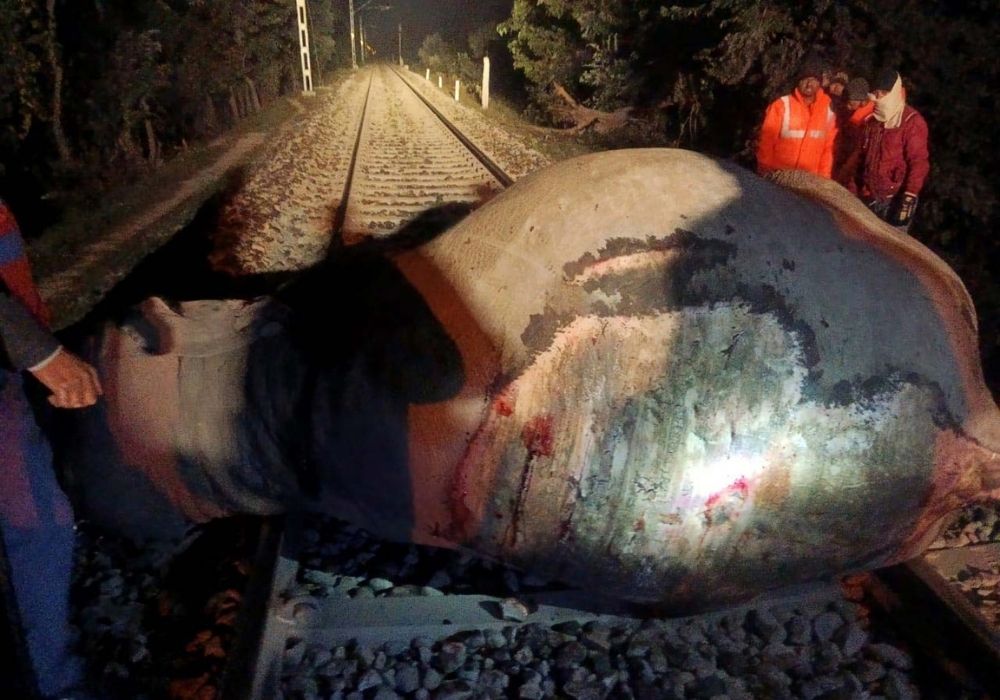
Last week, a devastating train collision claimed the lives of eight elephants, including calves, in Assam. This tragedy fills us with profound grief for the elephants lost, deep anger that known solutions were not in place, and a renewed resolve that as a global community, we must act decisively to prevent such needless deaths from happening again.
Across India, many of the landscapes elephants inhabit and migrate through are intersected by railways, highways, and other human-made infrastructure. Much of this was constructed decades ago, at a time when the needs of wildlife were largely overlooked and when population pressures and urban infrastructure were far less widespread. Today, with rising population density, rapid urbanisation, and increasingly fragmenting natural landscapes, these same corridors have become deadly obstacles, turning critical migration routes into fatal traps. Elephants, in turn, have begun slowly altering their traditional migration patterns in an attempt to avoid human settlements and instead moving through unprotected forest patches, where the risks are far greater. These new migration patterns are often outside of officially designated elephant corridors.
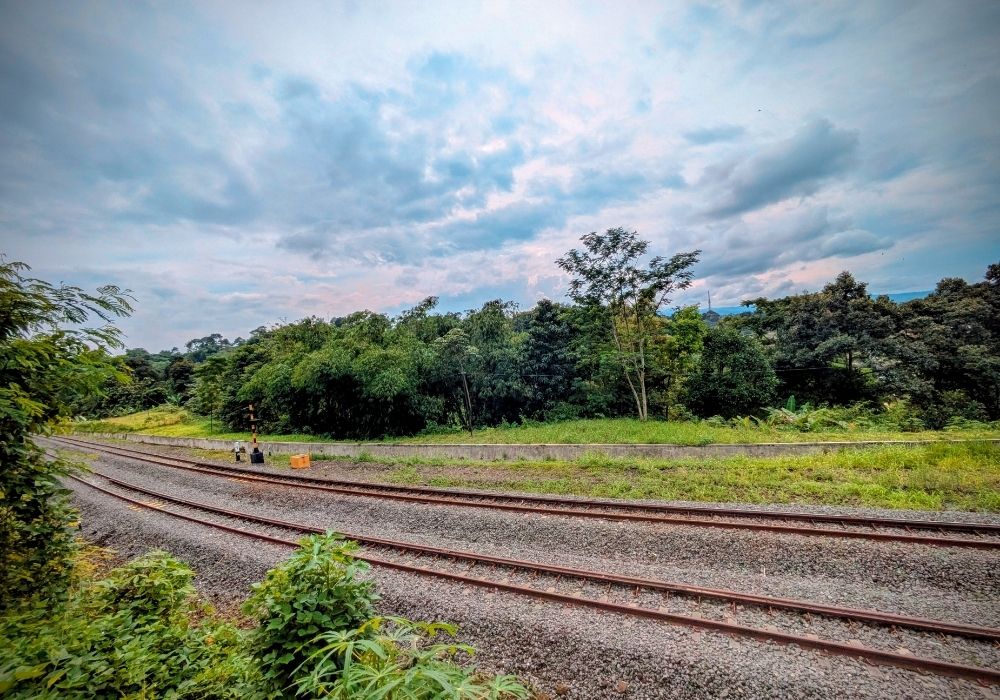
This tragedy comes amid an already alarming decline in India’s wild elephant population. Recent reports indicate a 25% reduction in elephant numbers over the past eight years, driven in large part by escalating human–elephant conflict — including deaths caused by trains, vehicles, electrocution, and habitat fragmentation.
Bani, our wild-rescued elephant calf, is a painful reminder of this very danger. Two years ago, she was struck by a speeding train within a known elephant corridor, leaving her paralysed and killing her mother. While Bani was fortunate to survive—and has since regained some function in her legs thanks to the dedicated and persistent efforts of Wildlife SOS veterinarians—the eight elephants in Assam were not given even a fighting chance. Their deaths occurred simply because the collision site was not part of a formally notified elephant corridor, meaning no special safety measures were in place. An entire part of a herd was lost—not because solutions do not exist, but because of a technicality, an oversight, and a rigid dependence on narrowly defined ‘protected’ boundaries.
What makes this loss even more heartbreaking is that it was preventable. Proven technologies now exist that can detect elephant movement near railway tracks and provide early warnings to train operators. When properly installed and used, these systems have been shown to dramatically reduce — and in some cases nearly eliminate — collisions between trains and elephants.
In Tamil Nadu, AI-enabled elephant detection systems deployed along vulnerable railway stretches, such as the Madukkarai–Coimbatore forest range, have reportedly already enabled over 6,500 safe elephant crossings, with zero elephant fatalities recorded on monitored tracks since early 2024. The state has also established an AI-powered Command and Control Centre to monitor wildlife movement and manage human-elephant conflict in real time.
Similar early-warning systems are already in place or being actively trialled in other regions as well. The Northeast Frontier Railway has introduced elephant detection systems across multiple elephant corridors in Assam and North Bengal, while the South Eastern Railway has tested AI-based warning systems along elephant-prone stretches of the Howrah-Mumbai route. Indian Railways has acknowledged that these interventions have contributed to a marked reduction in elephant deaths on monitored sections, underscoring that effective solutions are not hypothetical – they are already working on the ground.
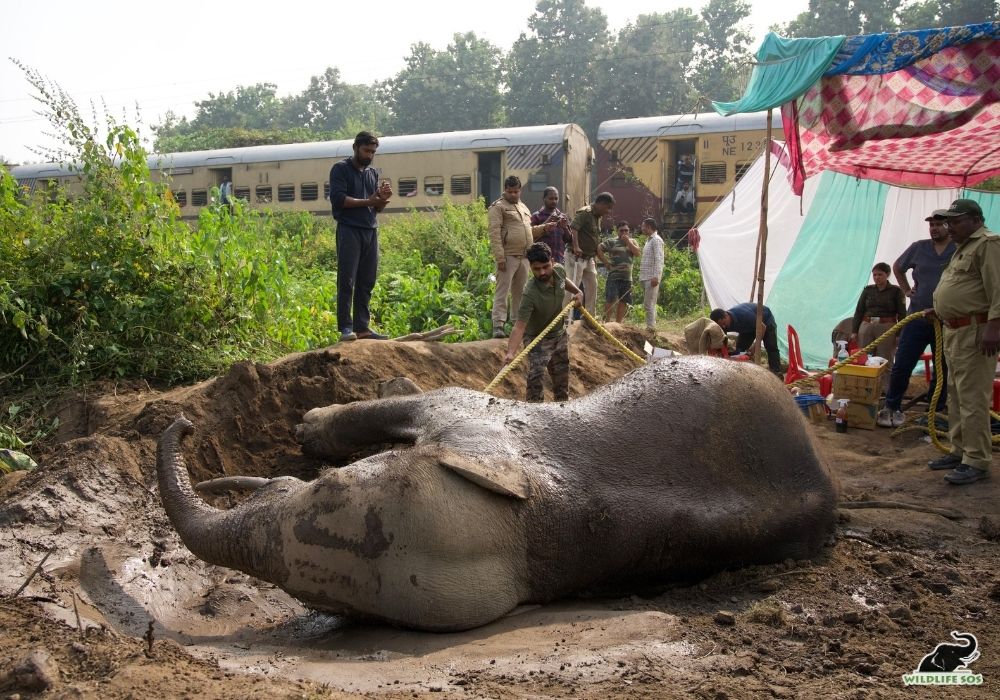
The railway line involved in last week’s collision did not have such elephant detection systems in place. Had they been installed, we firmly believe these eight elephants would still be alive today. The absence of protection because an area is not officially recognised as an active elephant crossing zone is not a minor technicality – it is a failure we can no longer afford to overlook.
The death of eight elephants in a single incident is not just a statistic; it pushes an already endangered species closer to the brink.
Installing elephant detection and warning systems is not optional nor should it be restricted only to officially protected corridors. These measures are essential and must be implemented across all railway stretches where elephants – and other wildlife – are known to traverse, even intermittently. They can save lives, both animal and human, and they must be deployed urgently wherever railways intersect elephant habitats. Failure to act now will only guarantee more tragedies like this one – tragedies that, as a nation, we cannot and should not allow to continue.
We owe it to the elephants we lost last week — and to those still struggling to survive — to ensure that no elephant dies from a tragedy that could have been avoided.
Sign our petition to save elephants from speeding trains and raise your voice for the voiceless.
Feature image: Canva