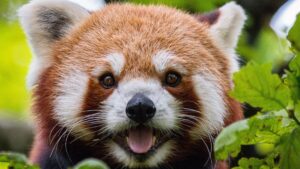
For urban animals, interactions with humans starts from simple curiosity. For people, much of this is associated with customs or traditions they follow. Many approach animals around them with the act of feeding, making the latter associate our kind with food which to them, translates into safety and survival. Such acts slowly become habits, conditioning the animal’s behaviour. ‘Habituation’ is a technical term that is derived from behavioural conditioning that takes place in animals around human settlements. But is habituation healthy for animals, or does it raise a risk for them as well as human beings? Does habituation in animals negatively affect conservation efforts?
What is Habituation?
Simply put, habituation is a process when someone (humans or animals) gets used to what happens again and again. Let us try to understand this better with an example. The milkman arrives and rings the bell at 7am sharp every morning, but the pets at home do not rush to the door like they normally do for doorbell sounds in the day. By now, they already know who it is, because they have learned that this is a repetitive act taking place every single day. It’s a routine that they are familiar with. Other examples that pet owners must have noticed is how every single day, at the same time in the afternoon, the dog at home waits by the door because it knows it’s time for the child to return from school or, the pet, who cannot read the clock, still makes a beeline to the kitchen just when it is their mealtime.
Now, let us transfer what we have understood about domestic animals to those that inherently belong to the wild, but are now being found living near or within urban areas. These animals have slowly adapted their feeding preferences, developed unnatural nesting behaviours and lost much of their natural fear of humans. While some may call this an act of natural selection, which implies that animals are adapting to the urban environment, it is, more accurately, a shift that disrupts their original and instinctive behaviour.
One might think that if the wild animals have adapted to life in a city, it’s a good thing, because this means the animals are learning to coexist with us. But that’s not quite right. Coexistence happens when the wild animals are able to retain their natural instincts and behaviour while living in proximity to the human population.

Let us look at some of the adaptations that have taken place to better understand habituation and its consequences. We will start by discussing the natural behaviour of the animal to see the changes they have undergone around human beings, and what risks these modified behaviours present.
Rhesus Macaque: Bananas, Biscuits & Broken Boundaries
There is a natural boundary that separates humans from wildlife. It is only broken when interaction between the two occurs, disturbing the concerned animal’s natural instincts. A real-world example is changes seen in the feeding patterns of rhesus macaques.
Natural Behaviour: If you have ever observed rhesus macaques in a national park or a wildlife sanctuary, you may have seen them foraging. In the wild, these primates depend on leaves, flowers, seeds and even roots for their meals. Searching for food takes up a notable part of their time throughout the day. In their natural habitat, when faced with humans, they maintain a wary distance. These monkeys avoid close contact as that is their basic survival instinct.
Modified Behaviour: Rhesus macaques have migrated to the cities primarily due to the loss of natural habitats, which means no access to food, water and shelter. Due to their remarkable ability to adapt, interaction of these primates with humans have become more frequent. Now, instead of foraging, rhesus macaques have become completely dependent on areas occupied by humans for their sustenance. They can access and often are even provided with biscuits, bananas, bread and home-made flatbread. This has made them more tolerant of humans, and over time, they have gone a step further to display acts of aggression if they are not given food. They have also started raiding waste bins for edibles. The convenience of attaining food has led to a change in their overall behaviour — they now spend more time resting and grooming instead of actively foraging.

Risks: Since macaques have started relying on the available food (provided intentionally or otherwise) where humans are, the nutritional requirements they need are not met. Processed snacks do not provide these primates with the required nutrients. Access to food has also led to an increase in the macaque population across urban landscapes. Now, after understanding that they will never run out of food, monkeys have developed a demanding streak of aggression that often leads to invasion of homes, snatching food from people and also causing injuries to them while doing so. The close proximity of the macaques and humans raises the risk of mutual transmission of diseases as well.

You might have thought that those feeding macaques are doing an act of kindness, or are honouring or seeking blessings from above, since this is seen commonly around temples and religious sites. But such activities ultimately harm and disrupt the natural order, resulting in negative consequences of habituation.
Cattle Egret: From Grazers to Mowers for Bugs
Cattle egrets are known for their symbiotic relationship with cattle, specifically a type of symbiosis called commensalism. Only the egret benefits in this relationship as it eats the insects that are flushed out of the vegetation while the cattle, like cows, walk or graze through it. Let’s compare the feeding and nesting patterns of these birds today with what it originally was.
Natural Behaviour: Cattle egrets live in habitats closer to water bodies. They are gregarious in nature, which means that they live in large colonies. These structured communities are known as heronries, because egrets are a type of heron that belong to the same family Ardeidae as heron species do, and with which they share their wetland nesting sites as well.

Modified Behaviour: Many cattle egrets have adapted to living within sites like agricultural fields and urban parks because of foraging advantages. While the species originally relied on natural grazers to stir up insects, egrets gradually began following farm machinery such as tractors and garden equipment like lawnmowers, where their movement scoops out the insect prey for them. They have further adapted to foraging alongside busy roads, around waste sites and in sewage areas where insects are readily available as well. Vast expansion of urban regions in the past decade has made them change their nesting sites to these spots as well, which are high with human activity. This also made us understand that these birds have developed a high disturbance tolerance — meaning the ability of an animal to withstand extreme changes in its environment.

Risks: Cattle egrets choosing to remain in cities is not recent. In 2014, a paper published to analyse the population of this species in Rajasthan mentions that out of 30 nesting sites observed, 16 were in urban landscapes. There are various risks associated with cattle egret nesting in cities. Herons are community nesters, and infections spread very rapidly among them. Humans are also exposed to such diseases. Cattle egrets are primarily waterbirds, so drought in urban areas can also have a major negative impact on them. Even though some of the natural predators of these herons are not present within cities, they face new threats such as feral cats and dogs.
Deer: From Fear to Familiarity
You may be familiar with the phrase “as shy as a deer”, but because of habituation, this saying is becoming outdated by the minute. Major eradication of their natural habitat has led to a number of deer living in or near urban areas, which in turn has led to them becoming less fearful of its new neighbours. Exposure to human activities is making ungulates more tolerant of our presence. This change is linked to what scientists call the “landscape of fear”, which describes how animals mentally map the geographical areas where they feel safe or sense danger. It varies from deer to deer.
Natural Behaviour: You may have observed on television programmes that when a lion wants to hunt a deer, it first isolates its prey from its large group. Deer naturally have the tendency to travel and graze in herds. This helps them to feel secure, reduces the chance of predation and helps their fawns learn survival skills. We also see that their natural reaction to any threat is a swift sprint.
Modified Behaviour: Deer around urban areas have been exposed to non-lethal human activities and in some cases, interactions. These ungulates have learned over time that regions dominated by humans are not an immediate threat to them. This has also led them to slightly delay their running away response.

Risks: Such modification in deer behaviour comes with hidden risks. Deer may not be able to differentiate between threatening and non-threatening human activities. These ungulates may also lose their capabilities of being on high alert and have a delayed response to predatorial threat. Another horrifying reality is that deer habituated around roads are more prone to collisions with vehicles.

In some parts of India, people even feed the deer. This includes bread, raw vegetables and even homemade flatbread made of wheat. Some regions where deer have become overly familiar with humans include Keoladeo National Park (KNP) and the city of Alwar, both situated in the vibrant state of Rajasthan. In Bharatpur’s KNP, a known heritage site, spotted deer are often seen being fed and petted by visitors. Meanwhile, in Alwar, even the elusive sambar deer have been observed wandering the city streets with no fear of humans. Habituation risks making them slow and vulnerable to predators like leopards and tigers of the forested regions of Sariska and the Aravallis in the outskirts. Major predators have already begun entering human settlements to prey on livestock since their natural habitats are shrinking, thus increasing danger for habituated wildlife.
Promoting Healthy Coexistence
As responsible citizens of the planet Earth, we need to make sure the wilderness of the wild animals stays preserved.
| DOs | DON’Ts |
| Observe wildlife from a distance | Do not feed wildlife |
| Keep pet food/water indoors | Do not leave trash outside unattended |
| Make loud noises or big arm gestures if the wild animal approaches | Do not try to move young or injured wildlife on your own, seek professional help instead |
| Plant native species so the animals are provided with natural food | Do not build shelter for wildlife |
If you ever encounter injured wildlife or a human-wildlife conflict situation, contact the Wildlife SOS 24×7 helpline immediately for assistance.
Delhi NCT: +91-9871963535
Agra and Mathura, Uttar Pradesh: +91-9917109666
Vadodara, Gujarat: +91-9825011117
Srinagar, Jammu and Kashmir: +91-7006692300/ +91-9419778280
Feature Image: Akash Dolas/Wildlife SOS
Try this short crossword to see how much you learned about habituation and natural animal behaviour!
How many of them did you get? Find the answers here.