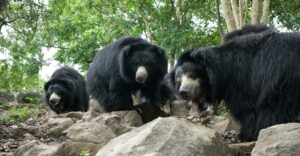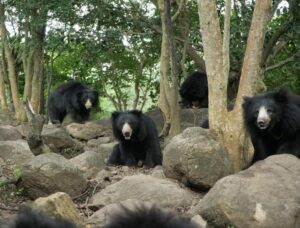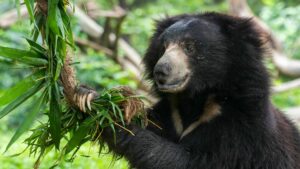
It’s one of nature’s most charming images: a sloth bear cub perched on its mother’s back like a tiny passenger. But behind that sweet scene is an incredible story of instinct, adaptation, and survival.
One of the most iconic behaviours of sloth bears is the way mothers carry one—or sometimes two—cubs on their backs. In fact, sloth bears are the only bear species known to routinely carry their young this way, from the time cubs leave the natal den until they are around 6–9 months old. Even older cubs will occasionally hitch a ride.
But how—and why—do they do it?
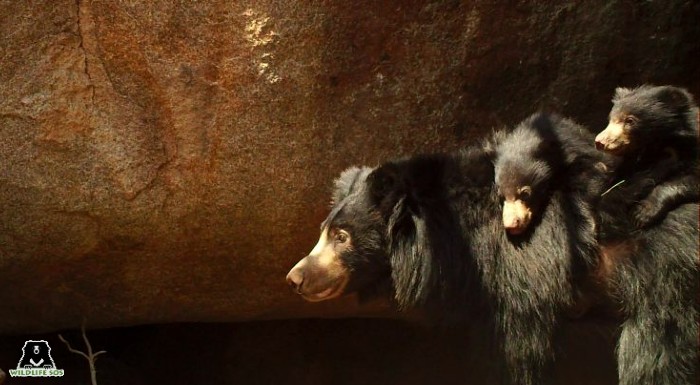
Photo © Wildlife SOS
That question is the focus of a new Wildlife SOS article published in International Bear News.
It turns out that sloth bear cubs—and even some adults—have an innate fascination with hair and fur. Hair is pulled, sniffed, and sometimes even gently sucked on, with longer hair often proving especially irresistible. Cubs are surprisingly adept at gripping hair and fur, and they can easily climb up their mother’s shaggy legs and onto her back. Once there, they rely mostly on balance rather than a constant tight hold—unless their mother begins running, digging, or engaging in other vigorous activity. In those moments, the cubs cling on with everything they have, gripping her fur with all four paws and even using their mouths for extra support.
So why do they ride on their mother’s back in the first place? The answer appears to be safety.
Sloth bears face threats from predators such as tigers and leopards, and they aren’t always fully aware of what’s happening around them. While foraging, they often move across the landscape with their heads down, focused on feeding—sometimes seeming almost oblivious. With cubs riding on her back, however, a mother sloth bear can keep close track of her young at all times, even during sudden encounters.
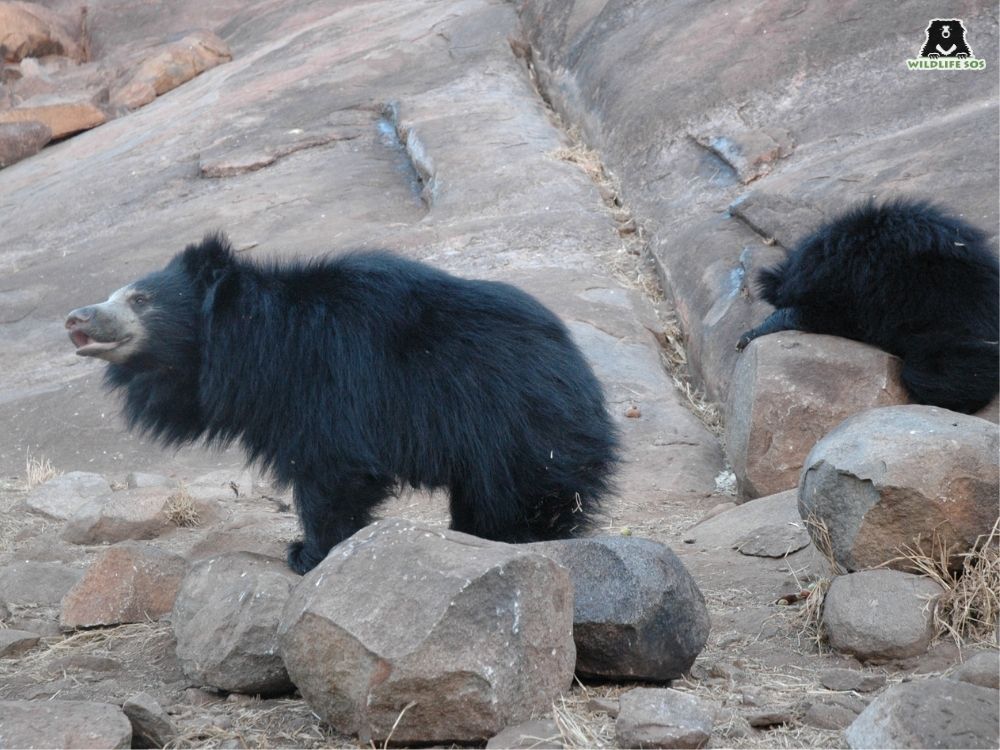
Photo © Wildlife SOS
Leopards, in particular, are exceptionally stealthy and can catch an unsuspecting sloth bear by surprise. But attempting to snatch a cub from a mother’s back would be far more difficult—and far more dangerous.
The sloth bear is truly one of the most unique bears in existence, and this remarkable cub-carrying behaviour is just one more example of how evolution has shaped them for survival. The more we learn about sloth bears, the better we can protect them. Your support helps Wildlife SOS rescue bears in need, care for them through recovery, and deepen our understanding of their behaviour—so we can advocate for stronger protection and a safer future for sloth bears in the wild.
Feature Image: Hemanta Chakma/Wildlife SOS