November marks a transitional phase not only for people, but for wildlife too, as they navigate through shrinking greener patches and cooler nights across cities, towns and urban landscapes as they search for warmth, shelter, food or safer corridors. This often results in sudden encounters with animals in unusual places like buildings, vehicles, institutional campuses and gardens.
For us at Wildlife SOS, November demands high vigilance and careful attention as rescue calls continue to come in from concerned citizens. From a massive python being extricated from a university campus to busting an illegal wildlife trade, this month proved to be yet another one where urgencies were dealt with expertise.
Let’s look at some of the most noteworthy rescues that happened across November.
Delhi-NCR
Delhi during November sees a dip in temperatures, bringing with it a shift in animal behaviour. With the onset of winter, reptiles slither to find sheltered places, occasionally venturing out to bask in the sun, and birds flying from long distances arrive in NCR and its wetlands. While these natural activities were taking place, our Delhi-NCR Rapid Response Unit remained on its toes to address rescue cases concerning unexpected encounters.
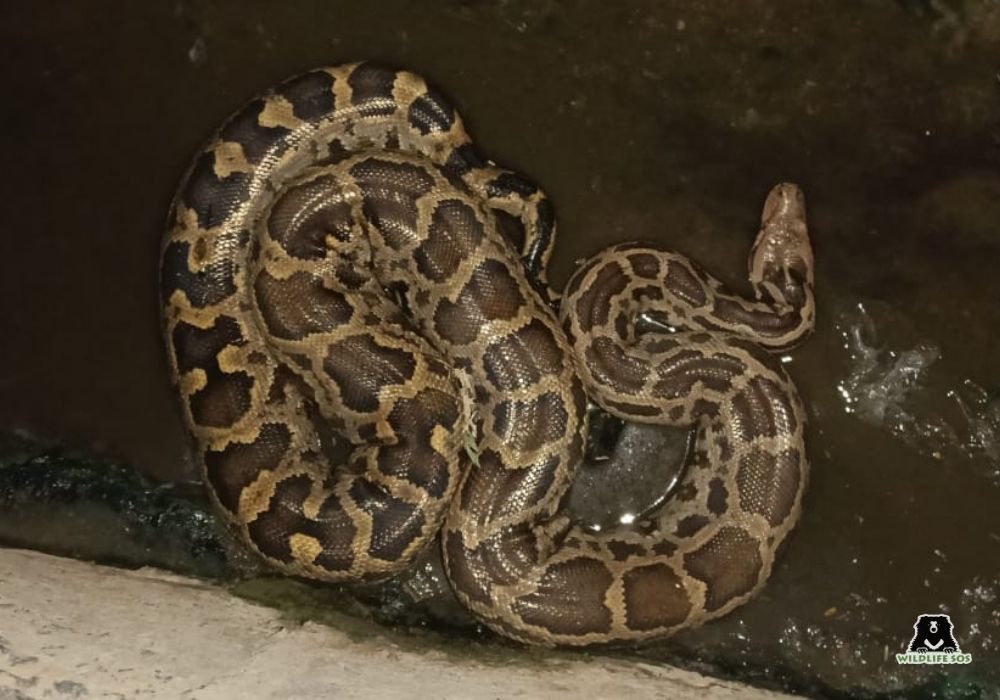
One particular call on our helpline late in the night took our rescuers to the residential campus of the Indira Gandhi Open University (IGNOU) in South Delhi. A massive Indian rock python measuring a whopping eight feet and weighing almost close to 30 kilograms had taken shelter inside one of the office buildings. The humongous size of the non-venomous snake had alarmed security personnel, who immediately alerted Wildlife SOS.
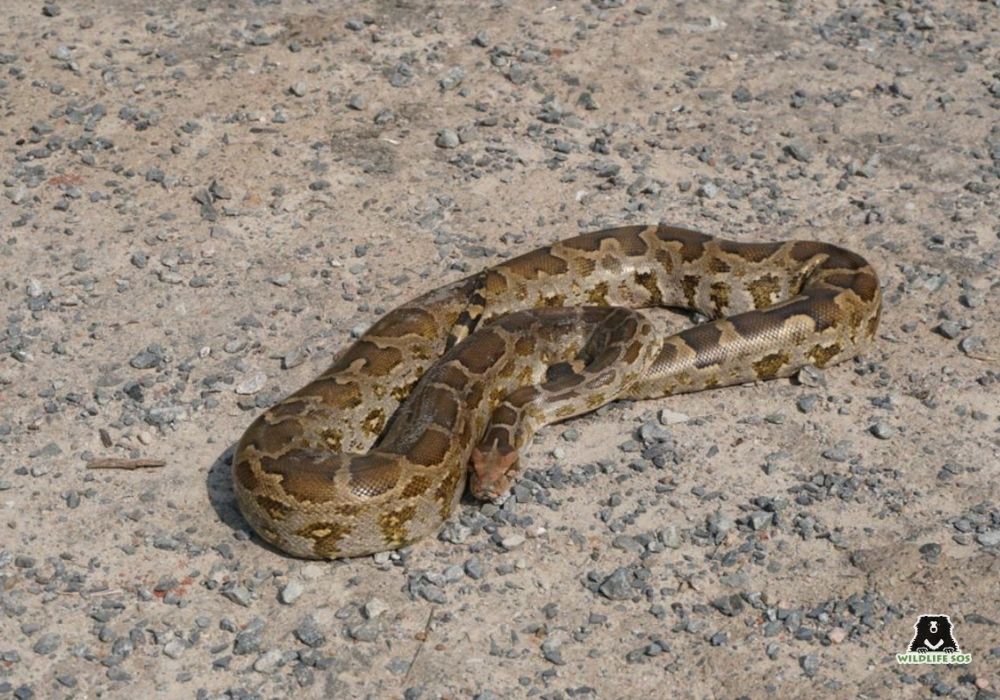
Our team promptly reached the location and, after assessing the situation very delicately, extricated the animal with minimal stress, maintaining the safety of both the people around and the snake. The python was then transported to Wildlife SOS’s Transit Facility, where, after careful medical examination and confirming that the snake is healthy, it was released into its suitable habitat.
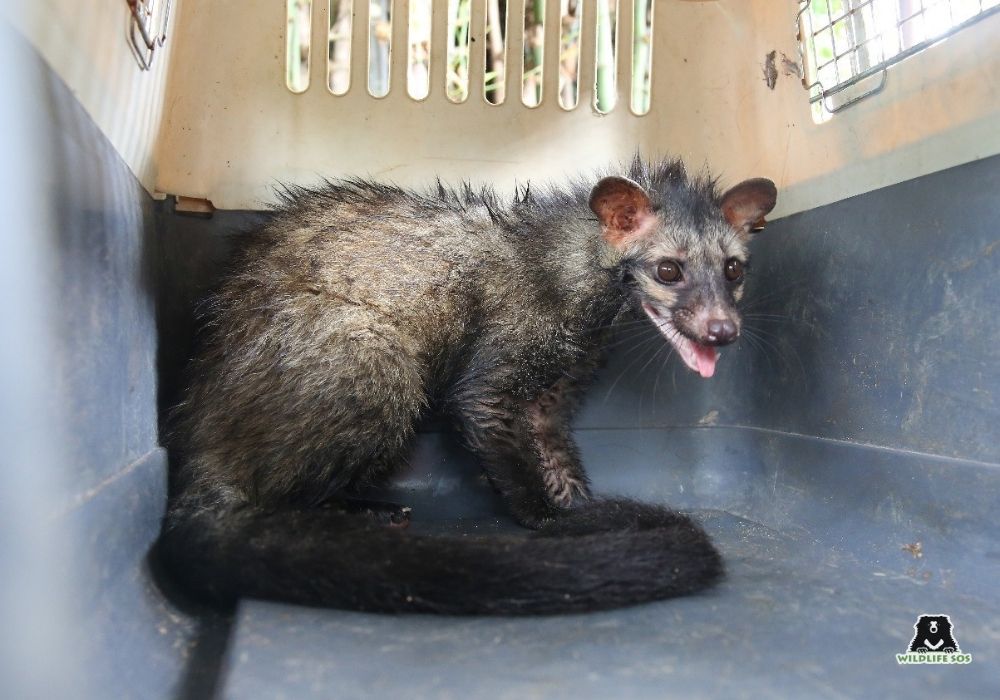
Another such noteworthy rescue was that of an Asian palm civet, which was found trapped deep inside the engine compartment of a car at a workshop outside the Palika Bhawan area. The animal had crawled inside due to the available warmth and got trapped. The driver who found the frightened animal contacted authorities, who reached out to us. The rescue was tedious and involved careful dismantling of each of the engine parts to extricate the civet. After assessing its health, the civet was safely released back into the wild.
In the lawns of the Parliamentary Library building, a black kite was discovered unable to fly. Closer inspection revealed an abscess on the left wing, which required immediate veterinary intervention. The bird was transported to Wildlife SOS’s Transit Facility, where it is currently undergoing treatment.
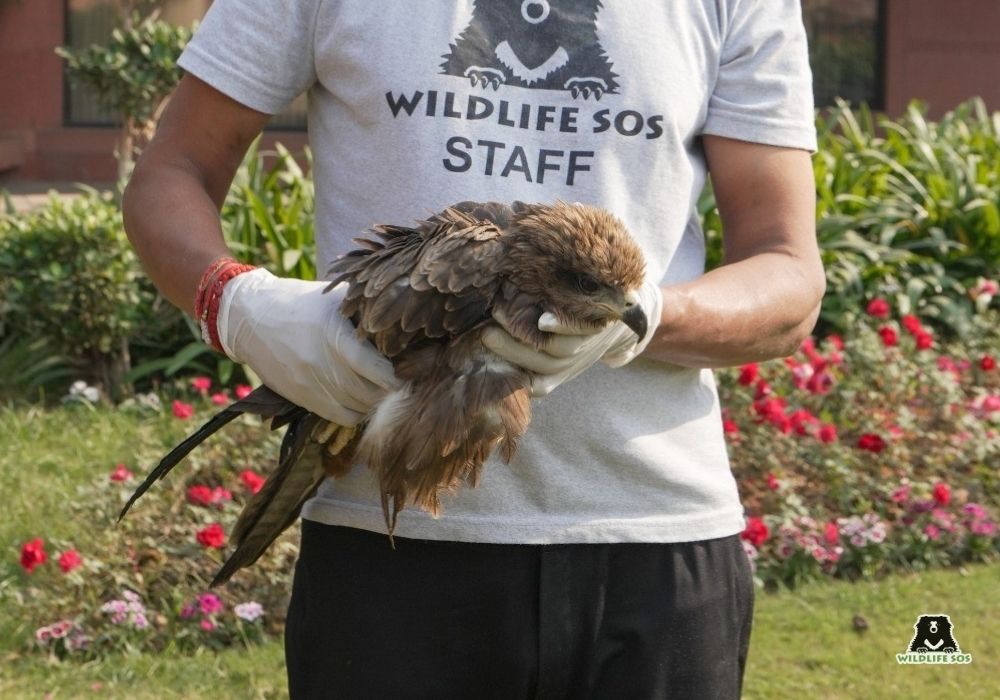
In total, the Delhi team rescued 40 mammals, 48 reptiles and 28 birds in November, taking the tally to 116.
Uttar Pradesh
In the agrarian landscapes of Agra and Mathura, November is defined by harvested fields, increased human movement, and reduced vegetative cover, conditions that frequently displace wildlife and push animals into close proximity with people.
The Wildlife SOS Rapid Response Unit of Agra and Mathura responded to multiple reptile calls during the month, of which 12 concerned Indian rock pythons. Among them, three were found within a residential complex, an apartment and an institution in and around Sikandra, Dayalbagh, and Mau Road. Each rescue in these areas demanded crowd management as well, which entailed handling the situation calmly to diffuse panic surrounding the non-venomous snakes. After careful and thorough examinations upon their rescues, the three pythons were individually released back into the wild.
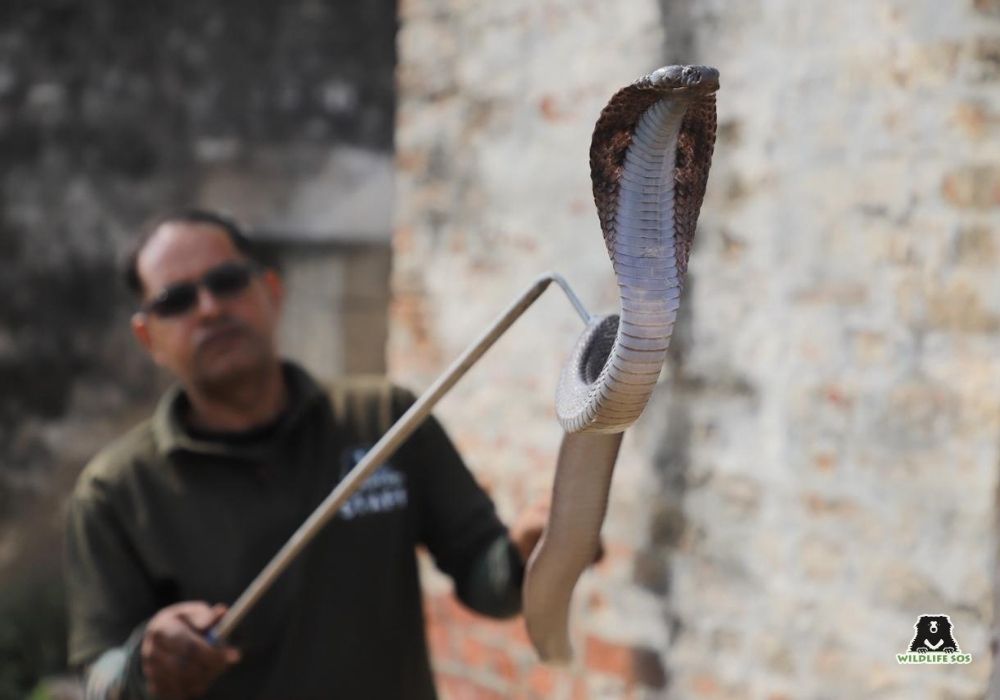
In what came in as a startling notification, three spectacled cobras were found inside the same agricultural field in Lalgarhi village, Khandoli. This is in accordance with the fact that after harvest, snakes coiled up are often left exposed, increasing encounters with farmers and locals. The three cobras were safely rescued and released in their natural habitat, far away from human settlement.
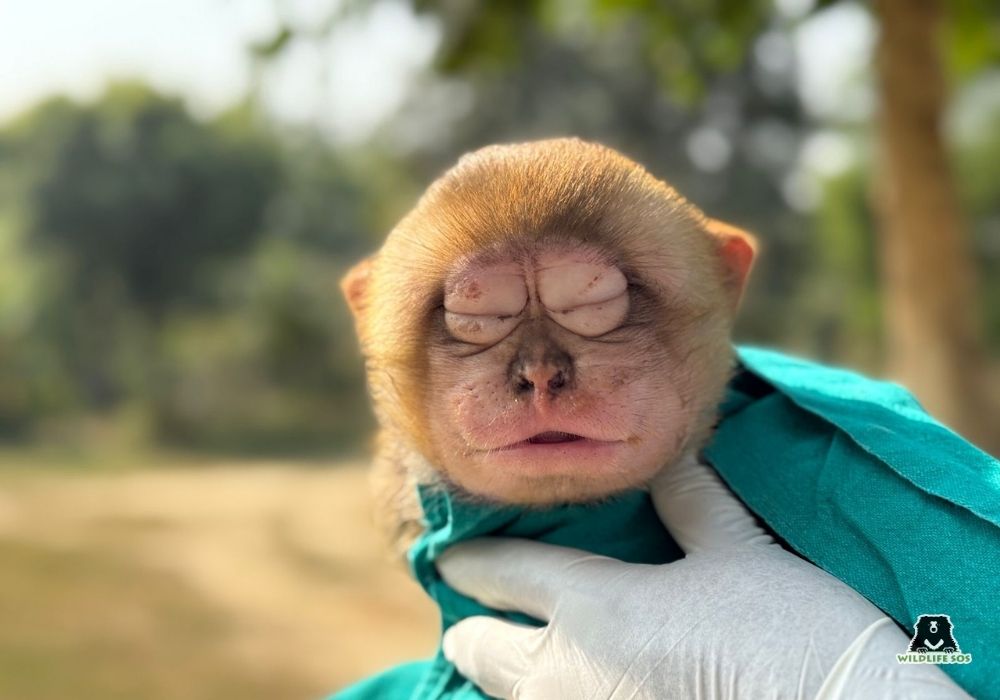
Mammal rescues continued alongside reptile operations. An injured rhesus macaque found near the Collectorate Office in Agra was rescued and provided immediate veterinary attention. After careful assessment for injuries and dehydration, the animal was treated for a while at our facility. Once full recovery was ensured, the animal was released into its natural habitat.
These incidents reflect a seasonal pattern seen across the region — as cover diminishes and temperatures fluctuate, wildlife is forced to scatter and navigate into human-dominated spaces, making community cooperation critical.
Bird rescues were the least among all, with 12 avians tended to in the month. Among these, peafowls dominated the numbers. Mammal rescues stood at 43, and the total number of reptiles was 47. By extending timely support to wildlife in distress, our Rapid Response Unit in Agra rescued 102 animals in November.
Gujarat
Unlike northern India, Gujarat experiences a milder winter, allowing reptile activity to remain high well into November. As a result, snake and crocodile rescues continued to dominate calls to the Vadodara Rapid Response Unit during this period.
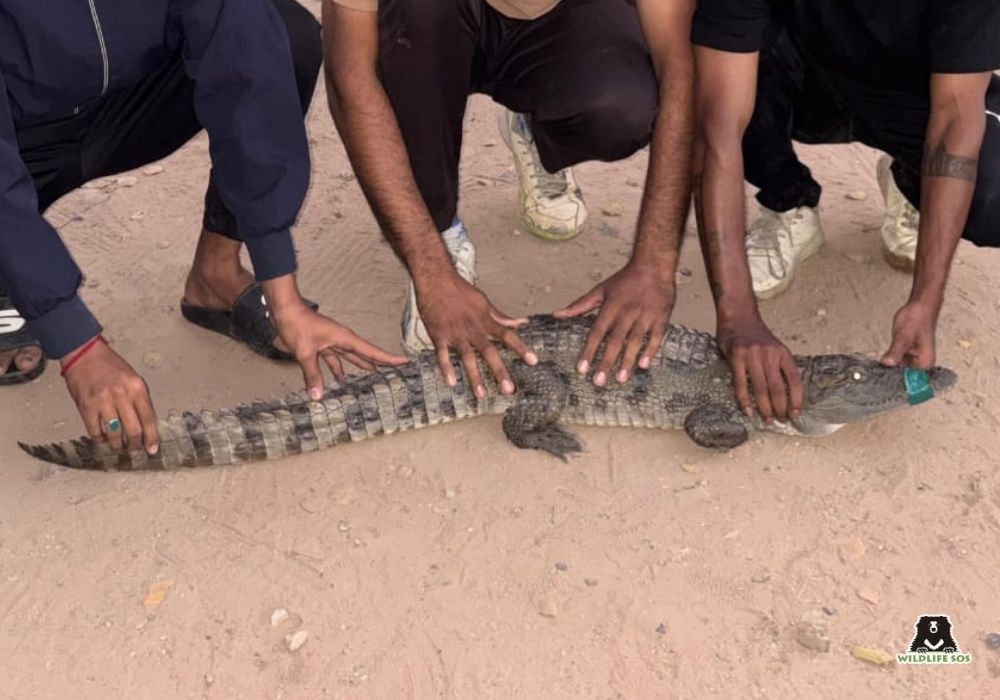
One particularly sensitive rescue involved a crocodile that had entered a private swimming pool at a heritage property in Vadodara. The presence of the reptile posed serious safety concerns, and the operation required careful planning, coordination, and restraint techniques to ensure the animal could be safely secured and relocated without injury or escalation. The crocodile was later released into a suitable natural water body under the supervision of forest officials.
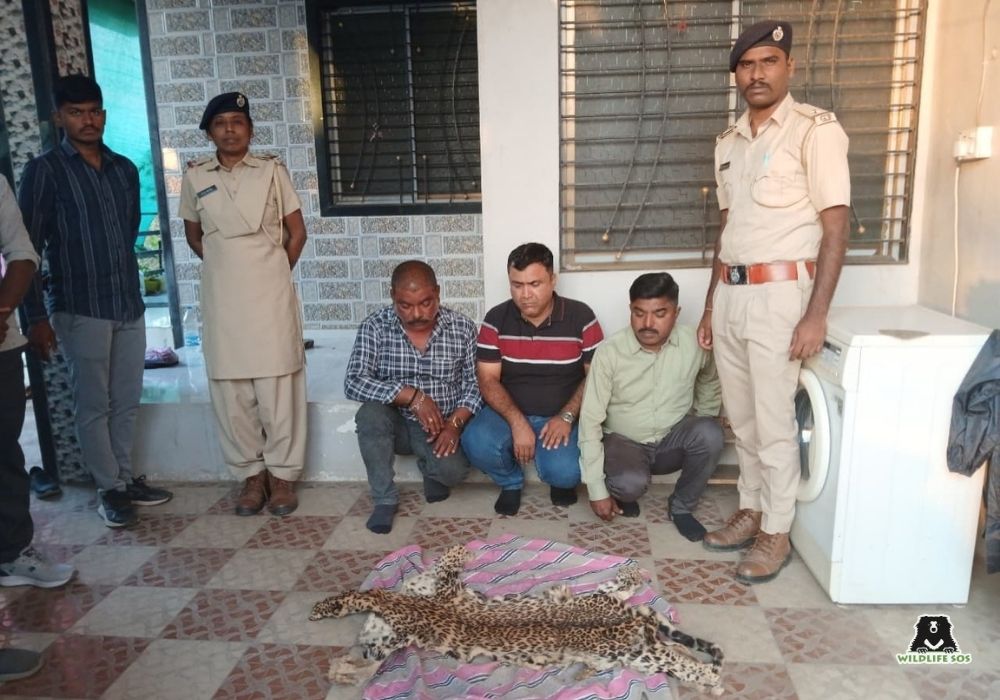
November also stood out for a major enforcement success against wildlife crime. Acting on a confidential tip-off, Wildlife SOS-GSPCA, in collaboration with the Gujarat Forest Department, conducted a high-risk undercover operation in Vansda city, Valsad district. Posing as prospective buyers, officials confirmed the illegal possession of a leopard skin before executing a coordinated raid that led to the arrest of five individuals. While the skin was recovered, investigations indicated the involvement of a wider trafficking network, underscoring the persistent threat posed by organised wildlife crime.
Alongside these high-profile cases, the Vadodara team continued routine rescues from residential societies, gardens, and workplaces, responding to snake sightings and public distress calls, and reinforcing the importance of informed, non-violent responses to wildlife presence.
For this month, our team rescued nine venomous and 33 non-venomous snakes, taking the reptile tally to 44. With 33 birds and 16 mammals, the rescue team in Vadodara saved 93 lives in November.
Jammu & Kashmir
During the winters, the temperature of Jammu & Kashmir plummets significantly, and so does reptile activity. Extreme cold most often reduces the availability of prey for bird species like owls and black kites, and they are often led to find food near human settlements, leading to conflicts and distress calls.
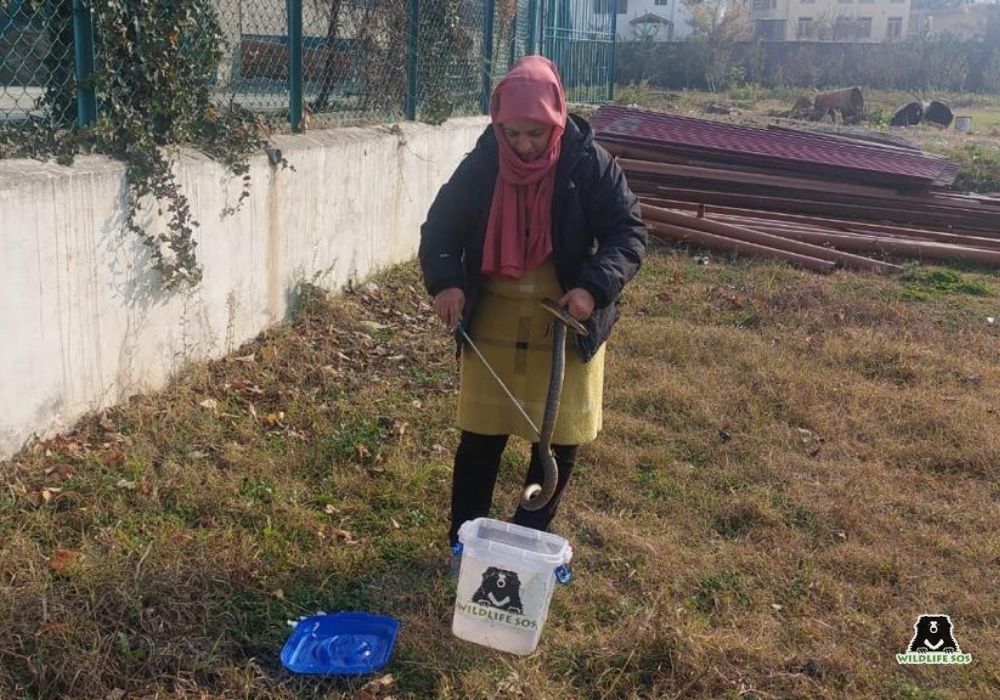
One particular incident occurred in the Nishad area concerning a reptile. A rat snake had slithered into a pile of stored firewood kept for heating traditional hamams, which are wood-fired bathing enclosures commonly used to withstand the harsh weather. When a resident noticed the snake while removing the logs, Wildlife SOS’s Rapid Response Unit was immediately alerted. The team carefully extricated the non-venomous snake and safely released it into a suitable habitat.
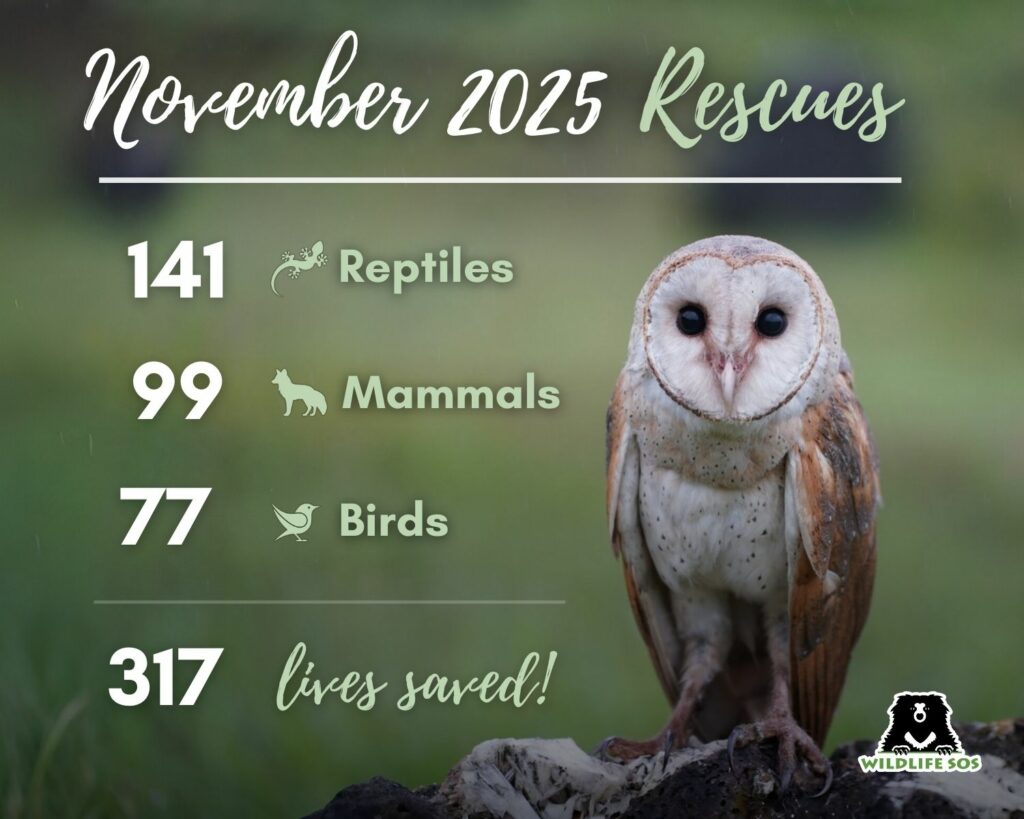
Another significant rescue happened at the house of a local, when he found an injured barn owl in his house. The owl was likely involved in an altercation with a raptor and, in turn, was wounded. After the call from the resident, our team promptly arrived at the location and the bird was rescued and provided with necessary care.
A total of two rat snakes, three black kites and one barn owl were rescued from Jammu & Kashmir in November, taking the total count of animals saved to six.
Every rescue this November, whether it involved a frightened civet inside a car engine, a python visiting a university, or a complex wildlife crime investigation, underscored the same truth: humans and our activities are rapidly intertwining with wildlife and its safety, and protecting both sides is equally important.
Wildlife SOS continues to operate 24×7 emergency rescue helplines across regions, responding to hundreds of calls each month with speed, expertise, and compassion.
If you encounter a wild animal in distress, contact our rescue teams immediately:
Delhi NCR – +91-9871963535
Agra & Mathura in Uttar Pradesh – +91-9917109666
Vadodara, Gujarat – +91-9825011117
Jammu & Kashmir – +91-7006692300, +91-9419778280
Timely reporting saves lives, both human and wild.
Feature image: Kunal Malhotra/ Wildlife SOS