Wildlife SOS has been taking care of rescued sloth bears for the last 30 years. Poached as cubs, these sloth bears were separated from their mother’s upbringing that would teach them the means to survive the wild. Instead of thriving in a suitable habitat, they underwent torture in order to entertain audiences and support their captors financially. With the assistance of forest departments and multiple state governments, a total of 628 sloth bears that were forced into the illegal practice of street performances have been rehabilitated by Wildlife SOS.
The ‘dancing’ bear practice was curtailed and sloth bears were rescued — now, it was imperative for the organisation to provide adequate space that can support both the care and the freedom given to the bears. Currently, we host rescued sloth bears at four centres across the nation, namely, Agra Bear Rescue Facility (ABRF), Bannerughatta Bear Rescue Centre (BBRC), Van Vihar Bear Rescue Facility (VVBRF) and West Bengal Bear Rescue Facility (WBBRF). Natural habitats for wild sloth bears across India include dry grasslands, scrublands and even tropical jungles. Since our rescue facilities are located in different parts of India, the landscape and climatic conditions in each vary, making it essential to provide a shelter that bears could comfortably adapt to. Along with that, each facility has differing dimensions, hence, enclosure space accommodating the bears must benefit these mammals.
Enclosure Design
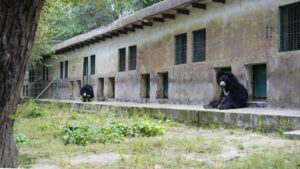
The enclosures in the bear rescue facilities are specially designed for the well-being of sloth bears. Our facilities are built inside or around forested areas, such as Van Vihar National Park in Madhya Pradesh, Bannerughatta National Park in Bangalore, and Soor Sarover Bird Sanctuary in Uttar Pradesh, and a specially designated forest land in West Bengal. Such a landscape provides our rescued sloth bears with various natural elements like native trees, high and low branches to climb on, logs to explore and earth to dig into. The Central Zoo Authority (CZA) of India has outlined guidelines for housing animals in environments that simulate natural habitats to ensure their welfare and safety. Our expert team of veterinarians and biologists have therefore provided these rescued animals with enclosures that encourage the revival and promotion of their natural instincts.
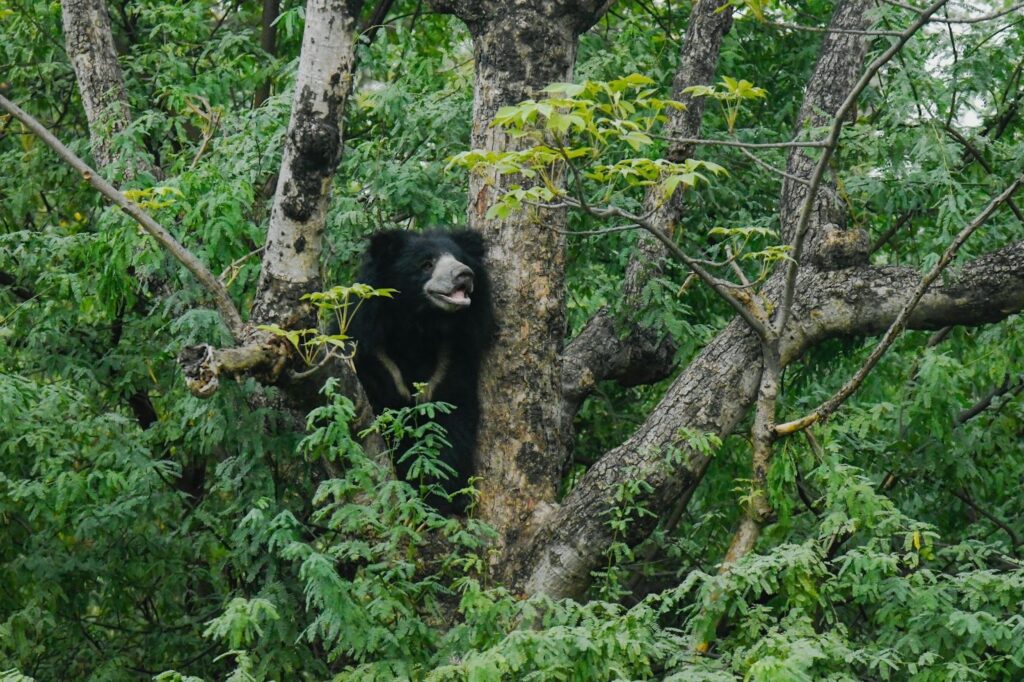
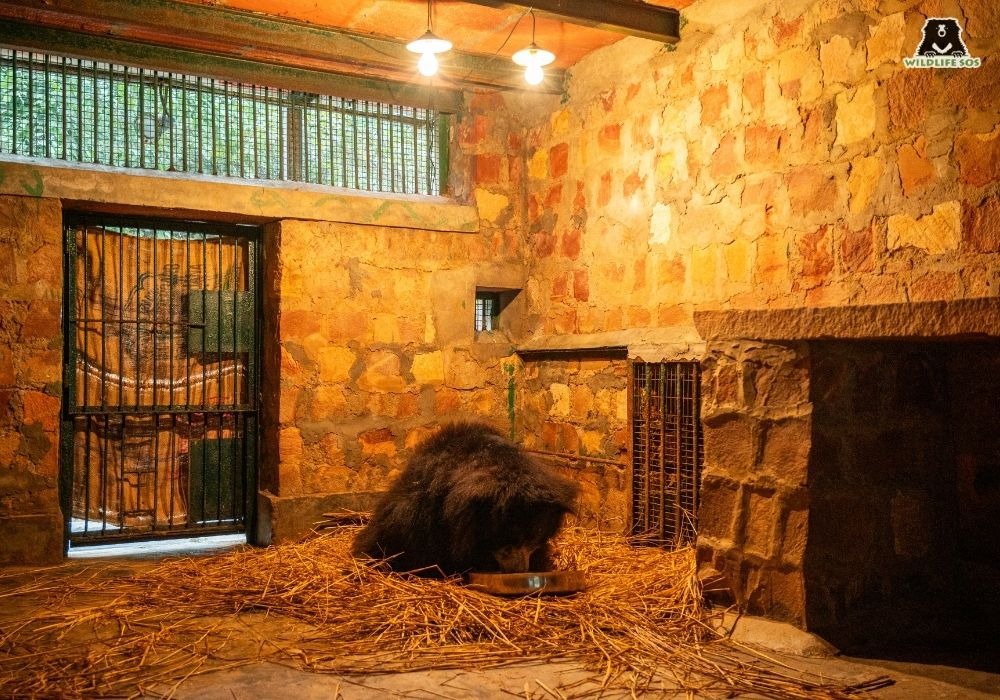
The bear enclosure is mainly divided into two parts, one being the open field, and the other the indoor or covered enclosure known as the ‘den’. The latter is meant to resemble an actual den where a sloth bear seeks refuge in the wild. This den also doubles up as the feeding area for the bear. It has two gates: a rear entry gate for the bear to enter from the open space, and a feeding gate that is used by caregivers to serve them their porridge meals. Since the rear entry gate opens directly into the open field, it’s never closed by the caregivers, except for when the food they have prepared for the bears is being laid out. Apart from this safety guideline, bears always have the freedom to move as they wish. Rescued sloth bears may choose to take shelter in these dens from the scorching sun or heavy rains, the choice is entirely theirs.
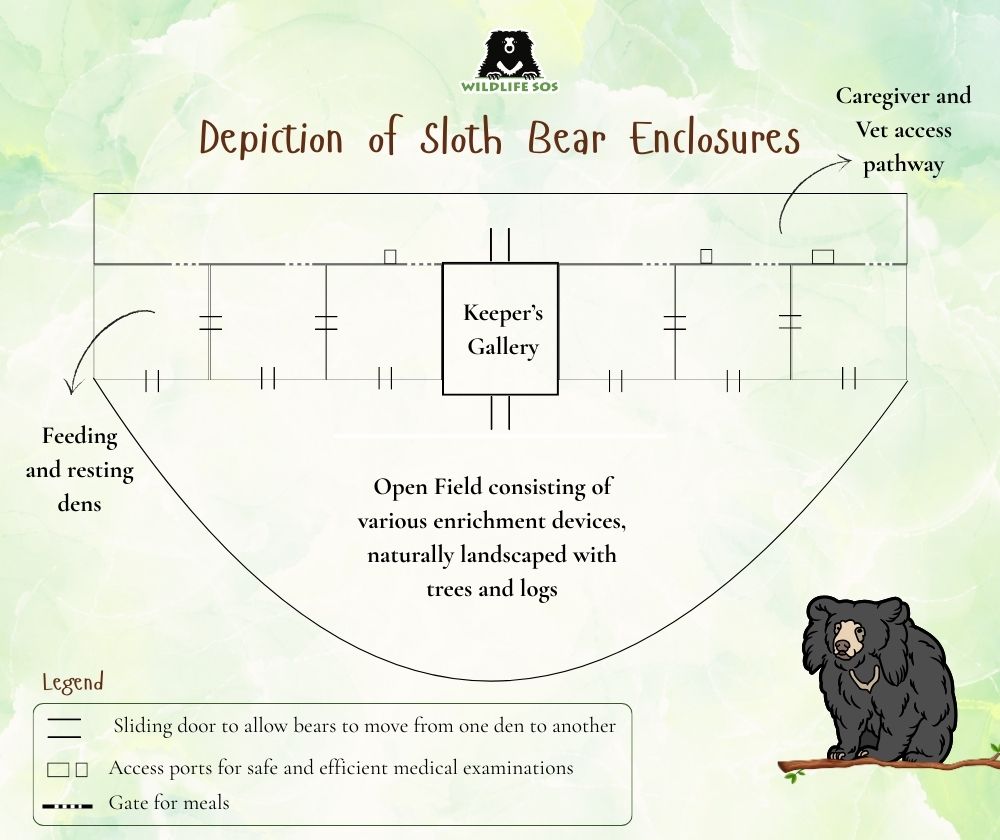
Feeding for sloth bears is a private and vulnerable activity. Recognising this, the veterinary and animal care teams carefully studied their behaviour to understand how enclosure design could better support their comfort. The feeding dens were therefore thoughtfully constructed side by side, minimising visual contact between neighbouring bears that allows each individual to eat without apprehensions.
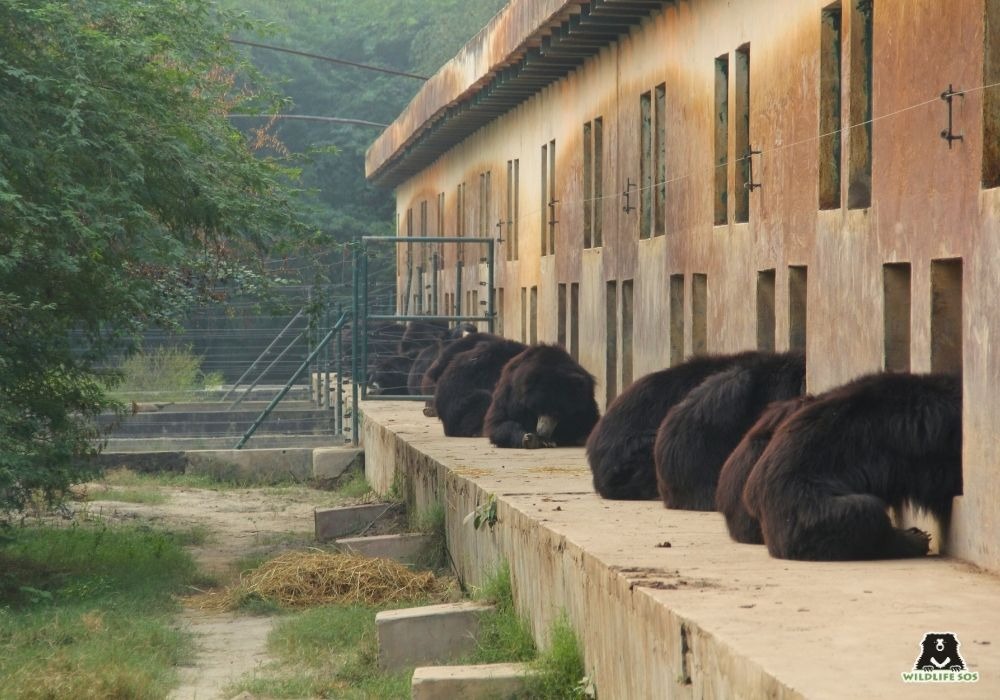
‘Dancing’ bears have a very traumatic past – their teeth were smashed to avoid bite injuries in retaliation. Another point noted was that sloth bears are instinctively nocturnal animals, but they were forced to perform in front of crowds in broad daylight. This played a major role in affecting their retinas, which resulted in eye problems. Some bears residing at our facilities are completely or partially blind.
To treat such medical conditions, complex medical procedures such as ocular ultrasounds, which use high-frequency sound waves to create pictures of the eye and its internal structures, are also performed through the rear entry gate of the enclosure. This gate of each den consists of access ports that help perform every examination needed highly effectively, avoiding any discomfort to sloth bears. This is a non-invasive mechanism that puts aside the need to use constant chemical tranquilisations that can be detrimental to the health of the bears.
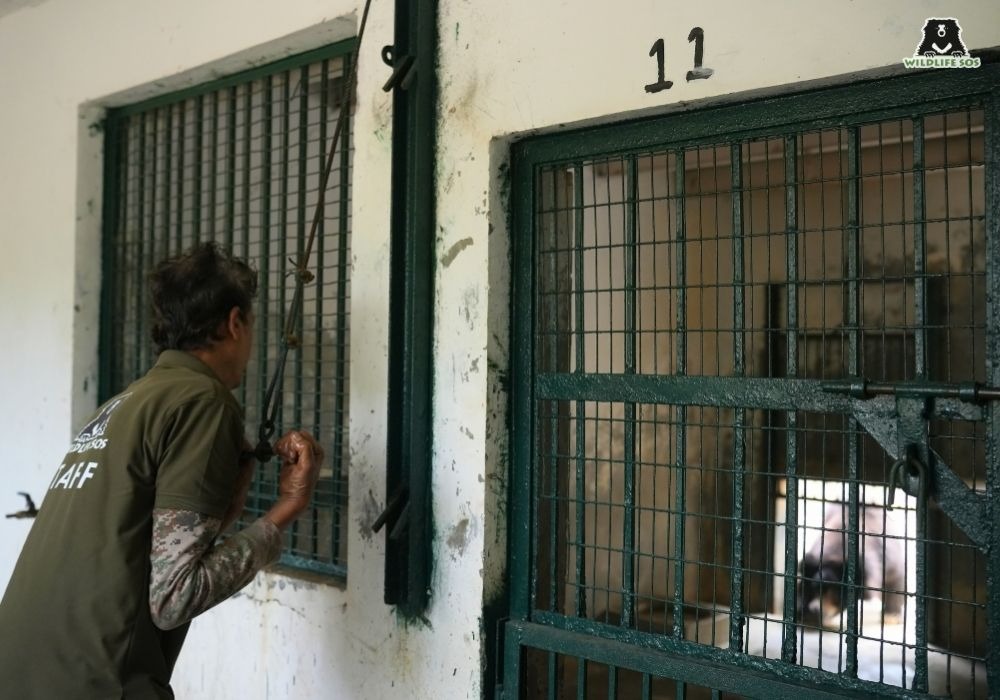
Target training sessions are carried out through these access ports. Also known as operant conditioning, it is a technique where the animals under care learn to follow a target stick and voluntarily present specific body parts like their feet, ears, or mouth, making medical checkups far less stressful. These are conducted using positive reinforcements of edible treats that are rewarded to the bears, motivating and encouraging them to participate.
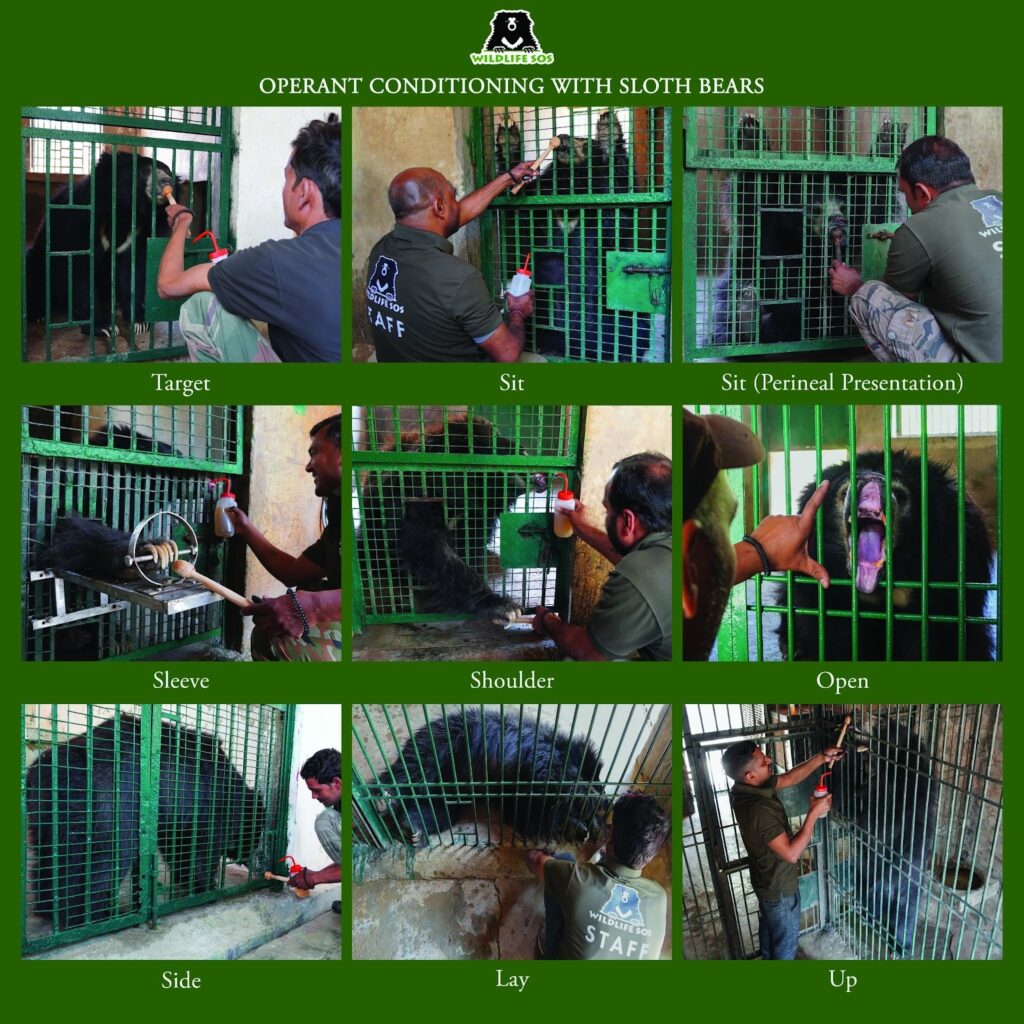
Revisions have been made on the den’s rear gate such as adding several appropriately placed mesh openings have improved the process of conducting regular examinations carefully. Routine procedures of collecting blood samples and administering vaccinations are effectively conducted at this gate through these openings, minimising anxiety for the bears.
Along with this, a thoughtful decision was also made to create permanent water bowls made out of cement within their feeding den itself. This fixed bowl’s stability ensures its durability. These in-built drinking water bowls are also extremely hygienic and resistant to environmental changes as they are duly maintained by the caregivers.
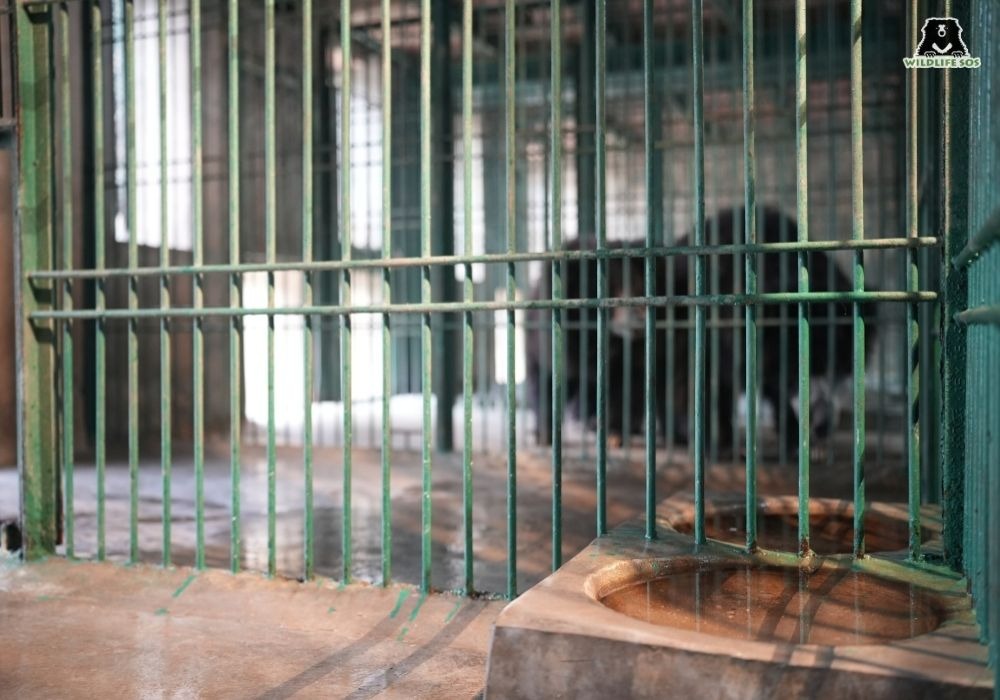
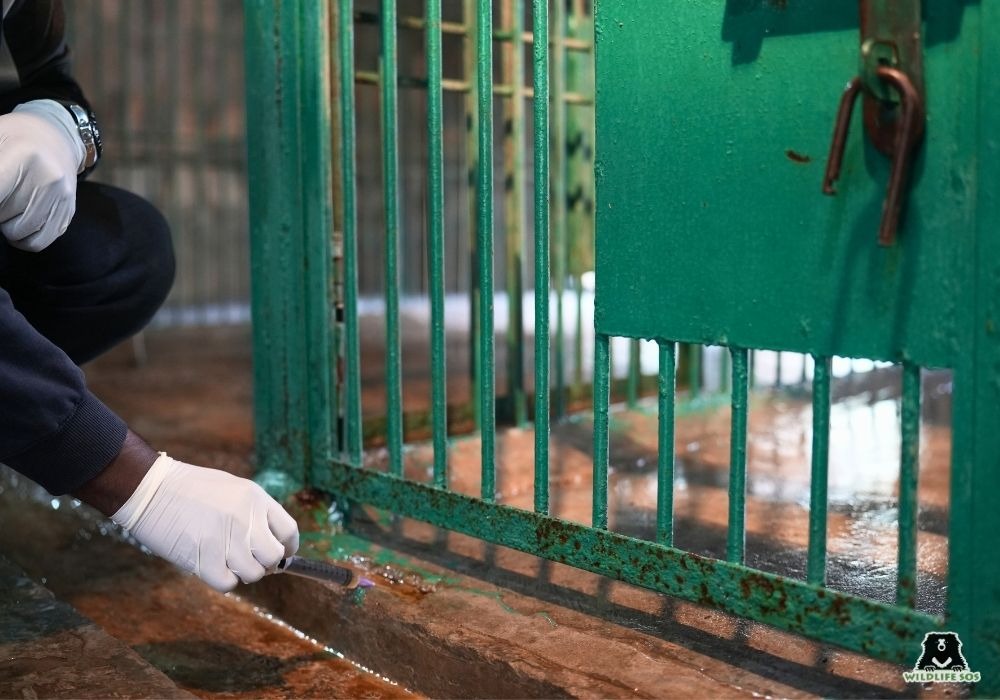
Another key modification made in the sloth bear enclosure enables non-invasive urine collection. Urine tests allow the medical team to analyse urine samples for important metabolic insights. However, even after exploring various methods, it was always challenging to collect this sample from the open field. An accessible technique was therefore developed, which also makes sure to prevent any stress on the bears. At the end of the feeding enclosure’s concrete flooring, a pit was made in a slightly slanted way that would collect the urine for the tests. To make sure the urine sample that is collected remains undiluted from the particles present in the enclosure, the area is properly sanitised with distilled water and disinfectants prior to the collection.
Multilayered Enrichments
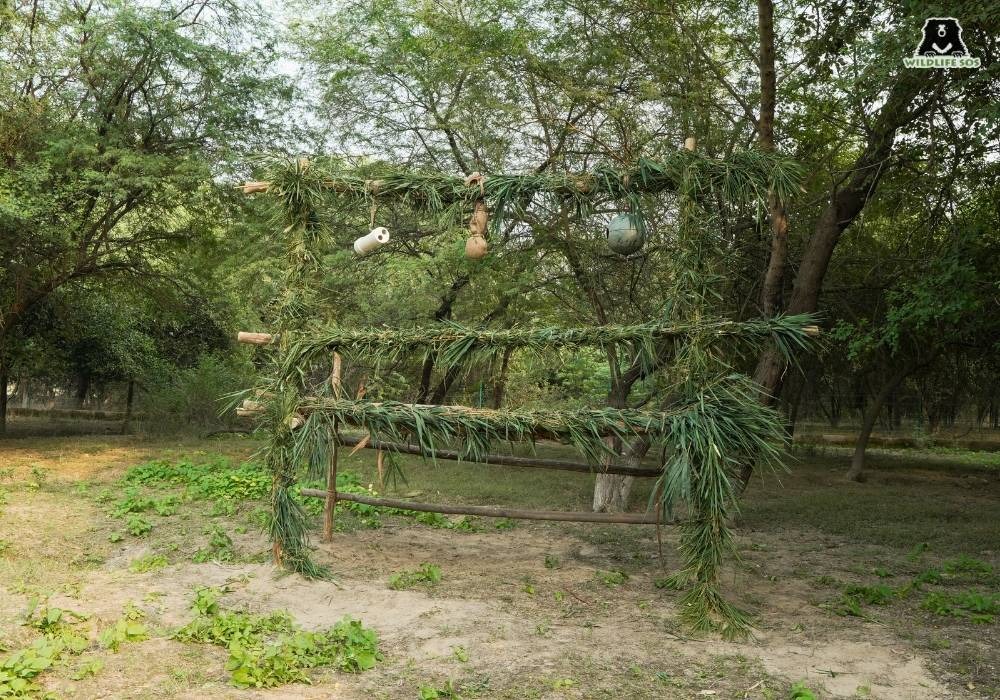
Staff members are encouraged to explore their creativity and build sturdy multilayered enrichment platforms for the rescued sloth bears. It is extremely important for the sloth bears to remain active and even engaged in their open field enclosure for their well-being. Enrichments also encourage the bears to revive and boost their natural behaviours.
A few big structures such as a swing, also known as a balancing beam, is made out of wood and encourages an instinctive reaction of the bears towards it. The act of exploration comes into play for the sloth bears using this environmental enrichment. The integration of treats in this structure is another attraction for the bears.
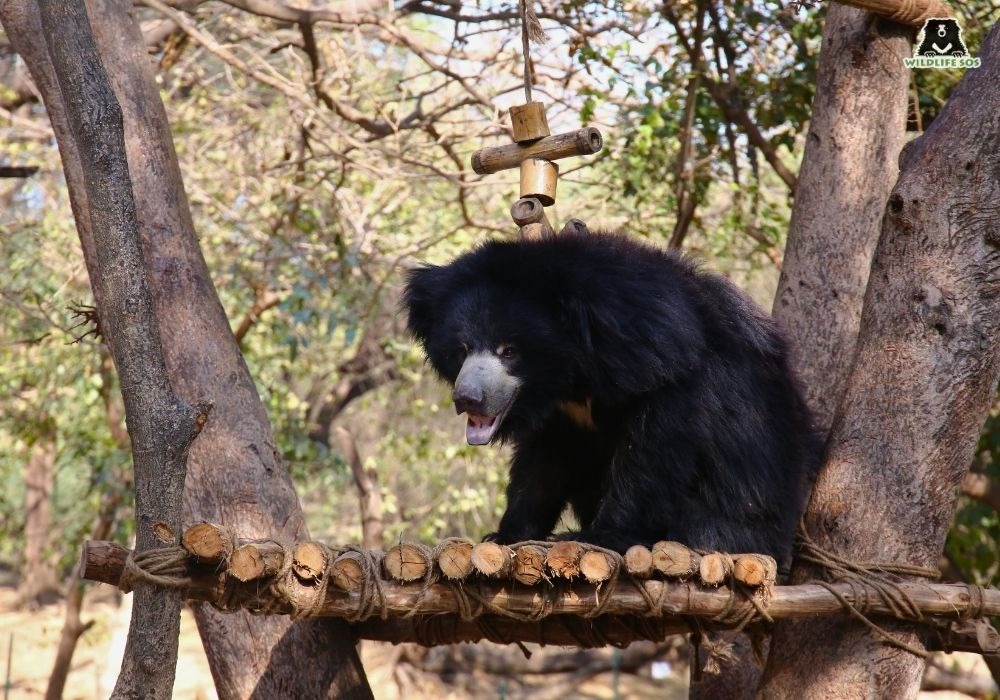
Sloth bears are known to climb trees in the wild. To keep such instincts alive and functioning, our wonderful caregivers have built ladders that also lead to hammocks, where our rescued bears are known to take their naps!
Our caregivers rotate environmental structures regularly to prevent habituation, as the bears may lose interest in them over time. The caregiving staff at all of the centres, who observe the sloth bears closely daily, have come up with innovative ideas for enrichments that keep the bears on their toes. Without variation, enrichments can become less effective, leading to potential boredom and immobility.
Since some of the enrichments are made of natural, breakable materials like burlap, the wear and tear of them easily indicate how much a bear enjoys those enrichments. For instance, when bears show a strong preference for certain enrichment structures, it makes it more prone to wear and tear. The caregivers notice these patterns and use a much sturdier material like a fire hose pipe to build the enrichment.
Summer and Winter Management
During summers, our sloth bears see a lot of adjustments happening in their enclosures. A row of coolers are placed along the indoor den enclosures of the bears. In the field, sprinklers are set up as a measure to beat the heat. A few bears choose to play in the artificial showers. The pool in their field is also filled with water for the bears to splash around.
Hanging gunny sacks act like coolers that are kept wet for hot air to pass and convert into cool air. Den doors remain open for the rescued sloth bears to choose whether they wish to rest inside the den facing the cooler, or under a shady tree located on the field.
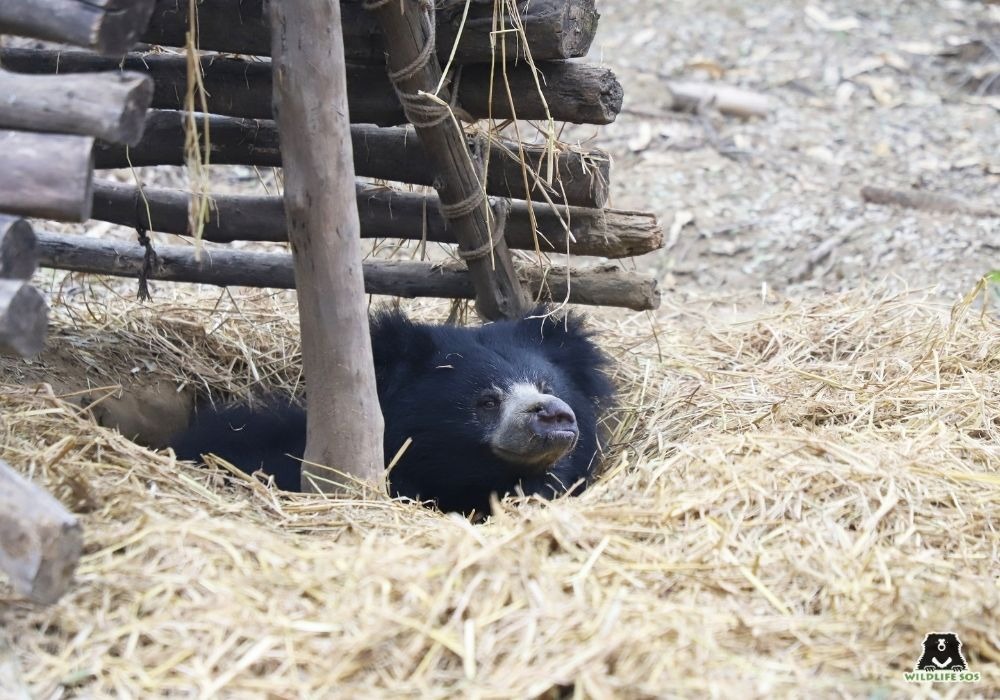
Hammocks for the bears are strategically placed in shaded areas during hot summers, offering a cool relaxed spot for an afternoon nap. In winters, the same hammocks are relocated to sunny spots, allowing the bears to enjoy a sunbath. In the winters, sloth bears do not hibernate, and their activities are minimal. They are known to slow down to conserve body heat. The doors of their dens are also covered with makeshift curtains made out of jute to block the chilly winds.
At Wildlife SOS, we have been dedicated to sloth bear care and welfare since our establishment 30 years ago. Priority was given to providing a calm and secure environment for their well-being, one that becomes a safe nurturing home to rehabilitated sloth bears. Our proficient team continues to study sloth bear behavioural patterns and publish research on this highly unexplored bear species. We also take essential findings from observation and care into consideration in order to uplift enclosure designs, enrichments and medical care given to the bears.
Consider donating for the comfort and health of the rescued and rehabilitated sloth bears under our care. You can even choose to sponsor an animal and receive updates on their health and, as a bonus gain a sneak peek, various anecdotes about them as well.
Feature Image: Vineet Singh/Wildlife SOS