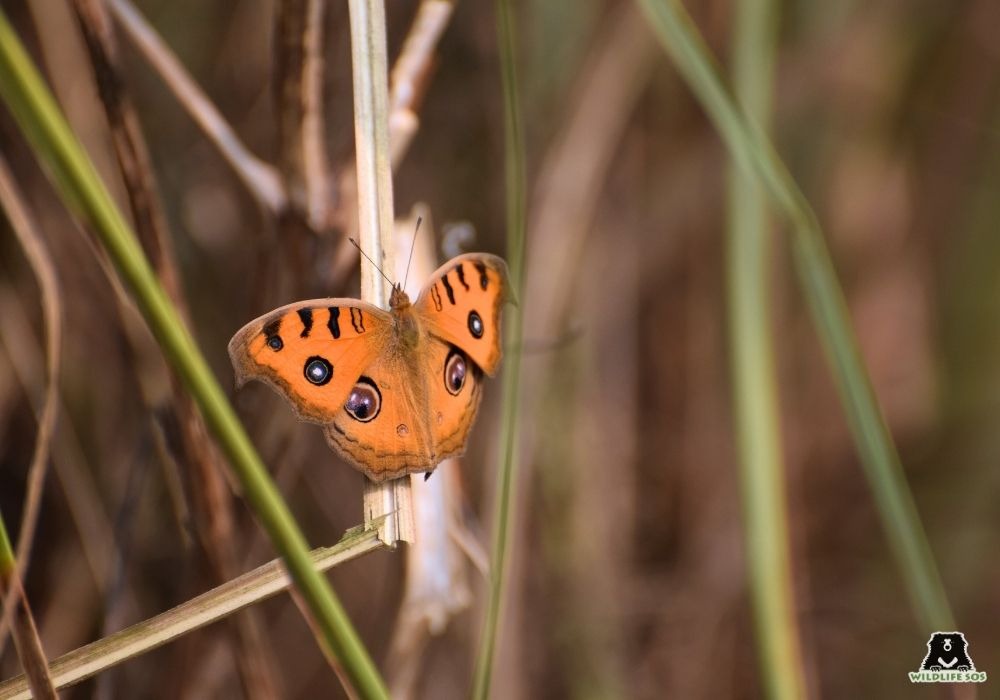
Oh look! A stunning butterfly with orange wings. It softly lands on a shrub nearby, where you’re standing. The violet eyespots on its wings mimic eyes to beguile predators. Its antennas wriggle, prompting your curiosity to come closer. As soon as the butterfly takes flight, your feet defy gravity, and you’re suddenly mid-air, following the winged wonder. You now have the ability to explore the Aravalli Hills, as the butterfly takes you through the role the hills play in nurturing its own, and our, environment.
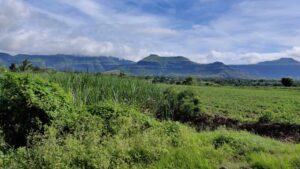
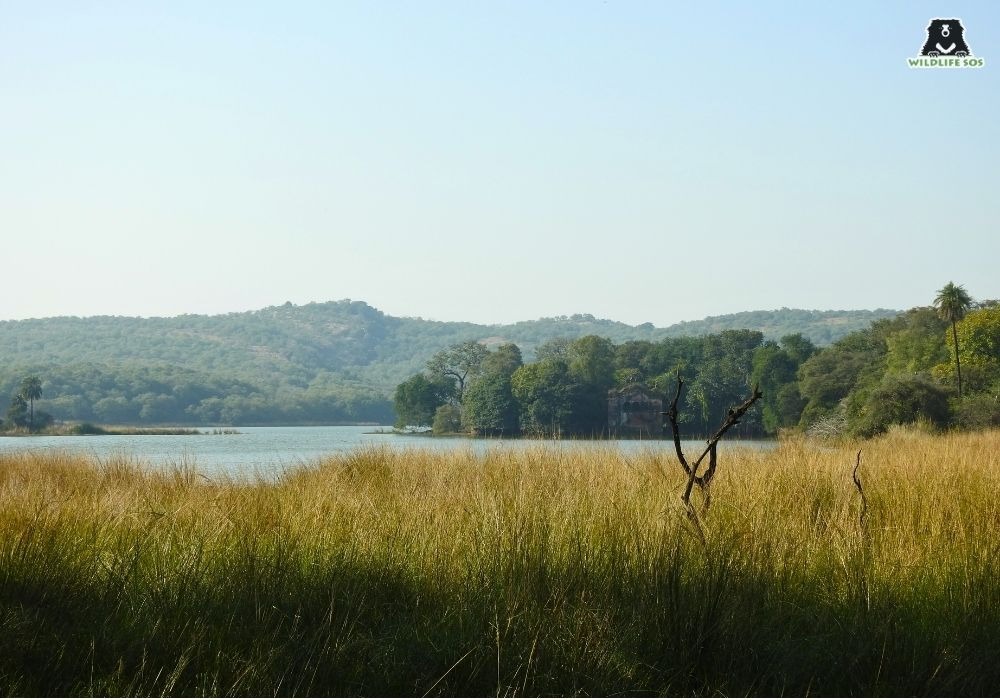
The beautiful Aravalli Hills belong to north-western India, ranging from Delhi, Haryana, Rajasthan, and winding down near Gujarat’s capital, Ahmedabad. They are one of the world’s oldest mountain belts, formed almost two billion years ago. The hills run for more than 650 kilometres and are home to a wide range of fauna and flora. The Aravallis are not only towering peaks but are extremely important ecologically, especially for the capital territory of India – Delhi.
Aravalli Hills act as a desertification barrier. In simpler terms, they are responsible for stopping the spread of the Thar desert from the state of Rajasthan. Deserts are known for receiving very low precipitation, which results in sparse vegetation. However, this in no way means that deserts are not useful, because these sandy landscapes play their own ecological role by protecting specially adapted life, and are also responsible for salt formation. So why does the Great Indian Desert need to remain within its bounds? Well, the Aravalli Range prevents the gusts of dust storms from reaching and negatively affecting places that are human-habitated.
The flash of orange crosses your eye once again as the butterfly goes and sits on a leaf of a resilient tree.
The Aravalli mountain range is famously known as the ‘green lungs’ of North India. Delhi is smothered with smog during the winters due to stubble burning, which produces a massive amount of smoke. Winds are also very stagnant during this season, hence the air remains still and stale. With the number of pollutants rising, these saviour hills are being burdened further to absorb them across the union territory.
These hills are also a significant natural carbon sink, removing greenhouse gases that are unpopular for trapping heat in the atmosphere for this part of the country. Climate regulation is balanced when heat-trapping gases are curtailed. These Aravalli mountains were formed at a convenient location, almost as nature’s strategic attempt to govern weather conditions. As summer approaches, their land warms up and breathes out heat. This forms a low pressure zone, which means that the air pressure in the region is lower than its surroundings, and draws in moisture laden winds originating from the Arabian Sea. Aravalli Hills act as a funnel, directing these moist winds towards the states it covers, eventually bringing in the rain. The continuous ridges on them and their orientation helps by intercepting these winds, and finally resulting in much needed rain showers in the summer time.
While your eyes are busy looking at the clouds that had suddenly turned grey and heavy with rain, the peacock pansy catches your attention by flying in an infinity loop. It then lands on the soil below.
Speaking of rains, this mountain range also majorly accounts for the groundwater recharge of Delhi, Haryana and Rajasthan. They have a wide range of permeable land which helps in rainwater harvesting. This water is extremely important as it provides drinking water, and irrigation to the farmlands.
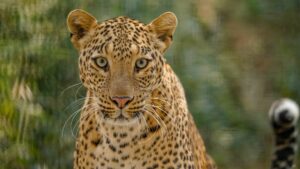
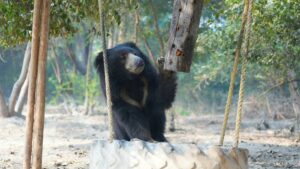
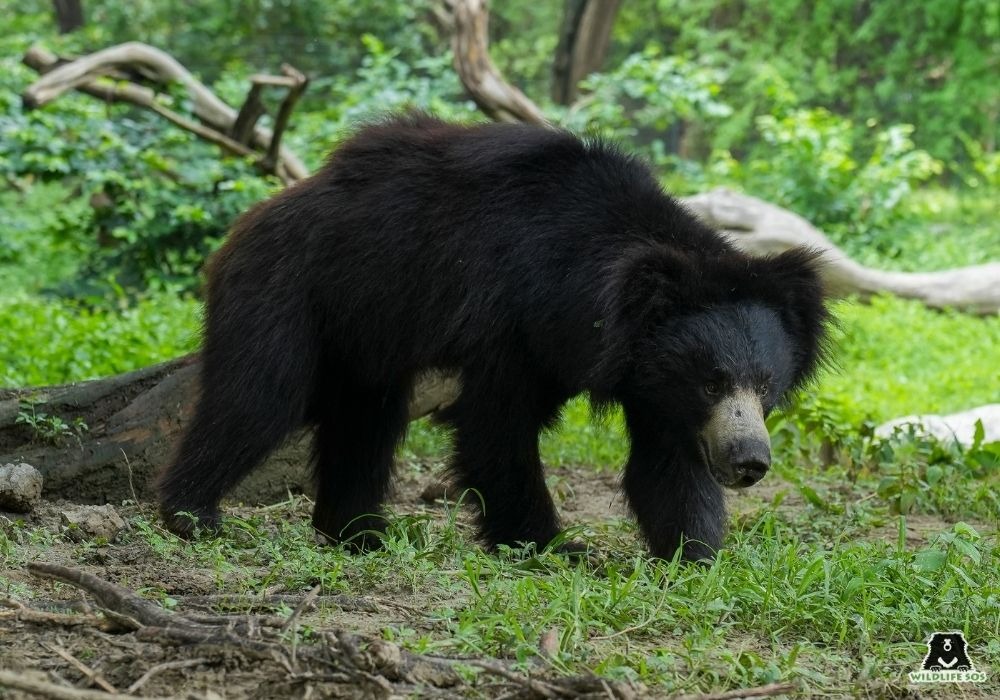
Apart from butterflies, the grand Aravallis are home to a wide variety of wild animals such as sloth bears, tigers, blue bulls, four-horned antelopes, and various snake species. Home to dry deciduous forests, one might not expect such an incredible variety of flora and fauna to stem from uneven ridges, jagged peaks and astounding valleys.
We have seen how the grand Aravalli Hills benefit humans in different cities and sustain diverse members of wildlife. Disrupting such an important yet delicate ecosystem therefore is nothing short of hair-rising.
Unfortunately, this is exactly what these mountain ranges are facing: multiple threats such as the spread of invasive species, unregulated tourism, rampant mining activities and fragmentation of habitats due to infrastructure development.
The butterfly picks up an astonishing speed, and you fly along with a mystical force. You realise you are travelling towards the stunning southern regions of the country… to a tale that we must remember to never forget.
To not let destruction of the Aravalli Hills go unnoticed, it is important to look at what happened in Kudremukh. Located in the Western Ghats of Karnataka, this mountain range is famous for its peak resembling a horse’s face. While its tropical rainforests host a number of species and also offer vital ecological benefits, for the acquisitive mind, the heart of the matter was the rich iron ore reserve it hosted. Highly destructive mining was carried out here to procure the metal.
Due to the gruelling process of mining, Kudremukh’s soil lost much of its natural water-holding capacity through the loss of all of its top soil. The impact extends far beyond what could be thought as immediate damage — the misery entailing habitat fragmentation. Fractured landscapes restricted the movement of wildlife over time, which has further affected species’ breeding patterns. Genetic isolation occurred, a condition that barriers healthy populations of the same species with weakened genetics. Species’ immunity suffers, threatening their long-term survival. Kudremukh is now an overlooked home to endangered endemic species because of the neglect and lack of foresight given to its remarkable biodiversity.
This reality shouldn’t repeat itself. Today, as cities remain busy calculating AQI, generating mountains of waste, and invading nature’s precious zones, there is a need to pause and reflect on how living beings of all kinds are getting affected. The threat to Aravalli Hills can not only impact the air we breathe and the seasons we witness, but also severely damage habitats, ecosystems and lives of many significant species.
The enchantment blurs, and your butterfly companion has brought you back to its own habitat, to its home, once again. It has shown you the great value of its world, and now, armed with rich knowledge, you are ready to protect the gorgeous Aravalli mountain range, come what may.
To read more such interesting articles about our environment, subscribe to our monthly newsletter.
Feature Image: Akash Dolas/Wildlife SOS