The air is thick with the odour of metallic chemicals inside the Mathura Refinery. A lost, confused and scared nilgai is here. The antelope is oblivious to the fact that his movements were being tracked by a team of rescuers, one of whom is hiding behind a carbon steel tank. Without getting distracted by his striking appearance, the man quietly assesses the nilgai’s movement patterns. Spooked by the unnatural surroundings, the male nilgai sprints from one end of the refinery to another. There is a sense of worry and urgency – one wrong move would result in the large animal clashing with the pipes flowing with refined oil, leading to a catastrophe. Tranquilising the running nilgai is also not an option, given the positioning of threatening pipes around him. Just then, the hidden man comes up with a plan. He is confident that it would work, without causing any injury to the antelope or to the mechanical devices around him.
The man picks up a rescue net (and his speed) as the dodging blue bull runs, and in one strategic throw, manages to cast it safely on the animal. The veterinary team comes forward to conduct a quick health examination and declares the nilgai to be absolutely fit. Thanks to the young man’s wisdom and wit, the nilgai is relocated back to the forest once again, where its expansive home awaits.
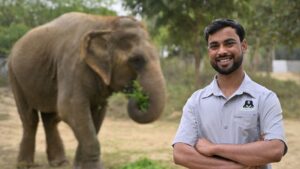
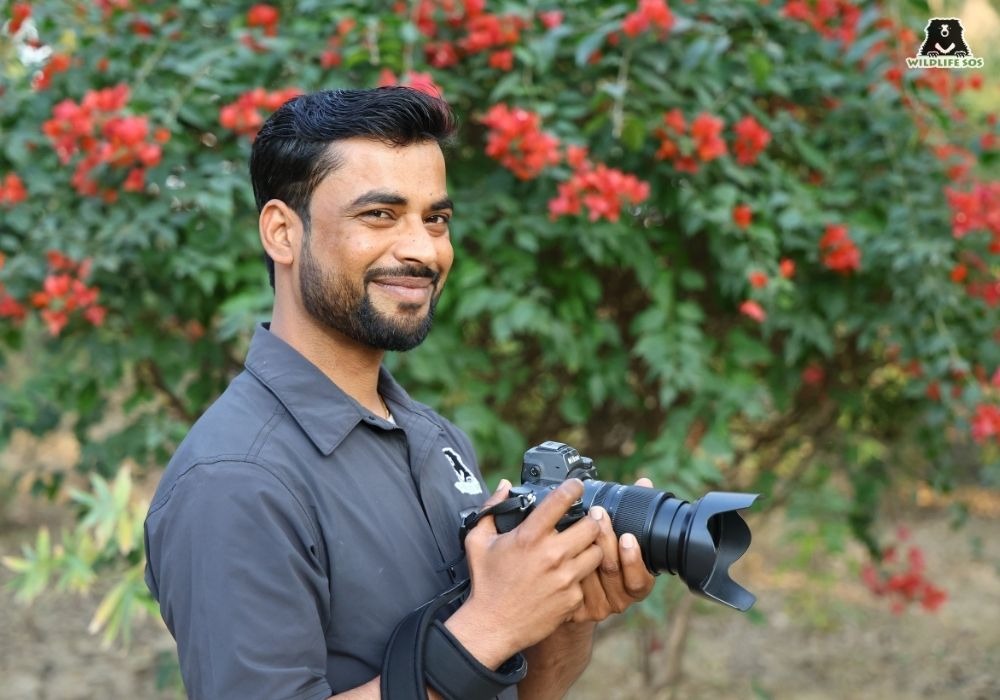
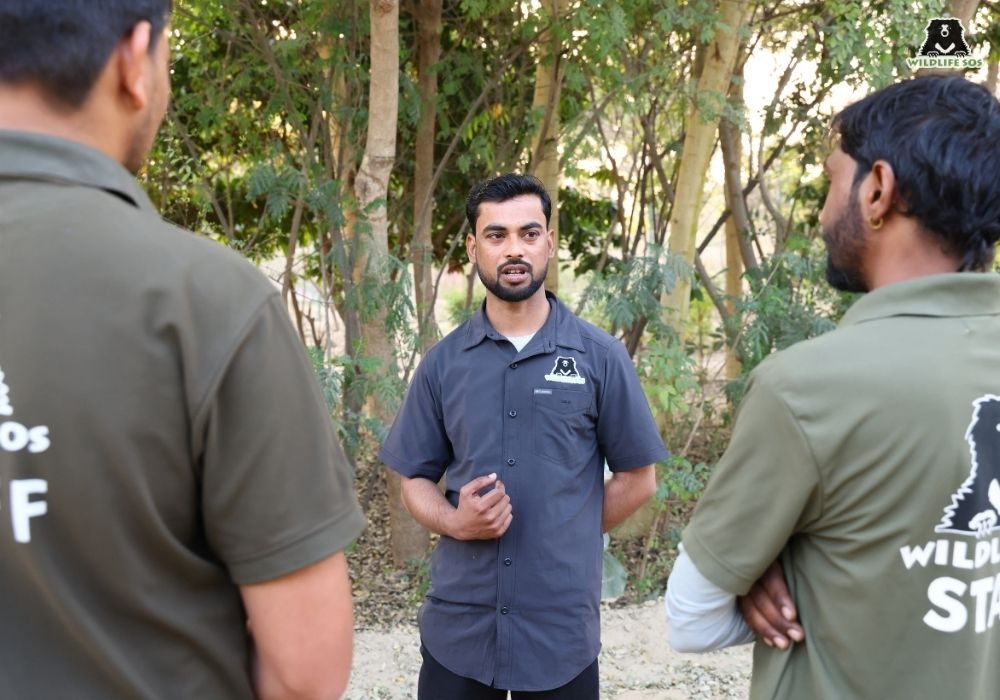
The man who emerged a hero in such a critical rescue was none other than Mr. Manoj Chaurasiya, a field researcher currently stationed at Wildlife SOS’s Agra Bear Rescue Facility (ABRF). Affectionately called Manoj ji by all at the centre, he has built his career with Wildlife SOS from the ground up. He regularly studies animal behaviour with extreme patience and a heightened sense of observation for his research. This regularly polished skill has added a sixth sense in Manoj ji that has been borrowed from the world of the wild! It allows him to naturally step into rescue operations as an erudite strategist.
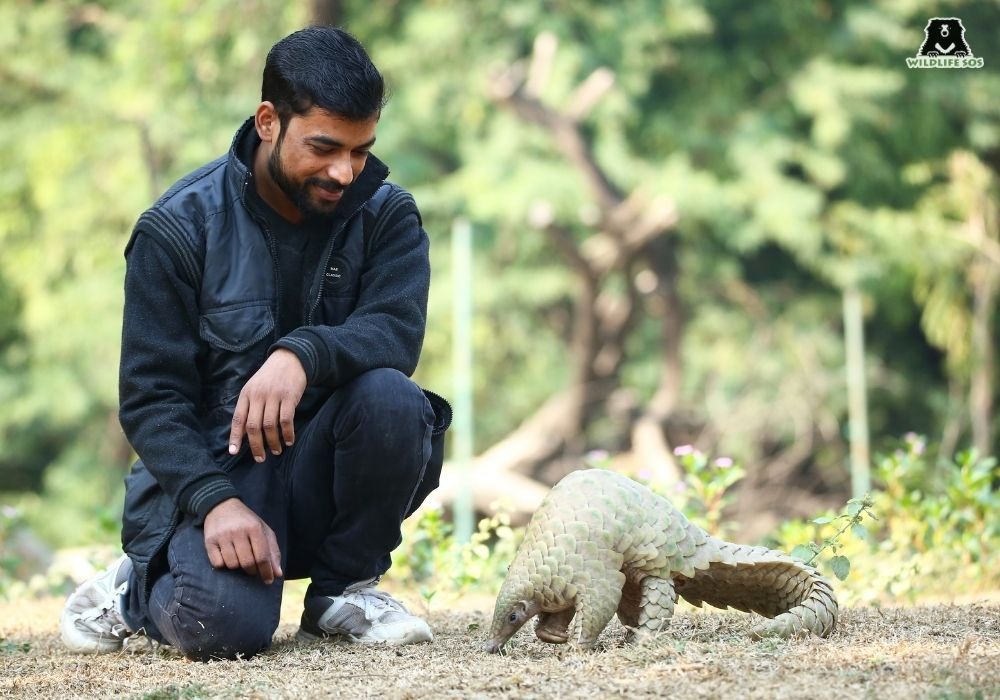
If one were to describe a regular day in the life of Manoj ji, it would be next to impossible. As a person consistently on the field, there is nothing “regular” in the fascinating diversity he is surrounded by. Self-taught and persistent with his work, Manoj ji takes his steps forward with each day as it comes, ready to deal with anything sudden or challenging that comes his way. Let’s get to know more about him.
What got you interested in wildlife?
My love for animals has always reached far and wide. Wild animals were no exception. Observing and understanding their behaviour always brought joy to me.
When did you join Wildlife SOS?
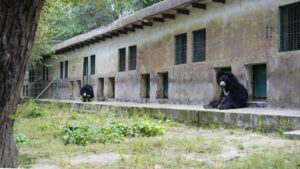
I joined Wildlife SOS in 2015. My father had been working at ABRF as a cook. He makes the delicious porridge that is served to the rescued sloth bears. He was always talking about the wonderful work that is being done for the welfare of rescued animals. I was intrigued and thought that the love I had for animals would translate well through this position.
What type of projects have you been a part of?
I have been involved in many projects ranging from surveys of primates in Agra to health assessments of elephants in Bandhavgarh National Park. Something that I initially worked on was the Monkey Sterilisation Project initiated by authorities and Wildlife SOS in the city of Agra. For that project, I learned a lot about rhesus macaque behaviour such as city foraging and their adaptations to live in an urban environment. Another survey I was a part of was the blackbuck census in the year 2018-19 around the Akbar Tomb in Sikandra. I am also the coordinator for the Agra Elephant Helplines.
Who is your conservation role model and how does the person inspire you?
I really look up to Mr. Kartick (Satyanarayan) sir, the co-founder of Wildlife SOS, because he is such a good spokesperson. Another role model would be Mr. Baiju (Raj M.V., Director of Conservation Projects, Wildlife SOS) sir, I am able to learn a lot from him not just about conservation, but also about rescues.
Who is your favourite resident animal(s) at Wildlife SOS?
Mischievous Mowgli and bubbly Bani! Both are young and full of life. They were rescued from difficult circumstances, and it makes me happy that we are able to give them a second chance at life.
What’s the one thing you wish more people understood about wildlife rehabilitation and conservation?
People should know how rescue and rehabilitation of animals is a crucial form of wildlife conservation. The most important thing while working for conservation is having compassion and love for each individual animal.
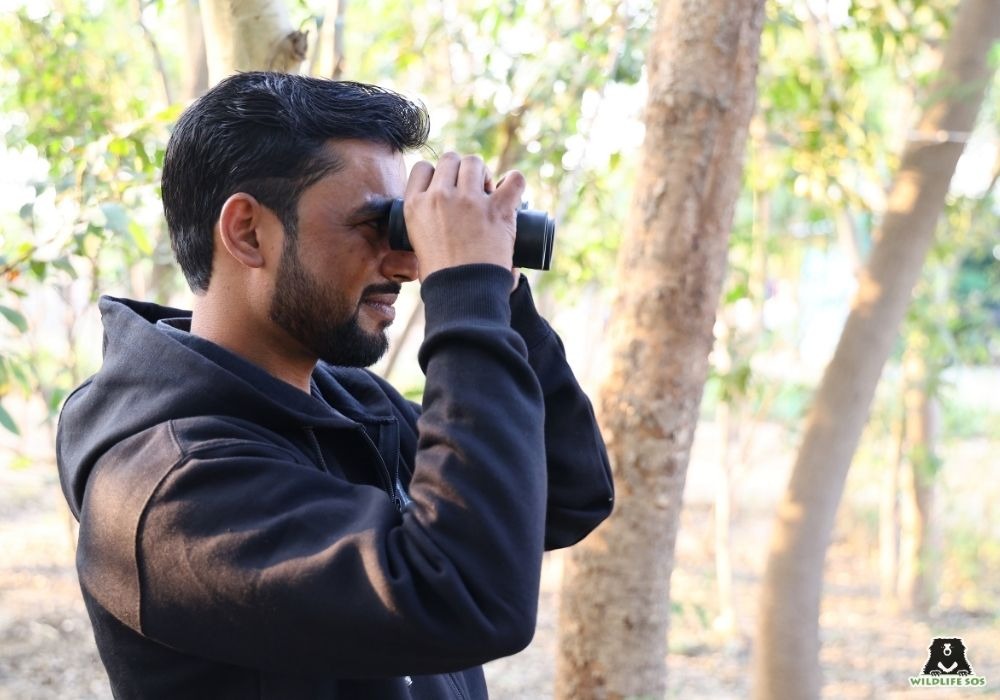
Now in his 11th year with Wildlife SOS, Manoj ji continues to be a steady and dependable presence across different teams. He is efficient at multitasking, plays an important role in coordinating field operations, and ensures that every effort towards wildlife projects comes to fruition. At ABRF, one might find him deeply engrossed in his watchful work. Manoj ji’s silent hours of observation might look like he’s relaxing within nature, but what’s brewing in his mind is nothing less than rich and insightful, and more importantly, it finds its roots in the quiet compassion he carries for the animals.
If you would like visit or volunteer at Agra Bear Rescue Facility and get a chance to interact with our wonderful team here, reach out to us at visit@wildlifesos.org
Feature Image: Atharva Pacharne/Wildlife SOS