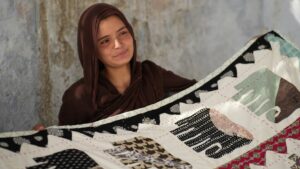
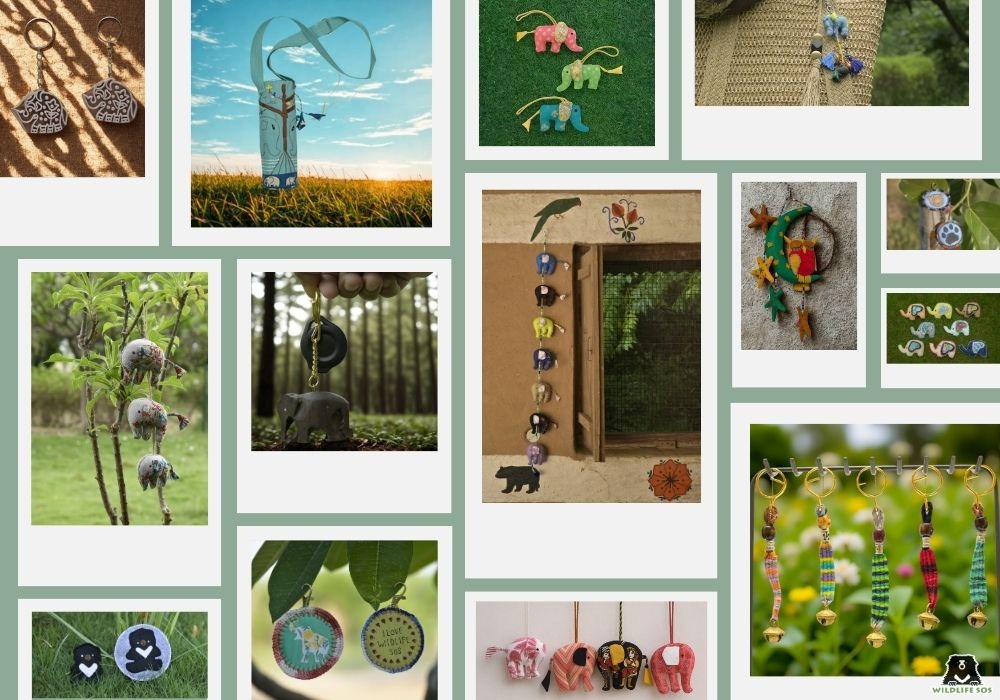
From bookmarks made of preserved petals to hand-embroidered elephant hangings that turn your walls vividly wild, Kalandar women supported by Wildlife SOS produce gorgeous goodies! In the joyful spirit the new year brings, we are proud to present a brand new collection of merchandise made by the talented Kalandar women who have put in their heart and soul into creating it!
The stunning merchandise collection includes keychains, zip tags, patchwork toys, magnets, home decor items, t-shirts, and dabu-print shawls. What makes each unique is the very fact that these handcrafted items are not mass produced. Instead, every piece is crafted with patience, precision and hours of careful work. This is what brings in the human-touch that so many of us hold dear in today’s world of mechanically produced products.
Taking this a level up, the skilled Kalandar women thoughtfully use eco-friendly materials, keeping the planet’s wellbeing central to their work. Items used are sustainably sourced to ensure minimal harm to the environment.
Creative Source of Livelihood
The products we showcase at Wildlife SOS gift shops are not just commodities on sale, they are, in fact, a source of livelihood for community families. Let us take a trip back in time to understand the plight of Kalandar women.
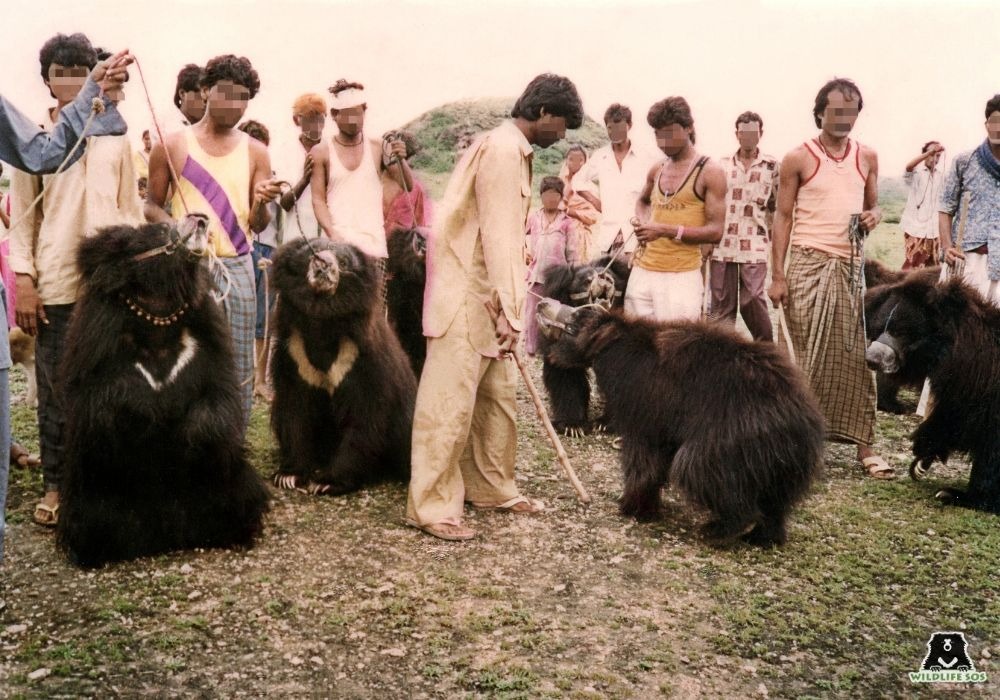
For 400 long years, the Kalandars were involved in the poaching of wild sloth bears. These bears were taken from their mothers at a very young age and trained to ‘dance’ or perform for the royal families in the Mughal era, and over time, for audiences on the streets under the scorching sun. Being a nomadic tribe, the Kalandars would travel with their bears and make them perform in different villages.
Wildlife SOS set on a mission to protect these bears from poaching and eradicate the ‘dancing’ practice altogether. Communicating with the members of the Kalandar community in their native language was helpful in making them understand the negative impacts of owning bears and treating them with harm. Upon gaining a sense of empathy, Kalandar individuals agreed to hand over their bears to the organisation for life-long care that included medical treatments and nourishing meals. But as the harsh practice was coming to a halt, so was the only source of livelihood for the community. What was now left to address was the financial insecurity that crept in among Kalandar people. This is why Wildlife SOS took a holistic approach in their project by introducing better options to sustain the community.
There was, however, a silent truth that existed within the community that had never been addressed. Lack of education and patriarchy had hindered the community’s progress, leaving the Kalandar women twice removed from securing any benefits — their presence was marginalised and voices were muted. Women providing any financial support to their families was unpermitted even as a thought.
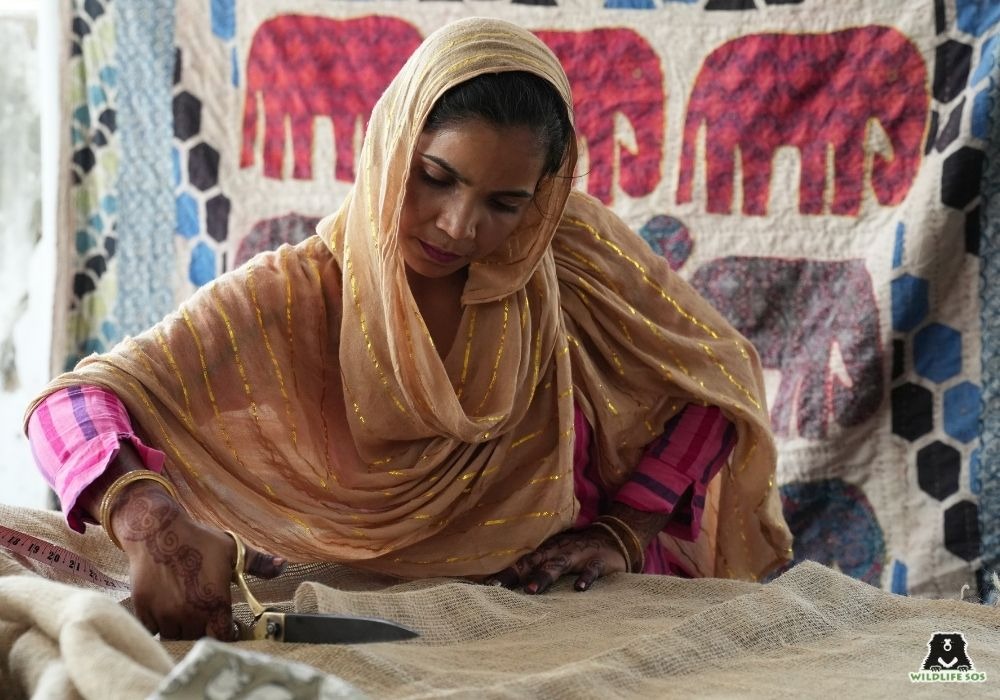
While initiatives to run small shops and stalls based on surveying local resources were promoted, Wildlife SOS stepped in to give the women a chance to finally step out of the shadows they were draped in. These women had a remarkable skill that had remained overlooked. They could create aari tari – an intricate form of Indian embroidery involving sequins and beads on bright cloth colours. Little did they know that they were carrying rich traditional knowledge that can be directed towards producing handmade items, which are highly regarded across the country and the world.
Stories Spun with Threads
Recognising the scope of their skill, Wildlife SOS established Sewing Training Centres in Rajasthan, one of the states where Kalandars had settled down. Mentors come in to take lessons and push their creativity for different types of art forms such as crochet and block painting. Passed on generationally, their indigenous abilities were, for the first time, being directed towards producing products that are able to meet the demands of today’s market. Traditional art was now being sewn to create modern items such as magnets, zip tags and even wall hangings.
Currently, there are two centres, one in Tonk and one in Chaksu, that are functioning successfully in the state. Recognising the responsibilities Kalandar women have to meet at home, gentle and flexible timings are offered to them so that they can come to the training centre according to their daily schedule and energy. Through this initiative, over 400 women have not only learnt and refined their skills, but have also gained a deep sense of pride by being recognised.
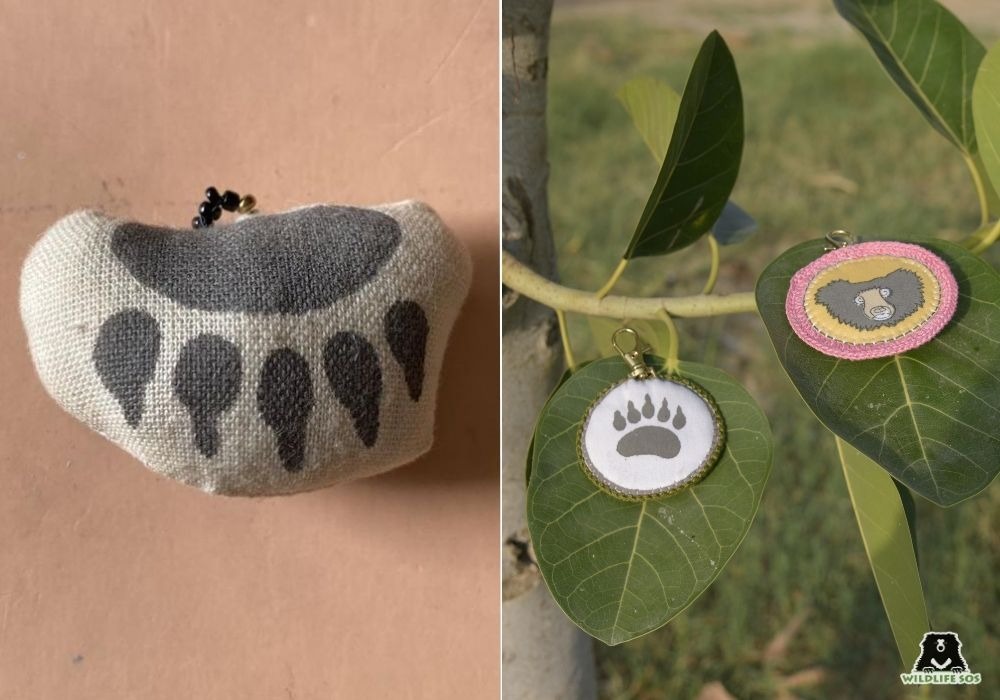
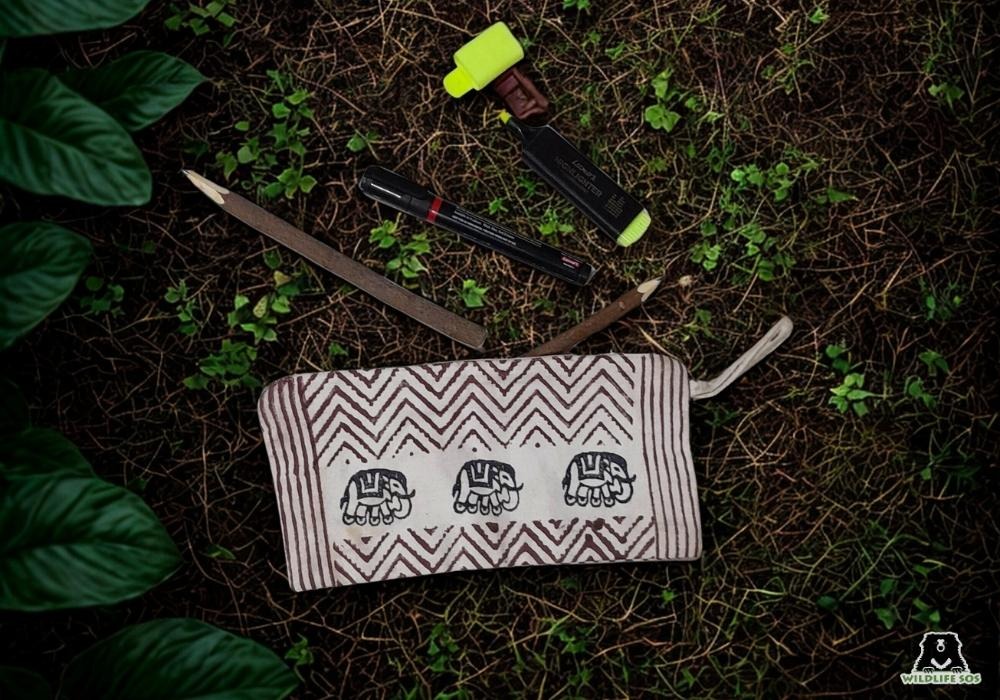
The entire collection of handcrafted merchandise is available to purchase at the gift shops of Wildlife SOS’s Elephant Conservation & Care Centre (ECCC) and the Agra Bear Rescue Facility (ABRF). Among the items placed are eyecatching pencil pouches that have been designed with block printing, and there’s an interesting story behind the making of them. A master called Mr. Rafid was invited to the training centre to conduct sessions on hand block printing. The most fascinating thing about the old gentleman was that despite having a blurry vision, he lent remarkable insights on this art — even if he had to bring what he was working on right up to his nose to identify the colour or design. The thick glasses he wore truly reflected his years of experience. When asked to replicate a colour, he would bring the reference colour close to his eyeglasses and then instantly mix seemingly random primary colours to reproduce the same exact colour, leaving the classroom astonished! The Kalandar women, after learning this technique, were excited to put this newly discovered technique to use.
The training centres in Rajasthan have become a haven for the women to gather around. While sharing the moments of designing products, choosing patterns and the right combination of colours, they also share laughter and conversations that reassure each other of loyal friendships. With courage and confidence slowly and steadily following their accomplishments, Kalandar women are empowered to make decisions for their family, such as the education of their children and the right age of their marriage. Many have voiced their interest for their child’s higher education and supported the vision which leads to a promising future.
We invite you to visit ABRF and ECCC in Uttar Pradesh where the wonderful talent of Kalandar women are on display at our gift shops. Every purchase supports, promotes and honours the story of their empowerment.
Learn more about the beautiful handmade products made by Kalandar women by downloading our catalogue Wild Treasures.
To assist Wildlife SOS in enabling more Kalandar women to secure promising means of livelihood, please consider making a donation towards our tribal rehabilitation programme.
Feature Image: Mradul Pathak/Wildlife SOS