For over 400 years, sloth bears had been captured and exploited as ‘dancing’ bears in India. As part of this archaic tradition, their long snouts were cruelly pierced for a rope to pass through so that they could be painfully tamed to perform.
Our rescued bears had met with this star-crossed fate. At a young age of only a few months, they were separated from their mothers in the wild, and were forced to perform for audiences on the streets. Such a life left these mammals with lifetime traumas. The bears rescued were found with several health issues as a consequence of years of captivity and improper diets. Wildlife SOS, with the help of various organisations and government officials, has been able to rehabilitate as many as 628 sloth bears from this trade declared illegal back in 1972. It was a moment of great joy and relief when the last sloth bear was saved from the grip of this brutal practice in 2009. The non-profit charity continues to rescue sloth bears that are targeted by poaching, snare-traps, and dire conflict situations.
Wildlife SOS was established in 1995 to free sloth bears from their harsh conditions, provide them with safe residences, and sustain their medical care as well as healthy nourishment. Thirty years on, the mission remains to safeguard sloth bears in distress, leading our teams to launch diverse studies that have so far been lacking for this understudied species.
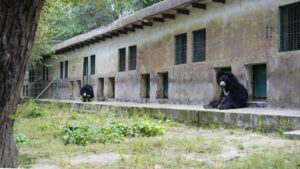
Currently, Wildlife SOS has four centres for rescued sloth bears across the nation, namely, Agra Bear Rescue Facility (ABRF), Bannerughatta Bear Rescue Centre (BBRC), Van Vihar Bear Rescue Facility (VVBRF) and West Bengal Bear Rescue Facility (WBBRF). The sloth bears now residing in calm environments of these centres could not be released back into the wild because they never received maternal guidance for survival skills. Malnourished, weak, injured, with some left impaired, these sloth bears also required consistent care for their overall well-being. At the facilities, the sensitised veterinary team has also had the opportunity to closely observe the behaviour pattern of sloth bears, and focus on conducting in-depth research on matters such as dental care and enrichment tools that are significant for the welfare of rescued bears.
Emotional Healing, Trust Building & Medical Care
In the rescued bears’ painful past, brutality experienced led them to have an ingrained fear of all humans. This distress was a massive challenge to address in the early stages of their care. Over time, our teams have firmly established how every bear under their care is unique and requires careful charting of their needs. Caregivers show kindness to anxious bears, slowly establishing bonds of trust and security with them. When bears acclimatise to their safe and peaceful environment, light interactions with target training are introduced. With each response to a gentle cue, such as presenting their paw of examination, sloth bears are rewarded with treats such as honey and dates. This method highly motivates the bears to cooperate during medical checkups, and helps the team to safely address chronic health issues as well.
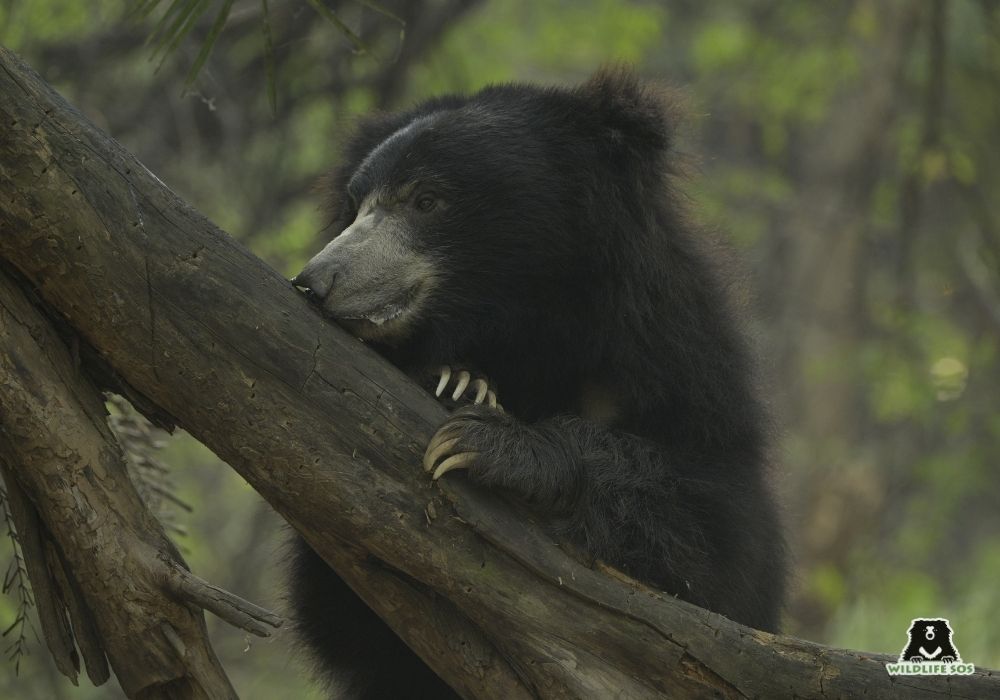
One of the bears named Digit was only five months old when Wildlife SOS rescued him from performing on the streets. When he first arrived at ABRF, he was extremely terrified of humans. In a similar case a year later, Titli was rescued when she was barely eight months old. Attentive and compassionate care has helped both bears find courage and confidence. Digit and Titli remain extremely comfortable around their caregivers, who have consistently addressed their needs since the last decade and a half. While Titli tends to follow them around, Digit has discovered a way to communicate with them: he lets out huffs to remind them to bring more of his tasty treats!
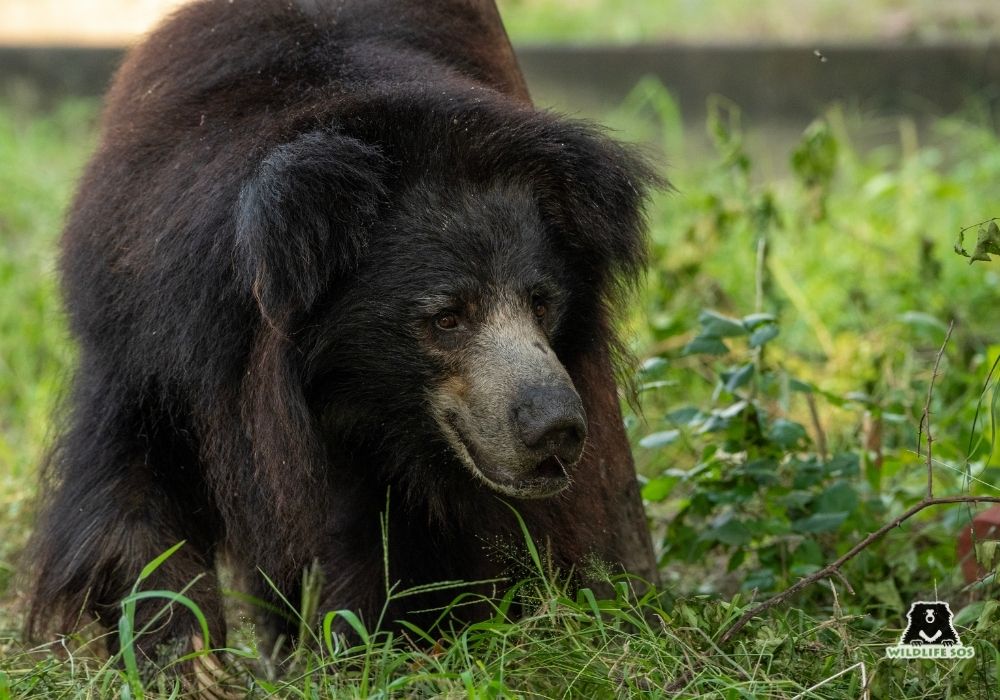
A lot of our bears rescued at a young age have now crossed the age of 16, entering the geriatric phase of their life. Caregivers and the veterinary team pay close attention to elderly bears so that their needs are met, and they remain at ease. Medical care is supplemented with appropriate diet (that is softened for easier consumption), while enrichments are modelled to suit their physical energy and body condition. By now, these sloth bears strongly believe in their caregivers giving them routine care.
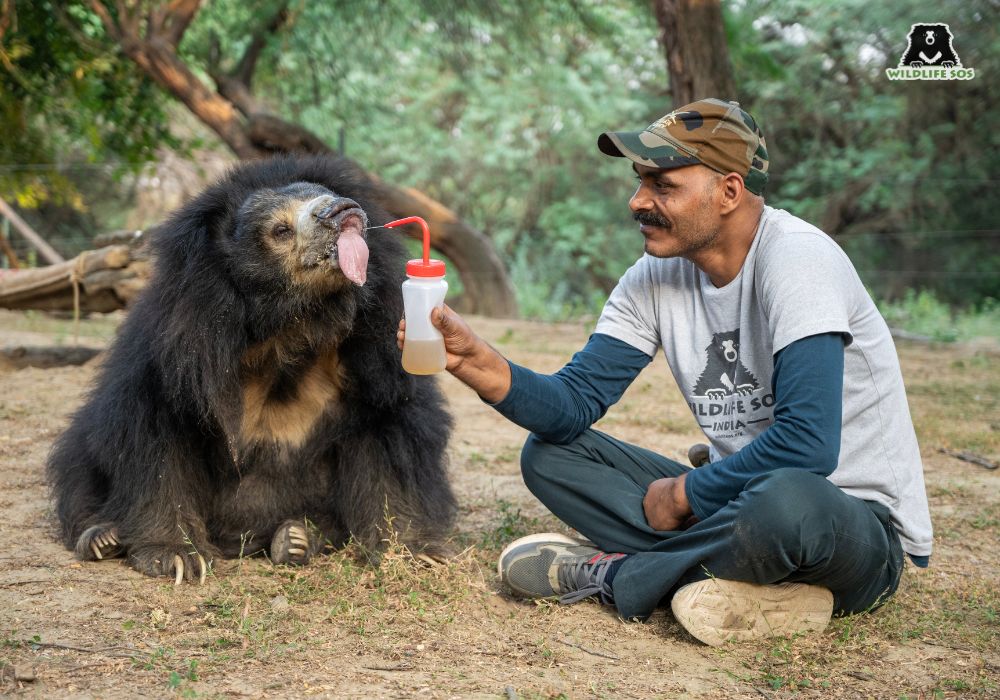
Sloth bear cubs in the wild are known to stay with their mothers for at least the first two years, learning how to survive in the wild, before they become independent and solitary by nature. Wildlife SOS has come across cases where cubs have ended up being orphaned due to the mother dying because of conflict situations. Due to such circumstances, our team has taken these baby sloth bears under their wing for long-term care and protection. For instance, Mowgli was a three-month-old cub attempting to nurse from his mother who had passed away due to electrocution in Madhya Pradesh. The cub had suffered some electrical burns on his back and forehead himself. Mowgli’s natural nourishment and guidance to traverse the wild were lost to him. Afraid and alone, he was given warmth, care and neonatal care at ABRF, which has resulted in him becoming a healthy and confident bear, now crossing the age of eight.
Enrichments and their Benefits
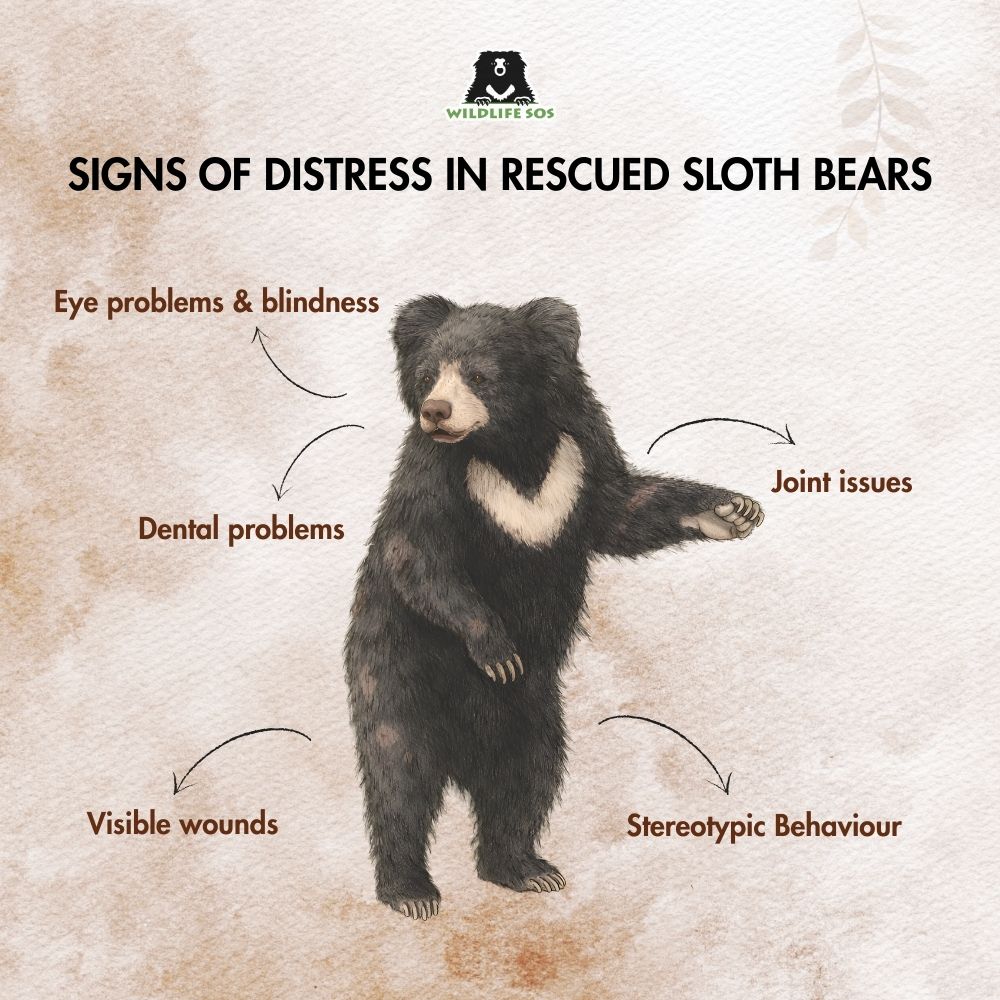
Enrichments for animals under rehabilitated care are activities designed to enhance their physical and mental well-being. It is extremely necessary for bears rescued from stressful conditions because they show stereotypic behaviour such as excessive licking of paws and head swaying. Enrichments can be created as physical structures such as hammocks and wooden platforms, or they can be boosters of sensory stimuli such as scents and sounds. Such tools encourage natural behaviours that bears would exhibit in the wild.
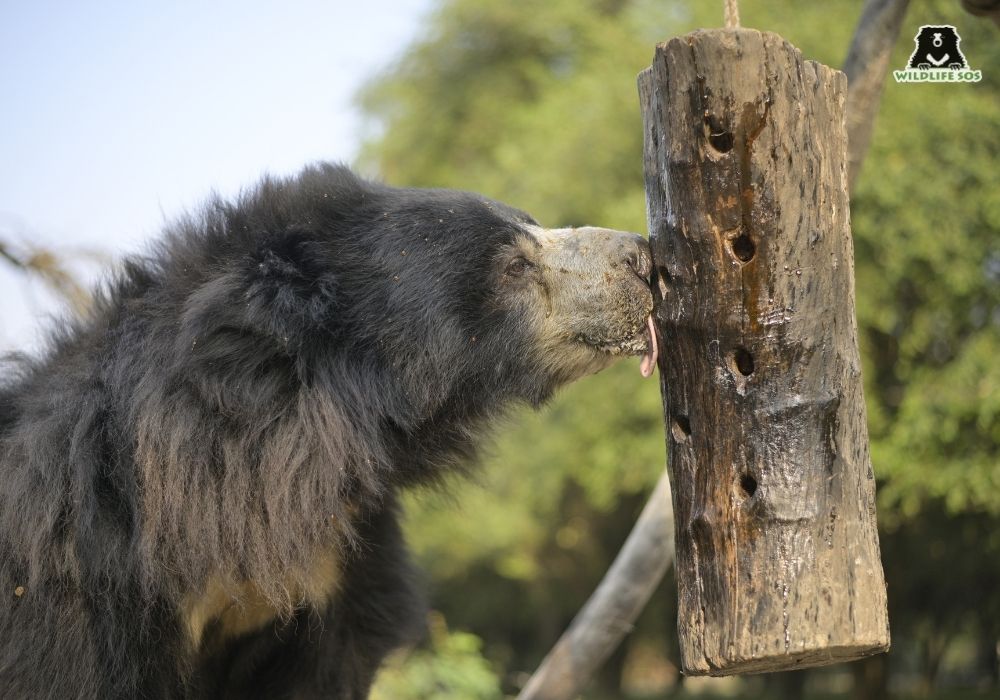
At Wildlife SOS, the rescued bears are provided with a variety of enrichments that are an essential part of their daily activities. These include hammocks, tyre feeders, enrichment balls, puzzle feeders and rolling barrels among more. All of these are well thought out so as to promote the bears’ natural behaviours.
Enrichments are also designed and laid out to suit each bear’s physical abilities. Odum, a sloth bear of comparatively short stature than other bears, resides at BBRC. Keeping his height in mind, the caregivers have placed his hammock at a lower height. This makes it easier for Odum to reach and utilise the enrichment to its full extent.
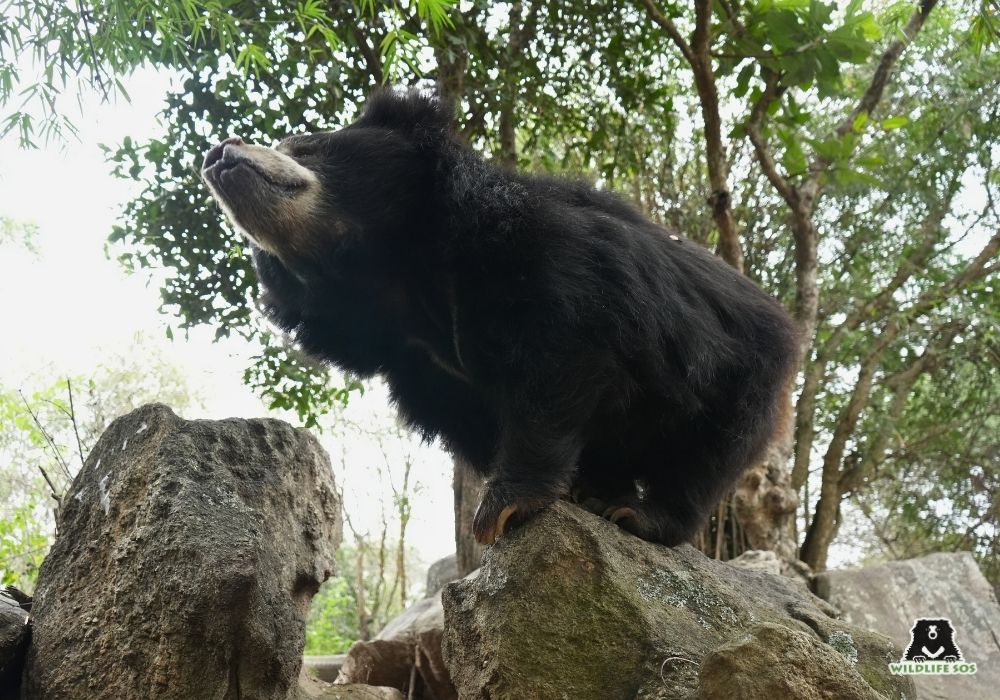
Geriatric bears tend to be slow in their mobility and are less energetic, which prompts caregivers to modify enrichments that allow them to continue indulging with activities at their pace. Enrichments that require climbing are replaced with those that stimulate their olfactory senses, such as those that are covered with tempting honey or peanut butter that remain their favourites.
Socialisation Among Rescued Sloth Bears
Sloth bears have been known to be solitary animals in their natural habitat. When we talk about the bears that we have rescued from distress, we are referring to animals that were captured by poachers and illegal traders when they were only cubs. These mammals never had a chance to familiarise themselves with their survival instincts and social behaviour.
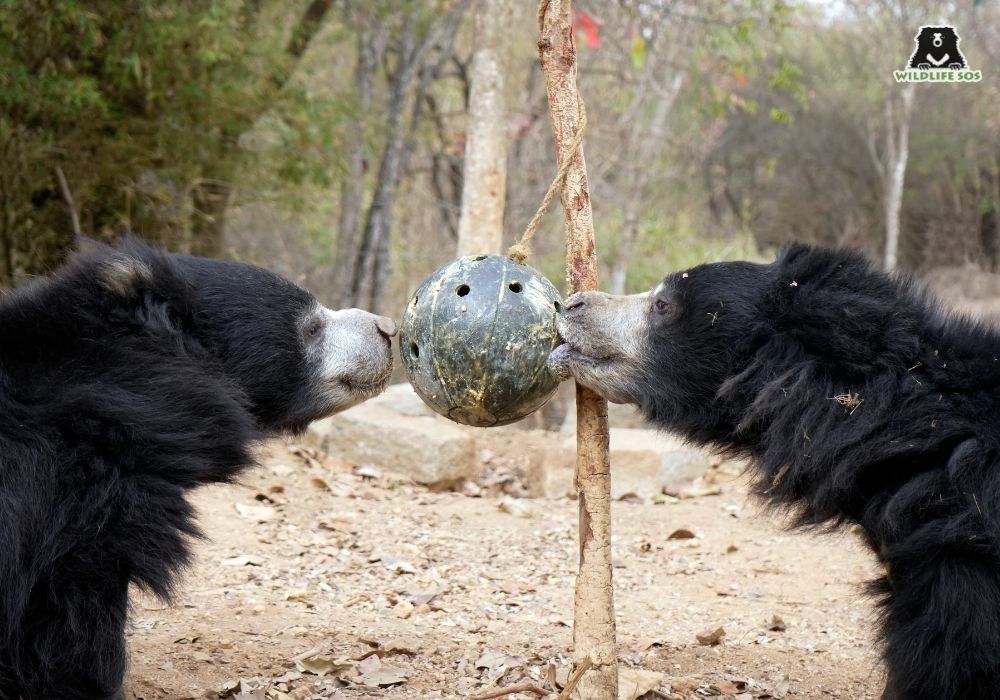
It’s interesting to know that every resident sloth bear at our facilities is different. Some prefer to be completely alone, while some like to play with the others. Some bears might even be comfortable in the company of others but choose not to directly interact with each other. The caregivers have also observed that younger bears are much more interactive with other sloth bears than the older ones are. For example, senior sloth bears Arifa and Leena are companions sharing the same enclosure at ABRF, but they tend to enjoy indulging in their own individual activities.
Molly and Ron, on the other hand, are recognised for their playful bond in our rescue facility in Agra. Molly shows her protective nature towards her younger companion Ron, and the two bears also participate in digging pits together across their field.
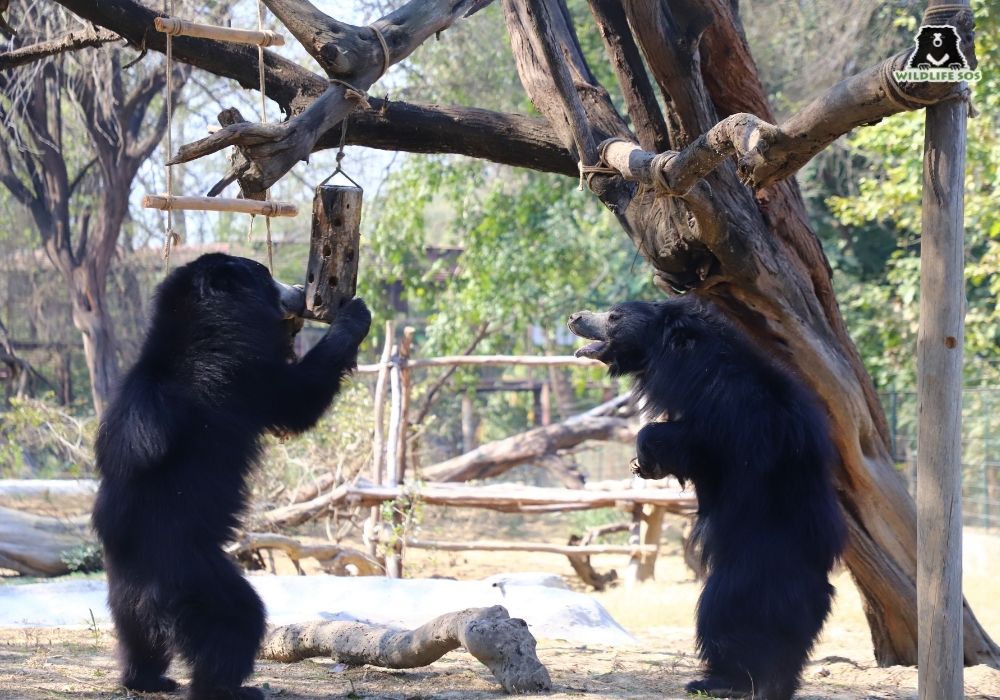
Expression of Natural Behaviours
The presence of natural behaviours is used as a key indicator of an animal’s well-being under rehabilitation. An increase or consistency in showing natural behaviour is associated with improved welfare.
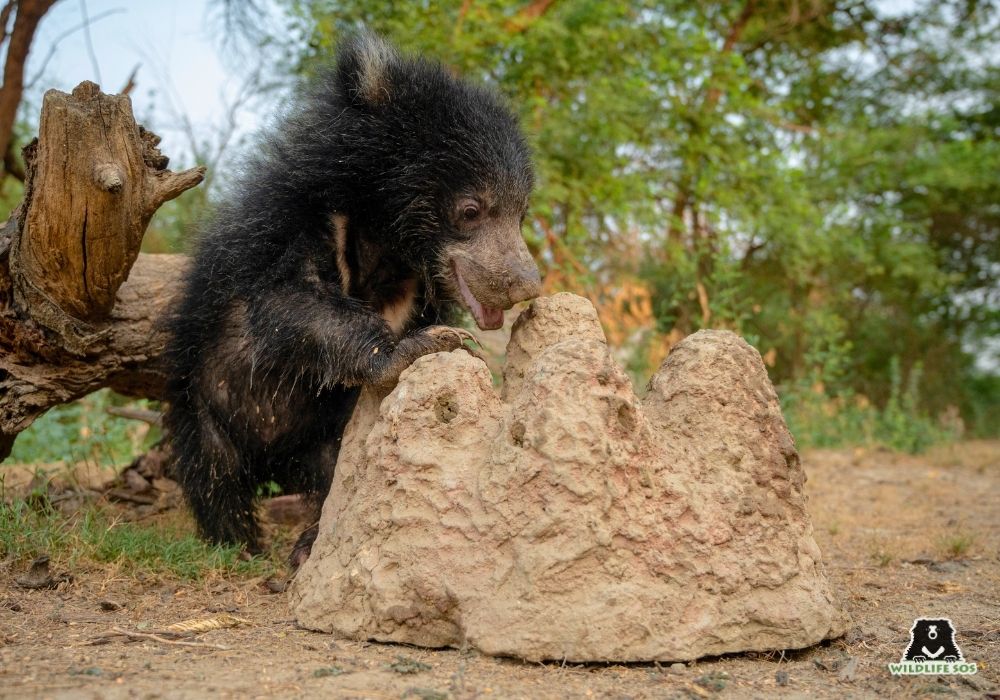
It is important therefore to maintain their surroundings as one that would encourage them to exercise their body and mind just as they would do in their natural habitats. Sloth bears in the wild mainly feed on fruits, berries, flowers, honeycombs and insects. At our centres, they are offered not only delightful portions of fruit and honey, but also opportunities to apply their skilful ability to dig the ground for ants and termites using their curved claws.
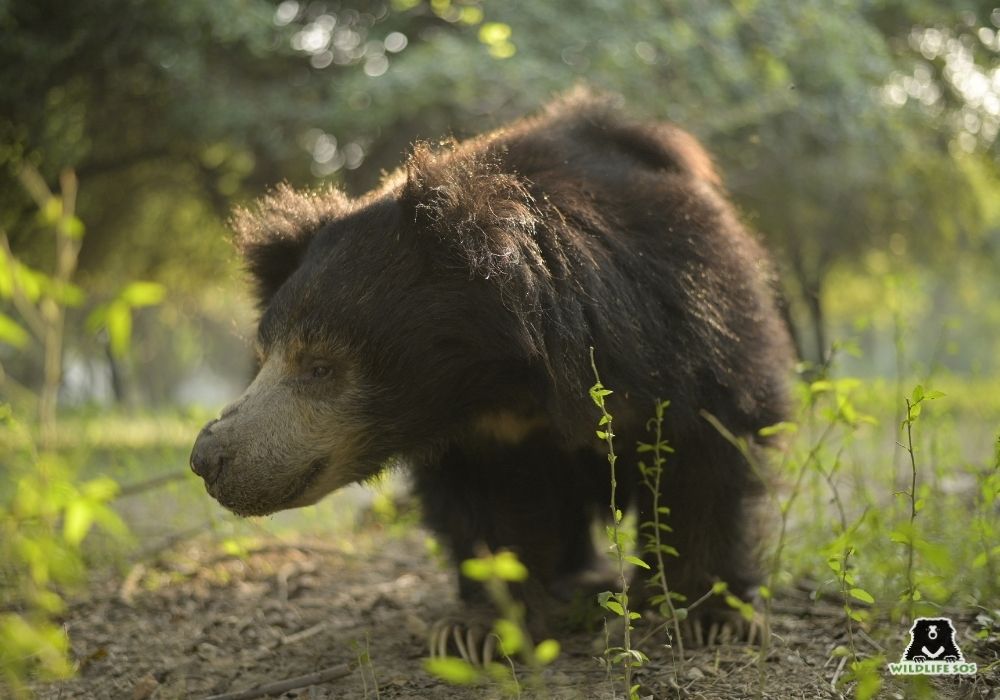
Bear cubs wrestle with each other playfully in the wilderness. It helps them develop muscle and it is also good practice to defend themselves against predators such as tigers. Sloth bears at our centres engage in mock wrestling with each other as well, a fascinating sight that shows how their innate traits come alive in an environment mimicking their forested landscape.
Our rescued sloth bears have persevered through harsh realities, as neglected ‘dancing’ bears, and now as victims of snare traps laid for poaching, habitat fragmentation and loss, and dire conflict situations. We always pray these cease to exist. Wildlife SOS rescues and rehabilitates bears caught in distress, so they can lead lives that support their health and overall well-being.
Please consider donating for the welfare of these sloth bears. You can also choose to sponsor a bear or any other rescued animal on a monthly basis.
Feature Image: Kunal Malhotra/Wildlife SOS