“O sleep, O gentle sleep, Nature’s soft nurse, how have I frightened thee, that thou no more will weigh my eyelids down, and steep my senses in forgetfulness?”
— William Shakespeare
Tom Rath, an American scientist who deeply studies sleep, once said that sleep is an investment in the energy you need to be effective tomorrow. This statement has been proven time and again. Quality sleep restores cognitive function, stabilises emotions, and replenishes physical energy, allowing better decision-making and performance the following day.
But is this true across the animal kingdom? Or is it only humans who have easy access to the realm of dreams?
Sleep, across species, is not simply the absence of wakefulness. It is not a switch that pauses the body. Rather, it is an actively regulated biological state shaped by brain activity, internal timing systems, and evolutionary pressures.
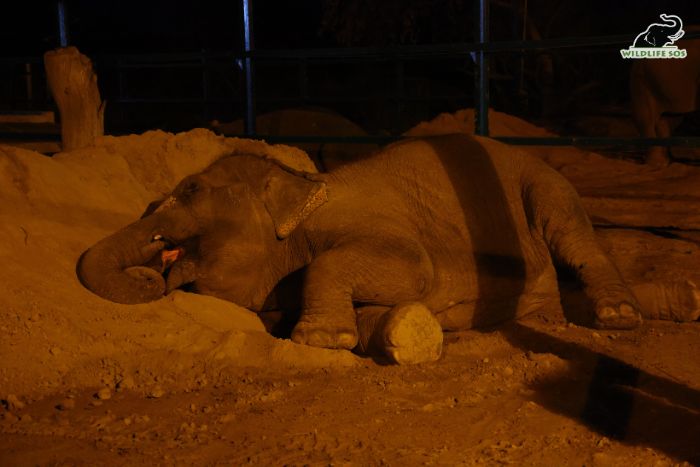
In mammals, sleep consists of two primary states: non-rapid eye movement (non-REM) sleep and rapid eye movement (REM) sleep. REM sleep is often referred to as paradoxical sleep — a term reflecting its strange duality. During this phase, the brain shows activity patterns resembling wakefulness, yet the body remains largely immobile due to temporary muscle atonia.
Muscle atonia is the near-complete loss of skeletal muscle tone during REM sleep. It acts as a protective paralysis preventing the body from acting out dreams and invertedly hurting oneself. This occurs through inhibition of spinal motor neurons. The sleeper appears still, but neurologically, the brain is intensely active.
In a species as large and cognitively complex as elephants, understanding sleep is not only fascinating, it is essential for welfare and management. Especially because elephants challenge many assumptions about mammalian sleep. They are among the shortest-sleeping terrestrial mammals studied to date.
Circadian Rhythms and Internal Timing
To understand elephant sleep, we must first understand the two biological processes that regulate sleep in all mammals.
- The Circadian Rhythm
Like humans and most animals, elephants follow a circadian rhythm — a roughly 24-hour internal cycle influenced by environmental cues such as light and temperature. This biological clock determines when an animal feels alert, when hormones fluctuate, when feeding occurs, and when sleep becomes likely.
Elephants are generally most active during the day, foraging and socialising. Their deepest rest typically occurs at night, often around midnight and again before dawn.
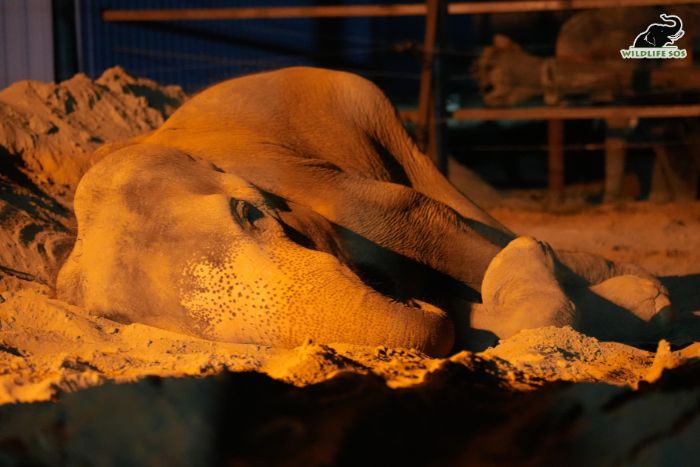
Unlike humans, elephants do not consolidate sleep into one long nocturnal stretch. Instead, their circadian rhythm supports a fragmented sleep architecture, where rest is distributed across shorter bouts. This pattern likely evolved due to ecological pressures like the need to travel long distances, consume large quantities of vegetation, and remain vigilant.
- The Homeostatic Process
The second regulator is the homeostatic sleep drive, often described as sleep pressure.
The longer an animal remains awake, the stronger the physiological drive to sleep becomes. Once sufficient sleep occurs, this pressure decreases. Humans experience this as increasing drowsiness after a poor night’s rest, followed by recovery sleep.
These two processes — circadian rhythms and homeostatic pressure — work together to ensure that the animal gets its required amount of sleep.
Sleep is not passive. During sleep, tissues repair, hormones regulate, immune functions strengthen, and memories consolidate through cycles of REM and non-REM stages.
Interestingly, research suggests that elephants possess a flexible homeostatic system. Despite sleeping very little, they do not consistently exhibit the severe breakdown observed in laboratory rodents subjected to forced sleep deprivation. This suggests evolutionary adaptation to intermittent sleep loss.
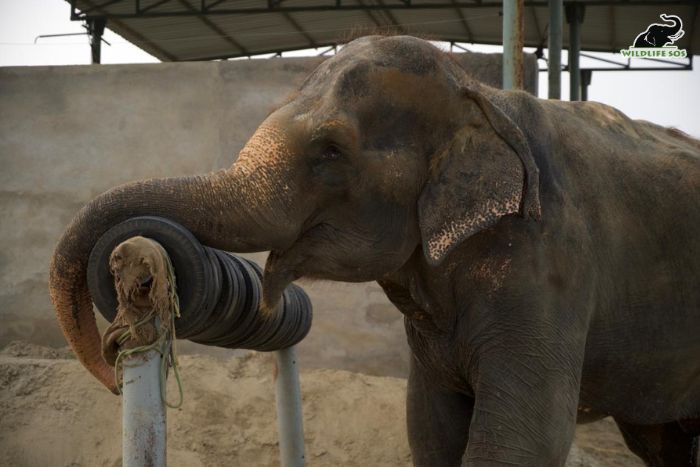
The Architecture of Sleep
Sleep is structured. It unfolds in stages and cycles.
In humans, one sleep cycle lasts approximately 90–110 minutes, alternating between non-REM and REM phases. A typical night consists of four to six cycles, with deep sleep dominating early and longer REM periods occurring later.
Small mammals’ sleep cycles are much faster — sometimes every 10–15 minutes. Marine mammals may even display unihemispheric sleep, where one half of the brain rests while the other remains alert.
Elephants, however, do not follow such predictable patterns.
Field research suggests African and Asian elephants may sleep as little as two hours per day in the wild, often in short bouts. Under managed care, their total sleep time may extend to three or four hours because the environment is safe and undisturbed.
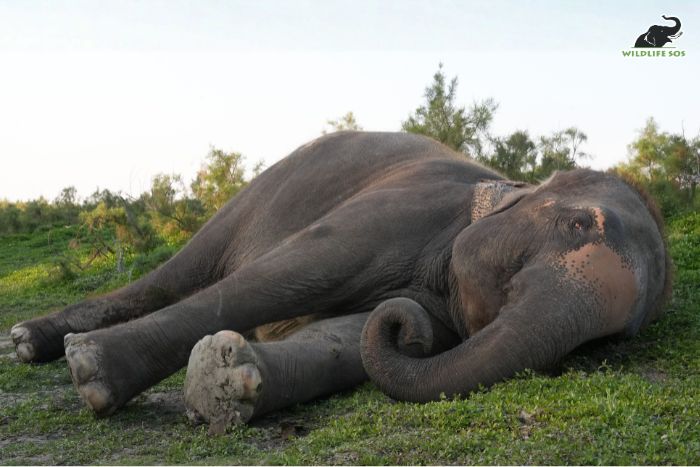
Standing Rest and the Limits of Paradoxical Sleep
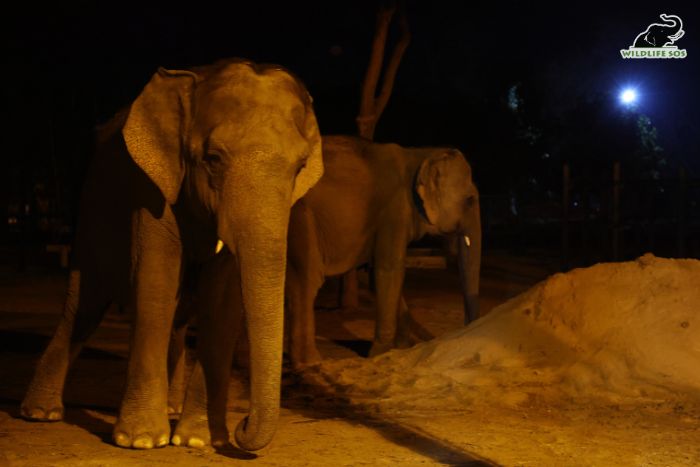
Other than their short sleep duration, another interesting fact about an elephant’s sleep process is that they exhibit two primary resting forms.
- Standing Rest
Where the elephant rests while standing on all four of their legs. This is possible because anatomically, elephants are built differently from most mammals. Their limbs align almost vertically beneath the body, functioning like structural pillars. This allows them to bear immense weight with minimal muscular effort.
Thus, in this position, elephants enter lighter stages of non-REM sleep while standing. These brief episodes allow partial rest while maintaining readiness which is useful for vigilance and accommodating their large body mass.
However, standing rest does not typically allow access to REM sleep.
- Lying or Recumbent Rest
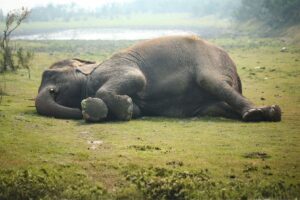
For deeper sleep, particularly REM sleep, elephants must lie down in lateral recumbency.
Because REM sleep involves muscle atonia, it would be physiologically unsafe for a multi-ton animal to experience it upright. Recumbency therefore becomes neurologically essential.
During REM, memory consolidation and neural restoration occur. In elephants, REM appears to take place primarily, if not exclusively, during recumbent rest. Only a small portion of their already brief total sleep time likely consists of REM.
Despite this limited duration, elephants appear adapted to function efficiently with comparatively little REM sleep. And they are famously known for their strong memories and astounding intelligence. Another proof of how remarkable this species is.
Ecological Sleep Loss: When Survival Overrides Sleep
One of the most compelling concepts in sleep research is ecological sleep loss, which is when animals may temporarily reduce sleep in response to environmental pressures.
Unlike laboratory deprivation which is unnaturally caused, ecological sleep loss occurs naturally mostly during migration, mating, predator vigilance, or social disruption.
In elephants, extended travel, instability, or perceived threats can reduce total sleep time. Yet they appear capable of compensatory adjustments later. This flexibility is essential for a species that must consume vast quantities of vegetation daily, travel long distances, and live within complex social groups.
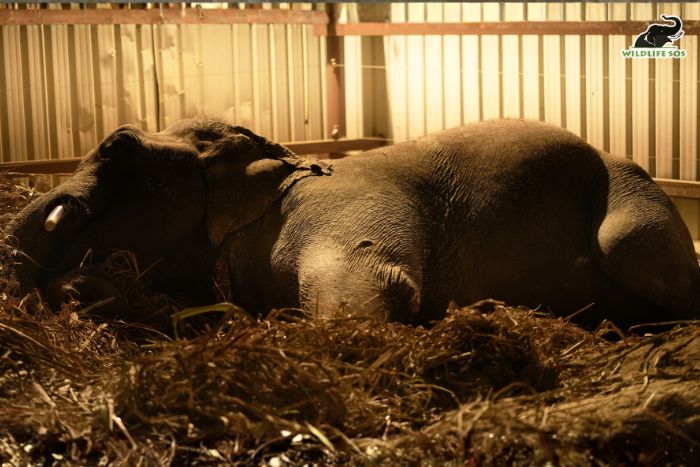
Sleep, for elephants, is not rigid. It is adaptive.
However, absence of immediate collapse does not mean absence of cost. Subtle cognitive, metabolic, or immune consequences may still accumulate. This is an area that requires further study in megafauna.
Comparative Sleep Across Species
Sleep duration varies dramatically:
- Bats: 18–20 hours
- Lions: 13–15 hours
- Humans: 7–8 hours
- Horses: ~3 hours
- Elephants: 2–4 hours
Sleep need is shaped not just by body size, but by ecological niche, diet, and vulnerability.
Large herbivores like elephants must spend extensive time feeding. Sleeping longer would reduce foraging opportunities. Additionally, fragmented, polyphasic sleep allows periodic vigilance.
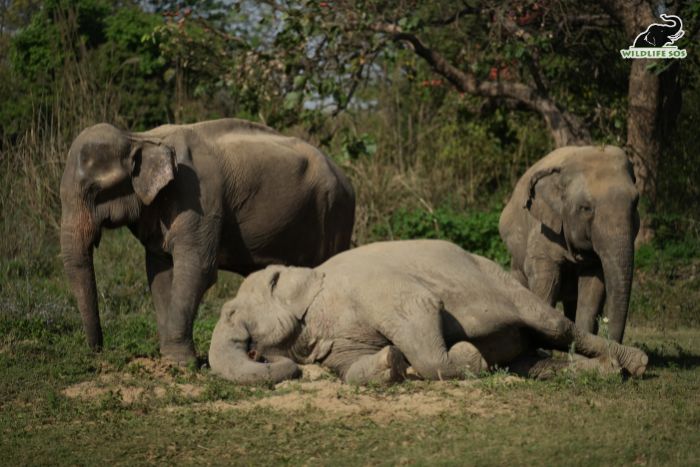
Elephant sleep reflects evolutionary compromise — they are attuned to get enough restoration to maintain cognitive sophistication, but minimal vulnerability.
Substrate, Side Changes, and Musculoskeletal Relief
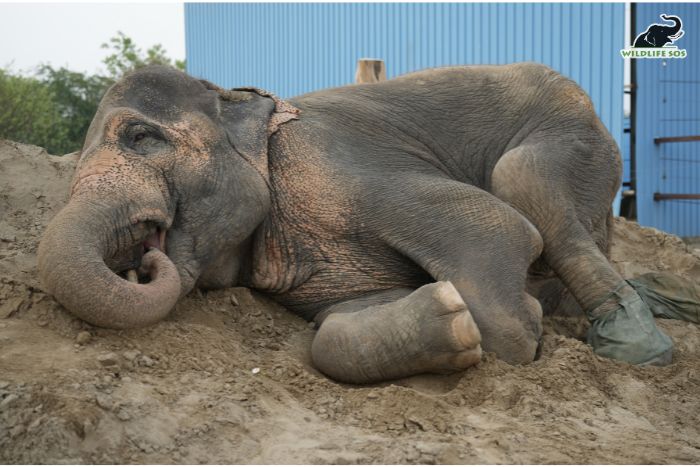
Welfare research in zoo and semi-captive settings shows that substrate quality significantly influences recumbent sleep. On soft sand, elephants lie down longer, have longer sleep bouts and change sides more frequently.
Side-changing is important, especially for such a large and heavy animal like the elephant, as prolonged pressure on one side of such a massive body can compromise circulation and joint comfort. Alternating sides likely support musculoskeletal recovery as well.
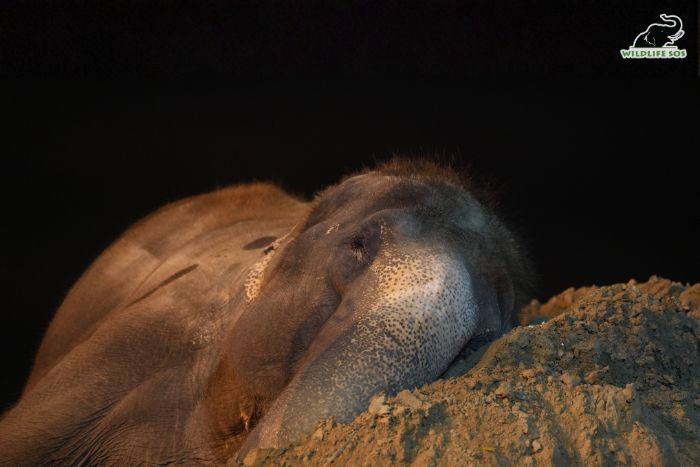
If recumbency is limited due to hard flooring or discomfort, opportunities for REM decrease — potentially affecting neural homeostasis, which is basically the brain’s way of keeping its activity balanced. When nerve cells become too active or too quiet, built-in mechanisms adjust their activity so the brain can continue functioning efficiently and safely.
Environmental design therefore influences not just posture, but brain health.
Age, Development, and REM Distribution
Sleep requirements shift across lifespan for all species.
Calves sleep significantly longer than adults, likely due to higher REM needs for brain development during that age. Across mammals, REM is more abundant early in life and decreases with maturation.
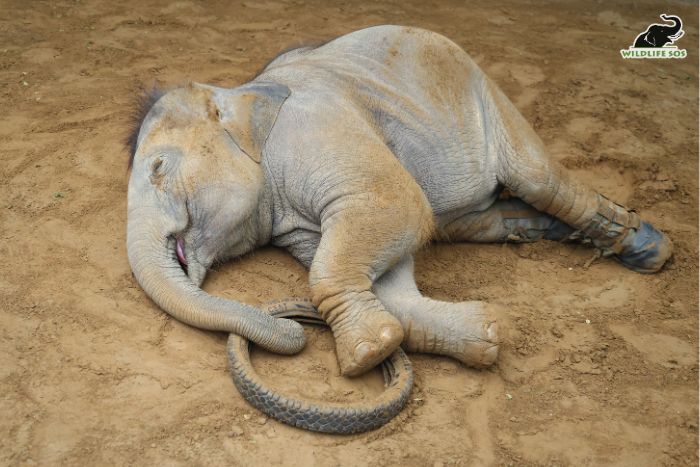
As elephants mature, total sleep duration decreases. In geriatric individuals, difficulty lying down may reduce REM access. Conversely, excessive resting can signal illness.
Monitoring sleep behaviour becomes a valuable welfare indicator.
Do Elephants Dream?
Because REM sleep is associated with dreaming in humans and other mammals, the presence of REM in recumbent elephants raises a compelling possibility.
Direct evidence is limited. But when an elephant lies stretched on her side — trunk resting, eyelids soft, body still, and sometimes snoring — subtle neurological processes may be unfolding beneath that quiet exterior.
For a species known for memory, emotional complexity, and intricate social bonds, REM sleep may play a crucial role in maintaining neural health.
The Science Beneath the Stillness
At first glance, a sleeping elephant appears simply at rest.
But beneath that stillness lies a finely regulated interplay of circadian rhythms, homeostatic balance, paradoxical sleep, ecological adaptation, and musculoskeletal design.
Understanding these layers allows caregivers to create environments that support not just survival, but restoration.
For rescued elephants who may once have known instability or fear, the ability to lie down fully, enter REM sleep, and rise again with ease is not just a biological mending. It is healing.
If you would like to be part of providing these gentle giants the safety they need to rest, consider supporting our work. Your contribution helps ensure that abused elephants finally gain access to environments where they can feel secure enough to lie down on the soft earth to sleep deeply — and perhaps, even dream.
Feature image credits: Mradul Pathak