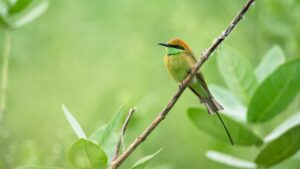
Wildlife SOS’s series “Things You Didn’t Know About” explores fascinating and lesser-known facts about various species. Our writers spotlight one inhabitant of the wild, unveiling its unique characteristics and roles in the ecosystem. In this blog, you will get to know about a species of bird that hosts vividly coloured members in its family that have the amazing aerial ability to hunt — the bee-eaters.
Imagine turning a corner of the street and a flash of green flies past. You know you also saw a tail having a slim and strange extension… but you’re eager to know more. Welcome to the world of bee-eaters! These birds fly with remarkable agility, and if you’ve spotted one, it’s highly likely that its flock is nearby.

As their name suggests, bee-eaters feed on bees and other aerial insects. What makes them unique is their graceful way of grabbing their prey mid flight! As many as 31 species of bee-eaters have been listed by the IUCN (International Union for Conservation of Nature) that are found across four continents: Asia, Australia, Africa and Europe. Their sub-species found in these regions may have varied hues, but they all share certain physical characteristics such as a medium-sized, slender body, and a beak that curves to serve them well for a hunt.
India is home to six sub-species of the bee-eaters.
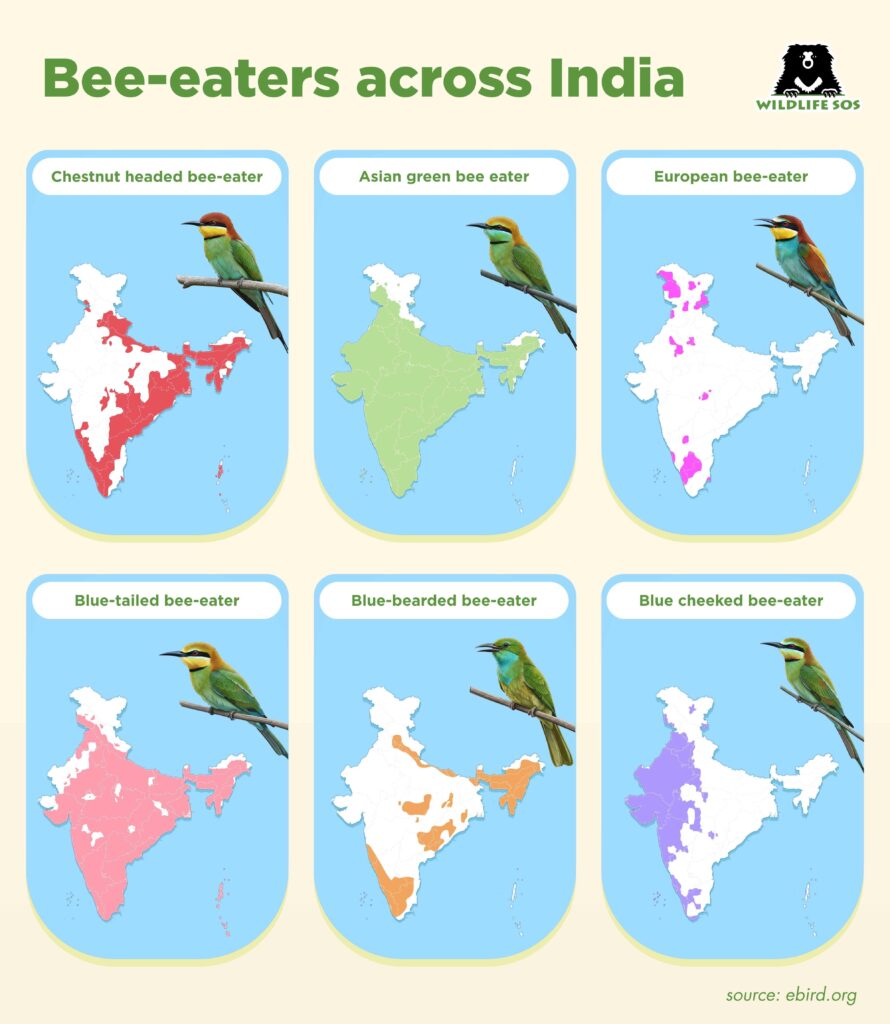
The most common and widespread one is the Asian green bee-eater (Merops orientalis), also known as the green bee-eater. It has a varied habitat that can range from wetlands, grasslands, dense forests, and you can even see it in the park from your bedroom window!
Let us look at some interesting facts that make the group of globally found bee-eaters stand out from other birds
Theory of Mind
What is ‘theory of mind’? Sounds complex, doesn’t it? Let us make it simple. It is the mental capacity that allows one to think about what another might be thinking. It will get clearer with this example. Imagine that it is close to the sunset hour and all the birds are already flying to their shelters to call it a day. But there’s a bee-eater perching on a wire and you are observing its beautiful plumage from below. The bird is highly aware of your presence, but the bee-eater senses that it is being watched. While you do not mean any harm, the bee-eater refuses to fly as it may give away the location of its nest. This is how bee-eaters cleverly protect their home and chicks from any potential threat or predators. The ability and awareness to understand the mind of any intruder is very uncommon in the animal kingdom, and is known to exist only in some great apes like chimpanzees, bonobos, and orangutans.
Stinger Removal
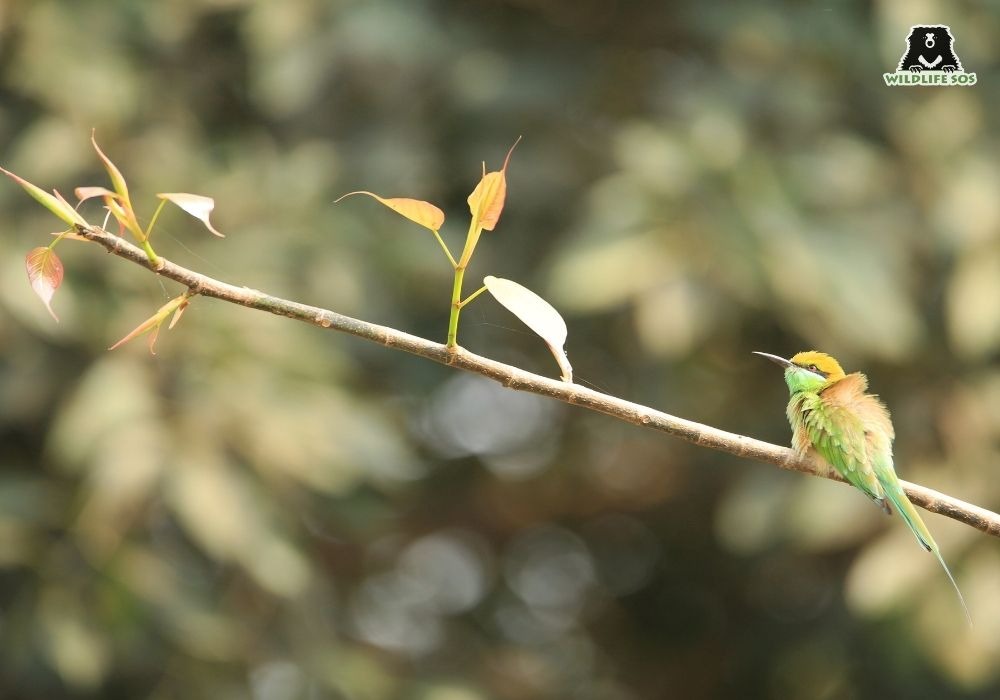
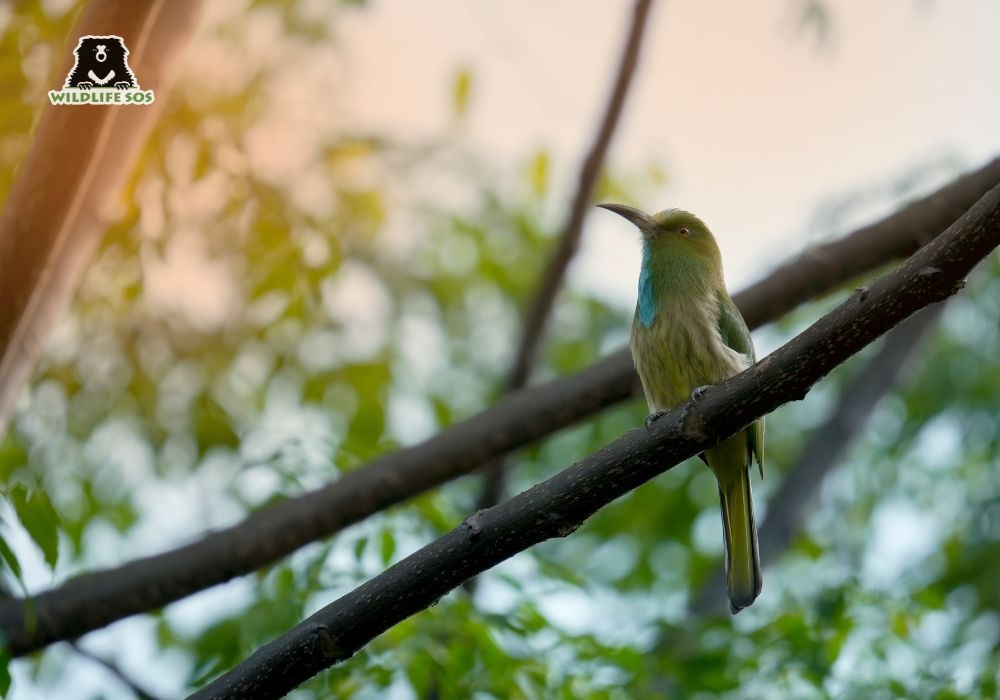
Bee-eaters are insectivorous birds. Their diet mainly consists of bees, which is revealed in their very name, that carry the weapon of a toxic sting they use in defense. But how do these birds survive from the poisonous prey? As soon as it catches a bee mid-air with its curved beak, it flies to a branch of a tree, where it knocks the winged insect against it. Once the bee is subdued, the bee-eater rubs the bee’s tail and its venom sac against the branch. It makes sure to close its eyes while doing this to prevent them from the squirted venom. Having disarmed the bee this way, the bee-eater’s meal is ready — it tosses the bee up in the air and swallows it whole.
Monogamous Partners
Another quality that is less likely to be found in other birds is that bee-eaters are monogamous in nature. This means that once they choose a partner, they form a bond for life. Before a female bee-eater is ready to lay eggs, the pair go on excavating missions to build a nest. They dig out tunnels approximately as deep as one to two metres long to create their nesting chamber. This is where the eggs are laid and then incubated. Since the male and female bee-eaters have made a lifelong commitment to one another, both ensure that incubating the eggs and feeding the chicks are shared responsibilities.
Aerial Hunters
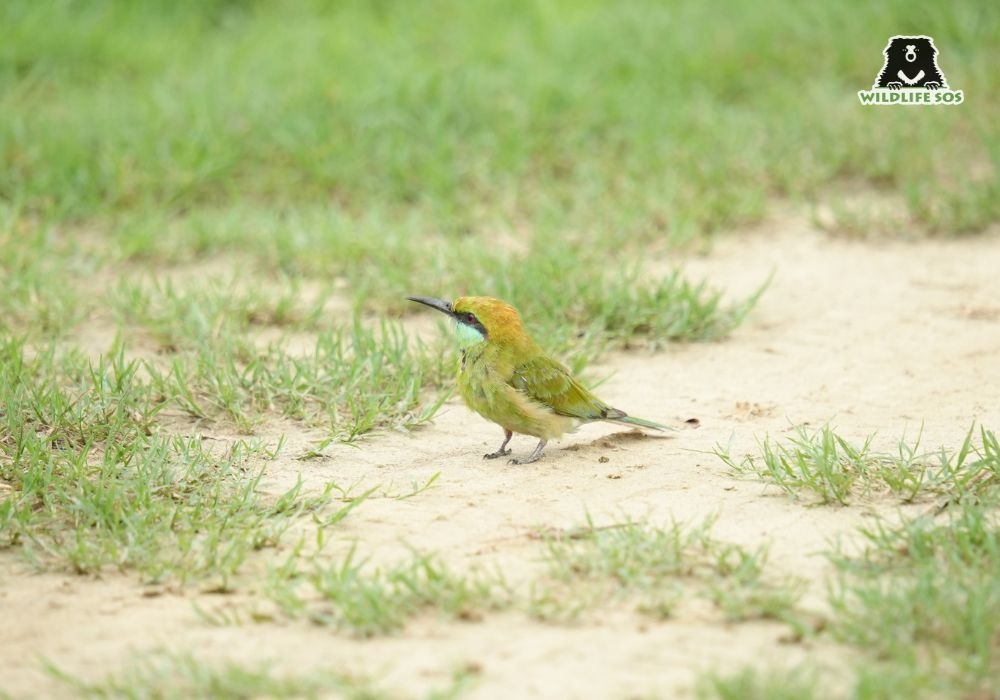
A bee-eater in flight is a spectacle to watch. In India, the bird’s body is likened to a bow, while its long bill resembles an arrow. Their wings open up to form a triangular shape, and their flight can be described as a stunning choreography of acrobatics. Bee-eaters not only have a gift for sprints, but also have sharp eye-sight. They can find their prey flying up to 60 metres ahead!
Dust Bathing
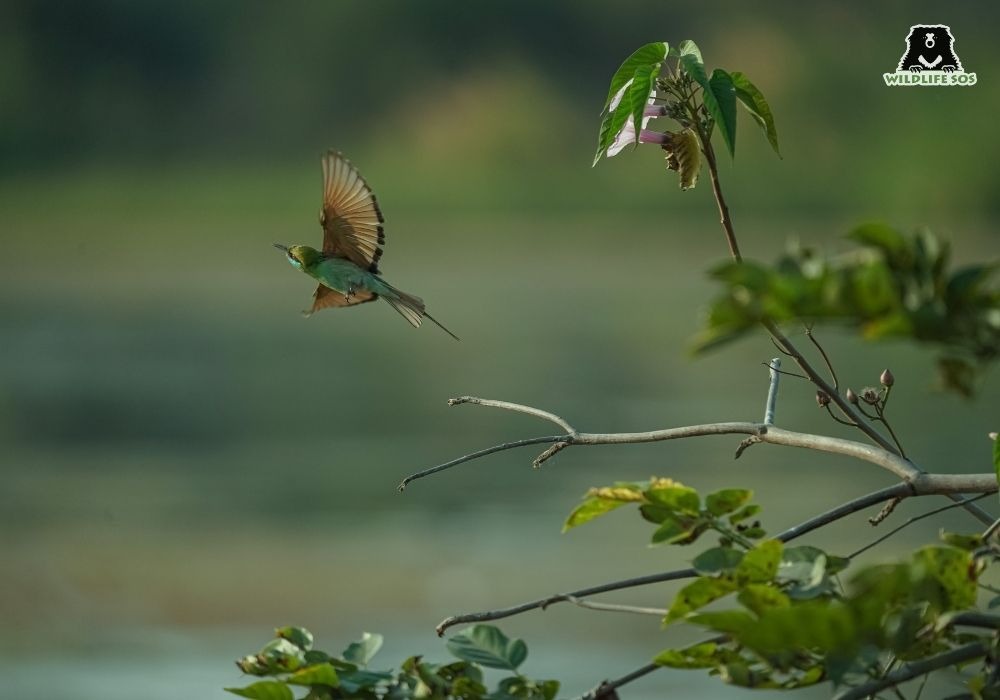
Most birds have oil glands present on the tip of their tail that produces a waxy substance similar to oil. This oil, while preening, transfers to their feathers by the beak, making them waterproof and enabling aerodynamic flight. However, it is rightly said that excess of anything is bad. For bee-eaters, when the oil-layer on their feathers accumulates, they tend to participate in what is called a dust bath. They rapidly wriggle on the ground to toss dust on themselves. The excess oil attaches itself to the dust particles, which is then ‘dusted off’ easily when the bird flaps around. Dust bathing is also an excellent way to get rid of parasites that may be stuck inside their iridescent feathers.
Communication in the Community
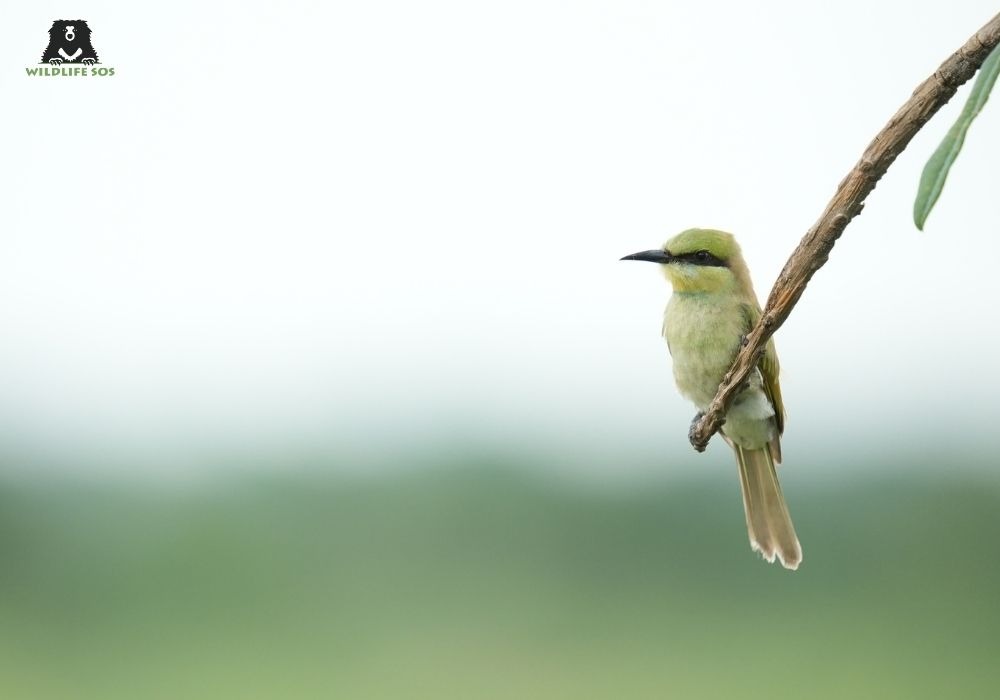
Bee-eaters may be monogamous, but are highly social birds. They simply love being around their kind. It is typical for them to gather on a single narrow perch. In fact, if you ever find a bee-eater alone, that would be a matter for discussion! These birds have formed societies stretching across entire generations, making it seem like they’re living with their extended family! Much like humans in a neighbourhood, their chirping always remains lively.

Monomorphic Birds
In the avian world, male and female birds are usually easy to differentiate. This is because male characteristics in most are much more flamboyant as compared to females. But in the case of bee-eaters, both look nearly the same. There are very minor differences such as males having a slightly longer tail length, which is hard to compare from a distance. Males of certain bee-eater species also may have their colours more vibrant, which again isn’t easy to differentiate in plain sight.
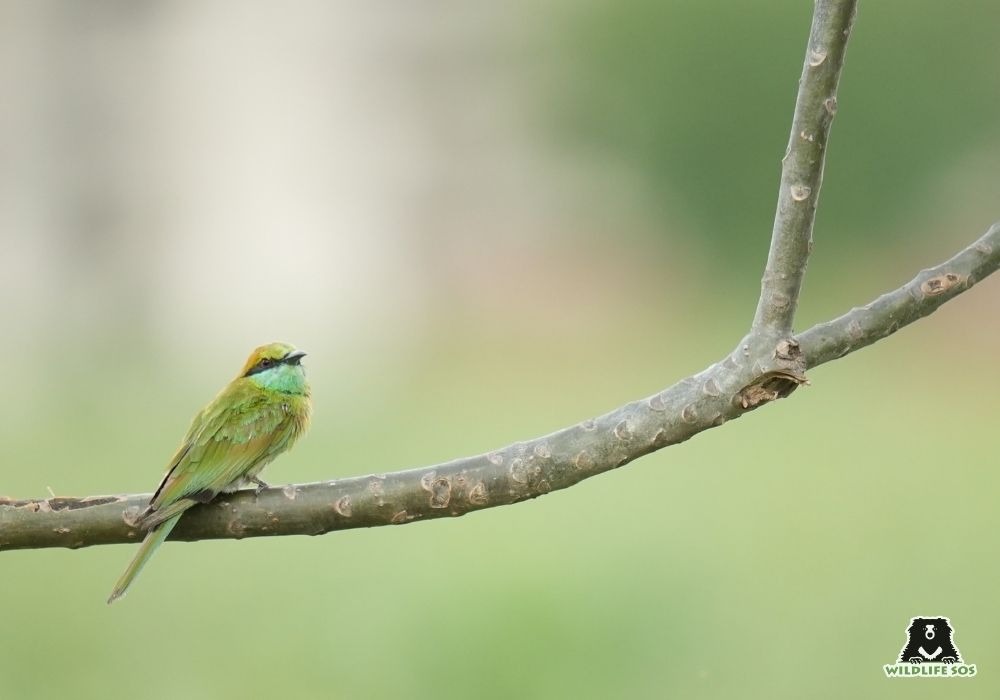
Every species has a role to maintain the balance of the ecosystem. By preying on a large number of insects, wasps and bees, bee-eaters contribute towards keeping their populations in check. As birds, they’re also key in maintaining balance of ecosystems through seed dispersal, thereby keeping their habitat alive.
Now that you know some of the most amazing facts about bee-eaters, make sure to keep your eyes open next time you wander through the green parts of your city! To support many such wonders of the wild, you can help Wildlife SOS in continuing its mission to protect India’s wildlife and their natural habitats.
Feature Image: Vineet Singh/Wildlife SOS