Wildlife SOS’s “Things You Didn’t Know About” series explores fascinating and lesser-known facets of wildlife across India. Each feature highlights one species, uncovering its unique behaviours, social dynamics and role in the ecosystem. This edition focuses on India’s most widespread and adaptable primates — the rhesus macaque.
Rhesus macaques are among India’s most adaptable primates, and their story is one of remarkable resilience in the face of rapid environmental change. With flexibility that lets them thrive from dense forests to bustling city streets, they’re one of South and Southeast Asia’s most widespread primate species. Their success in human-dominated landscapes, however, presents some challenges: as macaques increasingly share space with people, understanding their social structures, communication systems, and urban ecology has become essential for fostering humane coexistence and mitigating conflict.
Social hierarchies
In the world of rhesus macaques, order is everything. These primates live within steep, linear dominance hierarchies that are matriline-based and dictate access to food, grooming partners, and social alliances. Females stay within their natal groups and inherit their ranks, often following a fascinating phenomenon referred to as ‘youngest ascendancy’, where the youngest female in a family typically outranks her older sisters. Being supported to advance is a strategic move to keep the family status stable across generations. Males, on the other hand, disperse to new groups after attaining maturity, where they begin at the bottom of the social ladder and rise slowly through tenure or contests.
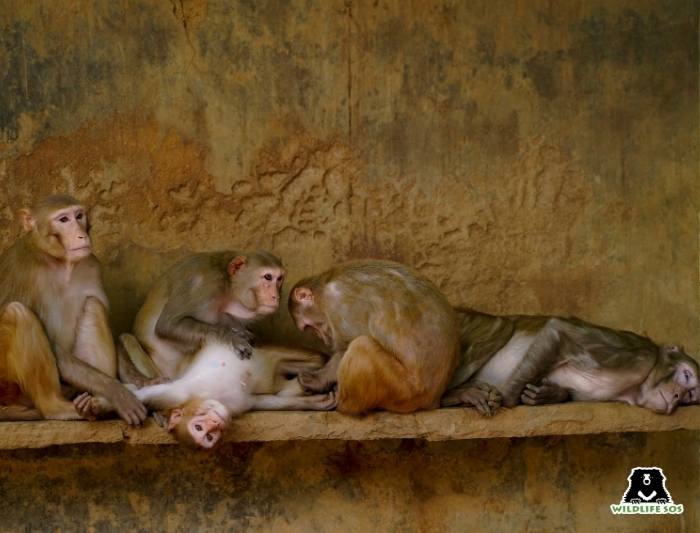
Disruptions—such as the removal of a key male after a stronger one takes over—can destabilise group harmony and trigger aggression, revealing just how crucial hierarchical balance is to maintaining peace. Within multi-female groups, genetic and demographic factors shape who grooms, allies with, or reconciles with whom, creating complex social networks that determine how these groups withstand change.
Habitat breadth, urban adaptation and flexibility
Few primates match the ecological range of the rhesus macaque. From arid grasslands and dense forests to agricultural fields and crowded cities, they occupy one of the broadest habitats among non-human primates across India and neighbouring regions. In northern India, large populations thrive in villages, temple complexes, and transport hubs, cleverly exploiting predictable food sources from people and waste streams.
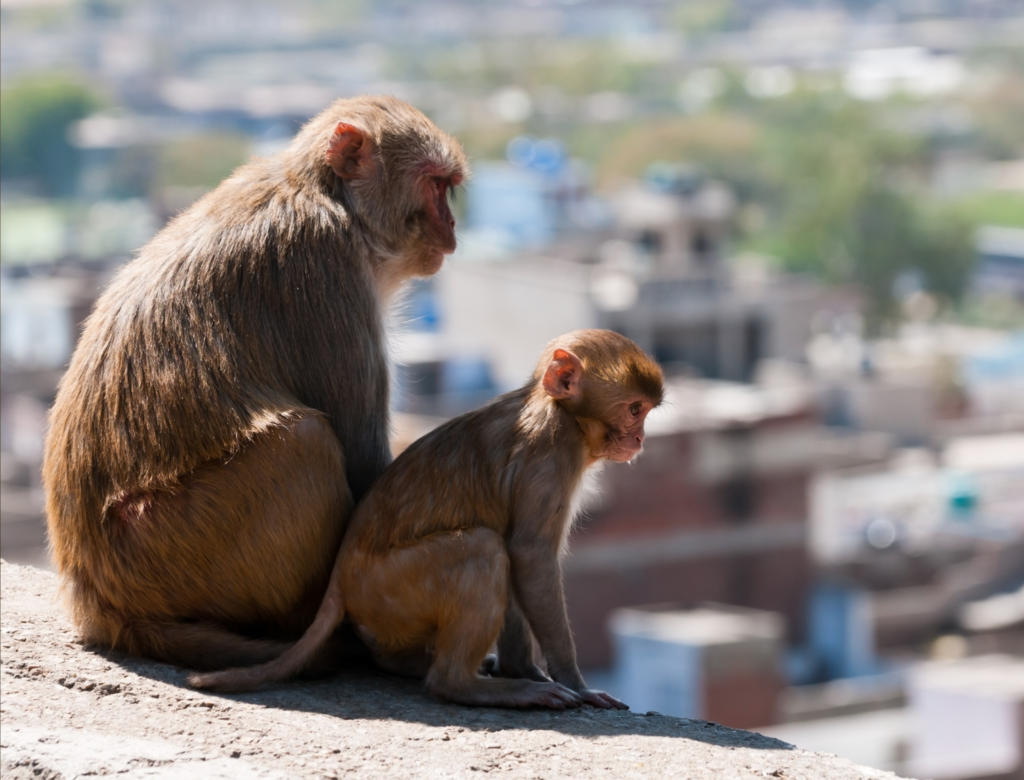
Studies in Shimla, for instance, reveal that urban troops spend over half their day resting and engage in long grooming sessions, a direct reflection of their reduced need to forage and the abundance of human-derived food. This easy access to calorie-dense nutrition boosts survival and reproduction, giving them a distinct advantage in urban landscapes.
Rhesus macaques are masters of adjustment, constantly recalibrating their activity and movement based on seasonal resources and surrounding risks. In the Himalayas, this might mean shifting elevation to follow food availability, while in cities, they synchronise their movements with human routines to avoid conflict and capitalise on opportunities. This behavioural plasticity—the ability to alter habits in response to human presence and provisioning—reflects a deep evolutionary flexibility. Combined with strong social cohesion, it allows rhesus macaques to persist and even flourish amid urban sprawl and environmental change.
Maternal, alloparental and paternal care
At the heart of every rhesus society lies the mother-infant bond. These relationships are central to the species’ social fabric, influencing everything from early development to long-term behaviour. A mother’s dominance rank and age can even affect her offspring’s outcomes, including birth sex ratios and developmental pace.
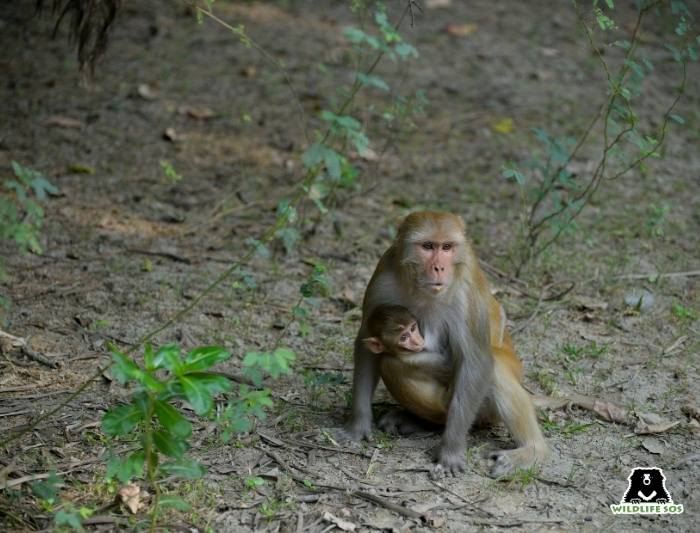
Beyond mothers, alloparental care—where others like relatives or troop members assist in infant care—also plays a key role. They may come forward to engage in babysitting or grooming infants, strengthening social bonds. Fascinatingly, a rare observation from Soor Sarovar Bird Sanctuary in North India documents an adult male carrying, grooming, and protecting an infant. This has opened doors to broaden our understanding of caregiving beyond maternal behaviour.
Moreover, early-life experience of the father can shape the behaviour and development of their offspring, even if they are distant from each other. Studies show that stress experienced by males can alter their hormones, which in turn can influence how their infants grow and respond to the world. This reveals multigenerational effects that interlink maternal, alloparental, and paternal influences in shaping young macaques’ lives.
How they Communicate
Rhesus macaques are fluent in a language of faces, voices, and gestures. Their communication repertoire is rich and context-dependent, combining expressions, postures, and vocal cues that reveal emotion, intent, and social awareness.
One of the most iconic signals is the “silent bared teeth” (SBT) display. Its meaning shifts with context: “peaceful” SBTs accompany friendly interactions, while “conflict” SBTs arise in tense moments to indicate the individual’s own immediate submission to a more dominant group member. Researchers can distinguish between the two SBTs by observing the situation—relaxed, affiliative moments include friendly baring of teeth, while conflict SBTs are seen during or just before aggressive encounters, often supplemented with hostile body language.
Their vocal language is equally intricate: coos and grunts maintain group cohesion and support affiliative contact, while shrill barks and screams punctuate threats and disputes.
Even more impressively, rhesus macaques can recognise and differentiate each other’s facial expressions, underscoring how highly attentive they are within their social set-ups.
Human-Macaque Conflict in Cities
In India’s expanding cities, humans and macaques share an uneasy coexistence. Conflict arises from habitat loss, religious or tourist provisioning, and the abundance of urban waste that draws troops into human spaces. Management strategies, from feeding bans to sterilisation programmes, remain widely debated.
Research indicates that conflicts are not random but often cluster in specific urban-suburban areas like Delhi NCR, highlighting where targeted solutions can work best: effective waste control, strict enforcement against feeding, community awareness, and ethical, science-based sterilisation or translocation within legal limits.
For community members dealing with frequent, adverse encounters, it is advised to avoid feeding macaques, secure waste, and always reach out to trained responders rather than making direct interventions. These steps not only reduce the chances of injury and disease transmission, but also promote peaceful coexistence between people and one of India’s most adaptable wild neighbours.
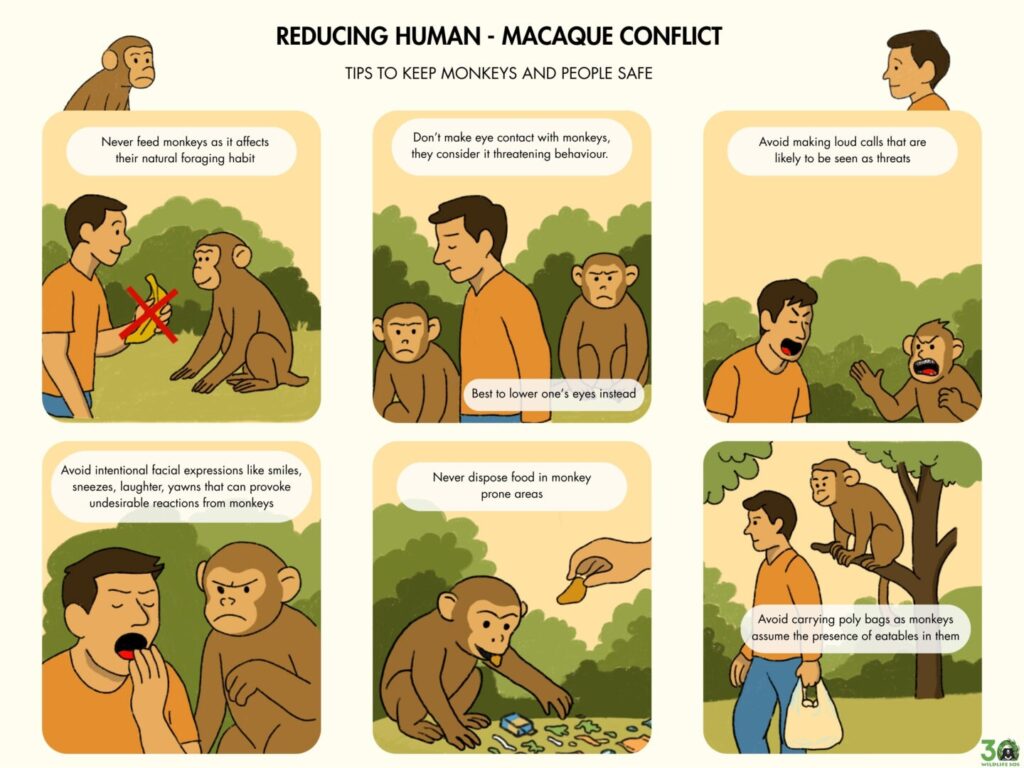
Beyond human safety, rhesus expansion poses conservation challenges too, as they can displace endemic primate species like the bonnet macaque in peninsular India. These ecological trade-offs underscore the need for region-specific, humane strategies that balance coexistence with conservation priorities. Wildlife SOS supports these efforts through the dedicated Human-Primate Conflict Mitigation Centre, which addresses urban primate management challenges and provides expert care to rescued animals, including orphaned baby macaques like Abu and Zoey.
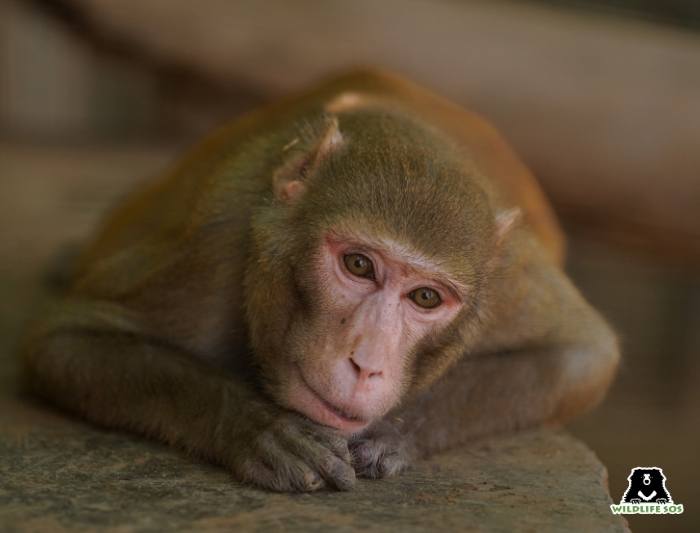
Wildlife SOS plays a vital role in addressing the growing interface between humans and macaques. Operating emergency rescue helplines across multiple regions, the organisation regularly responds to macaques found injured, trapped, or stranded in residential and public spaces.
Each rescue ensures safe capture, expert veterinary care, and appropriate release—minimising stress to both animals and people.
If a macaque is injured or trapped in your area, contact the nearest Wildlife SOS rescue helpline:
Delhi NCR – +91 9871963535
Agra, Uttar Pradesh – +91 9917109666
Vadodara, Gujarat – +91 9825011117
Jammu & Kashmir – +91 7006692300 or +91 9419778280
Feature Image: Akash Dolas/ Wildlife SOS