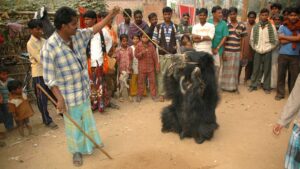
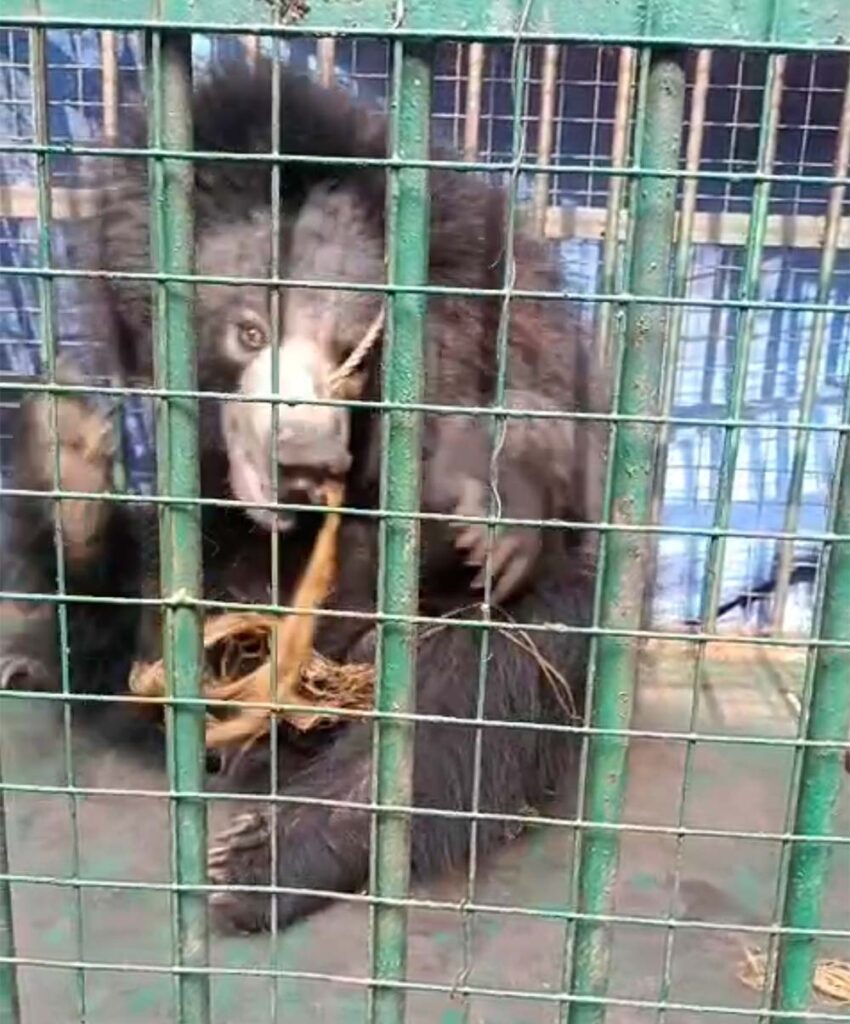
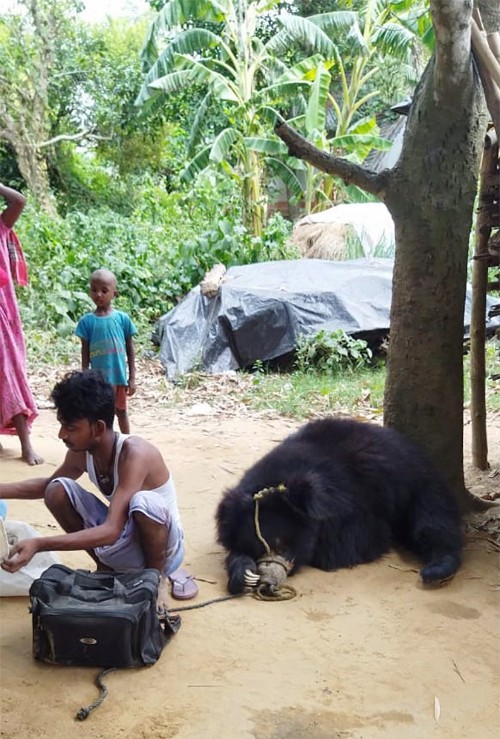
Soon after 2026 began, Wildlife SOS was alerted to a deeply disturbing development: a young female sloth bear was being used as a “dancing” bear. Luckily, she had been seized by the Forest Department just weeks earlier.
Our team immediately arranged her transfer to the Wildlife SOS Sloth Bear Rescue Facility in Agra. We named her Lissy, and she is now beginning the long process of recovery — from physical injuries, and from the deep psychological trauma caused by years of abuse. Her healing will take time. But her story has raised a couple questions from our supporters: How could the ‘dancing bear’ practice, an atrocity that had been eliminated, resurface years later?
As news spread, reactions varied. Many people were learning about the dancing bear trade for the first time: What is it? Why would a bear have a rope through her nose? For long-time supporters of Wildlife SOS, the questions were different — and heavier: Didn’t this end in 2009?
It did. And that is precisely why Lissy’s rescue matters.
A Practice Built on Pain
For more than 400 years, the dancing bear trade inflicted extreme cruelty on sloth bears in India. Cubs were poached from the wild — often after their mothers were killed — and subjected to horrific abuse. Their muzzles were pierced with red-hot pokers, ropes threaded through the wounds. The bears were forced to “dance,” a reaction driven entirely by pain and fear.
Beyond the suffering of individual animals, the trade devastated wild bear populations by systematically removing cubs and breeding females — one of the fastest ways to devastate a wild population.
By the mid-1990s, more than 1,200 dancing bears were believed to be held across India.
A Historic End — Achieved the Right Way
In 1996, Wildlife SOS, working closely with the Government of India and partner organizations including International Animal Rescue, One Voice, and Free the Bears, committed to ending the practice permanently.
By 2009, 628 dancing bears in India had been rescued and placed into lifetime care and the dancing bear practice had been abolished from the country.
This victory did not come through mass arrests or punishment. Instead, it was achieved through an approach rooted in dignity and long-term solutions. Every family that surrendered a bear was supported in transitioning to a new livelihood. Children gained access to education. Women were supported through empowerment initiatives. Some former bear handlers were even trained and employed as caregivers — protecting the very animals they had once been forced to exploit.
The practice ended because its root causes were addressed.
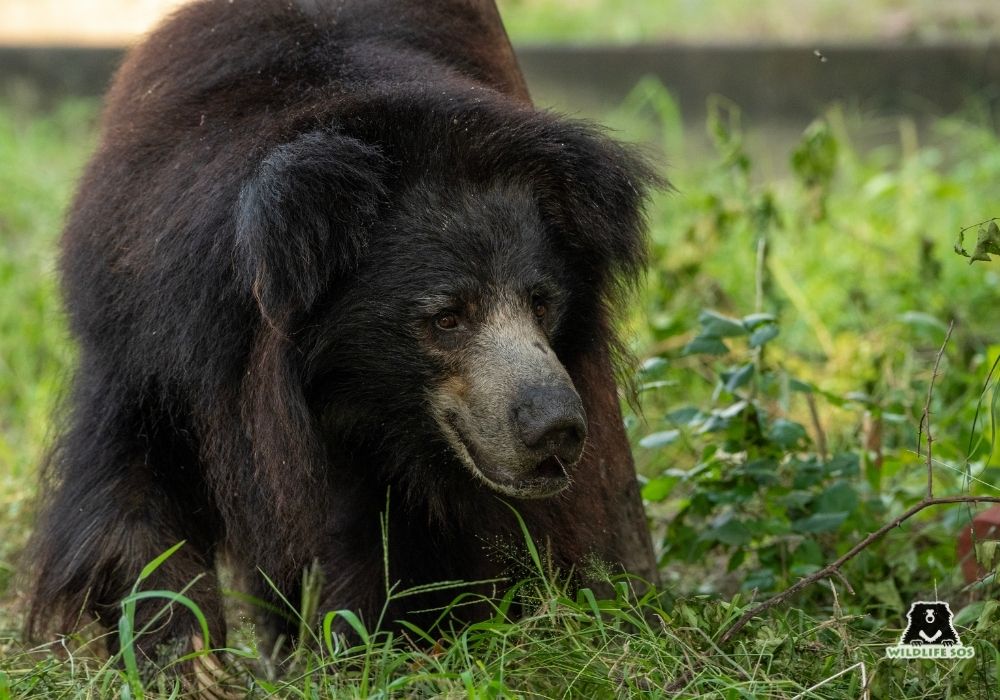
Why Ending the Practice Was Never the Finish Line
Wildlife SOS has always understood one critical truth: wildlife crime does not disappear simply because it is outlawed. It recedes. It adapts. And when vigilance weakens, it can return.
That is why the work did not stop in 2009.
Our anti-poaching networks remain active. Community engagement programs continue. Wildlife SOS worked closely with forest departments and law enforcement agencies to monitor illegal activity and respond swiftly to threats. This vigilance proved essential. More than a decade ago, intelligence provided by Wildlife SOS led to the interception of four young sloth bears during an anti-poaching operation near the Indo-Nepal border — preventing them from ever being forced into the dancing bear trade.
This was proof that monitoring works.
A Wake-Up Call in 2026
In early 2026, Lissy was found. It is a tragedy what she went through, but luckily this time she was seized by the Forest Department, perhaps our most important partner in the effort to eradicate the dancing bear practice. And she was sent to a WIldlife SOS rescue facility where she could be cared for. And perhaps this is a victory in itself. In 1996 she likely would not have been seized, and even if she had been there would be no Wildlife SOS facility to send her to.
She is the first confirmed dancing bear in many years — a stark reminder that conservation victories are fragile. It reinforces the lesson Wildlife SOS has always known: success must be fiercely protected, not assumed. Since 2009, Wildlife SOS has rescued 11 dancing bears, most of which were trafficked from Nepal.
The Real Measure of Success
Wildlife protection does not end when the last animal is rescued or when a practice is declared abolished. The true measure of success lies in the years — and decades — spent ensuring that cruelty never regains a foothold.
For Wildlife SOS, vigilance is a responsibility. It means maintaining anti-poaching networks, continuing community education and women’s empowerment programs, and responding to every warning sign, no matter how long it has been since the last crisis.
Lissy’s suffering should never have happened. But because it did, her story must serve as a warning — and a call to action.
What You Can Do
Long-term vigilance requires long-term commitment. It depends on sustained support, continued awareness, and collective responsibility — even when a crisis is no longer in the headlines.
By standing with Wildlife SOS, you help ensure that the dancing bear trade never takes hold again. You support rescue, lifetime care, community empowerment, and the quiet, critical work of prevention.
Ending cruelty once is not enough. Together, we must make sure it never returns.