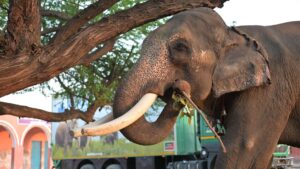
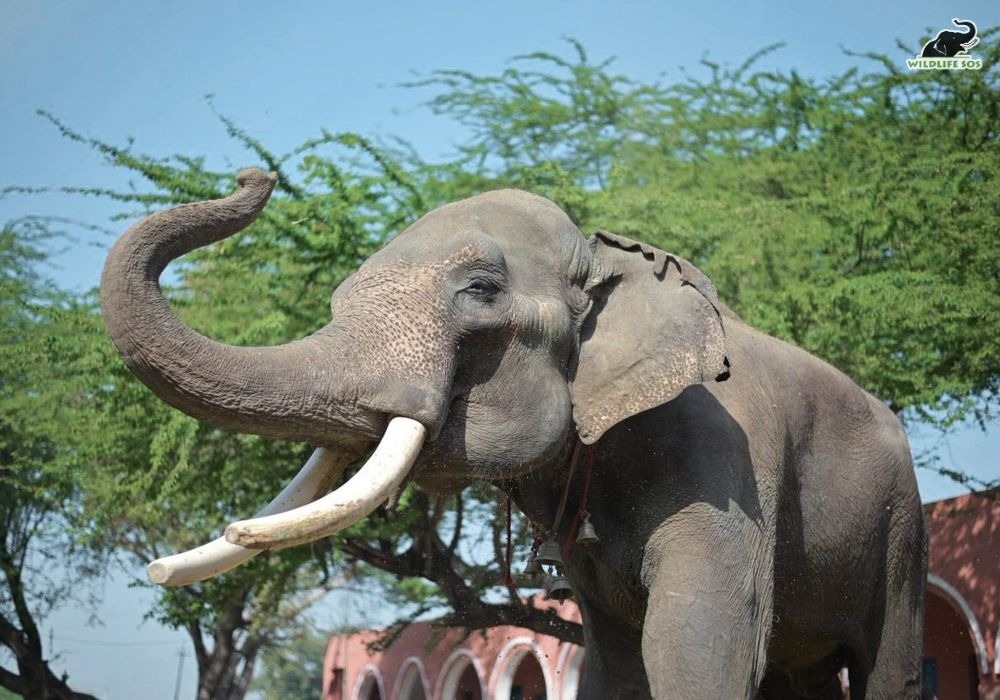
The sound of four bells ringing from an elephant’s neck was mixed with the noise of traffic in Mau, an industrial town in Uttar Pradesh. While the bull elephant had long tusks, what caught everyone’s eyes was his awkward way of walking. The elephant had a noticeable limp in his front right limb, but was constantly being made to walk by his mahout who had grabbed him by one of his tusks.
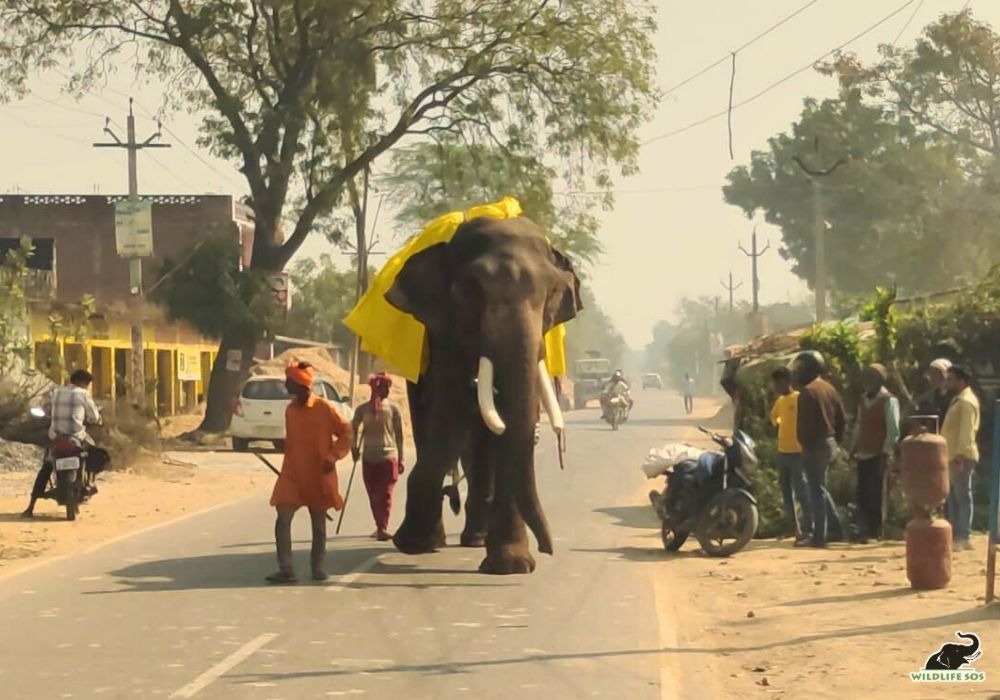
Towards the end of January, Wildlife SOS’s inbox was flooded with sightings made of this ‘begging’ elephant being exploited, and even used to participate in religious processions. What happened next was an intensive search operation to try and figure out where this elephant resides and what we can do to help him. The Uttar Pradesh Forest Department (UPFD) came forward to conduct an initial health assessment of this elephant. Due to financial hardship, the owner of the pachyderm acknowledged his inability to provide necessary veterinary treatment, maintenance, and care that the elephant was in desperate need of. In coordination with the state forest Department, Wildlife SOS proceeded to transfer the elephant to the Elephant Hospital Campus (EHC) for long-term care.
The medical overview received by our expert team of veterinarians helped them to gather and prepare devices required for further inspections. Thermal imaging cameras and portable X-Ray machine were included within the Elephant Ambulance so that a clear detection of the pachyderms ailments could be made. The reports from the forest department indicated that the gentle giant was suffering from a chronic joint degeneration in his front right leg. Despite undergoing such a critical condition, the bull elephant was still able to push through and walk. The elephant’s courage and bravery made us arrive at the name Veer for an elephant who was battling pain and difficulties with his inner strength.
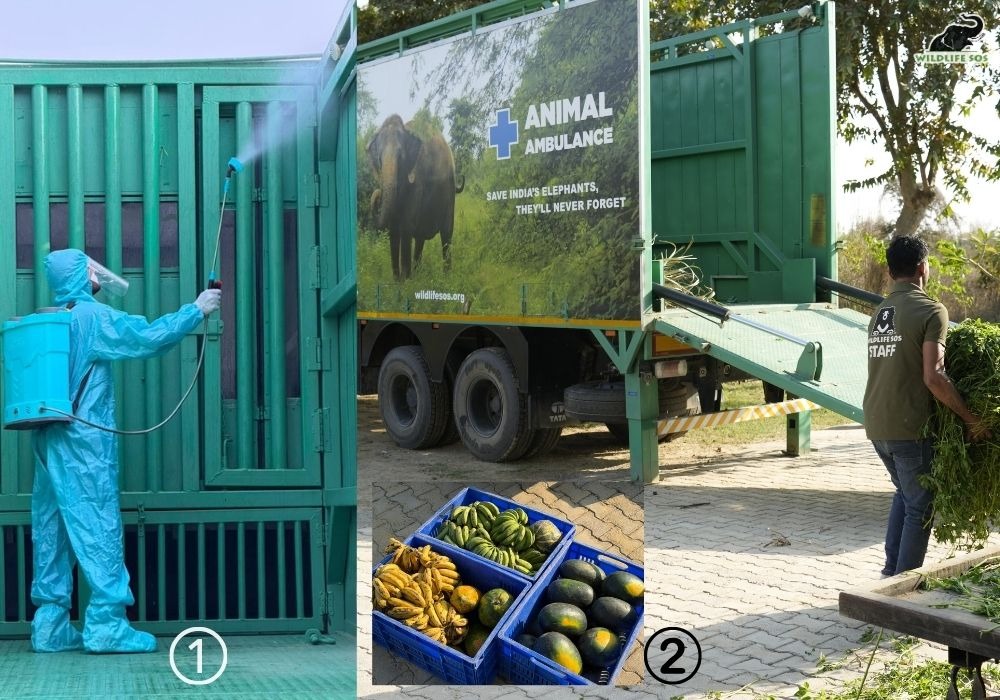
Our travelling team of rescuers consisted of a veterinarian, experienced caregivers and documentation officers. Like how most rescue operations occur, the group was split into two, with an advance team setting out before the main rescue team reached Veer to assess the situation and possible risks that would undoubtedly arise during rescue operations, especially understanding the crowd situation there. This also ensured the ambulance team had enough time to properly ready the ambulance with all the requirements of a rescue from treatment instruments, medications, feed and water.
The advance team reached Veer even before sunrise, and as they had predicted, the news of Veer leaving Mau, never to return, had widely spread. More and more people began to gather as the sun rose in a bid to say farewell to Veer. The crowd of locals were curious as well as concerned about the condition of the pachyderm’s leg.
When the second team arrived with the animal ambulance in front of the ever swelling crowd, it became apparent that it would be impossible to hold a proper preliminary medical examination at that time amid the noise and distractions.
With a crowd gathered around, the team briskly but with care guided Veer inside the ambulance. The caregivers gently motivated the pachyderm to enter the secure vehicle with fruits. Once inside, Dr. Rahul had thoughtfully prepared gunny sac padding to help support and balance Veer’s affected limb during the journey. Only after confirming that Veer was settled and stable did the team drive on to find a suitable location for his medical evaluation.
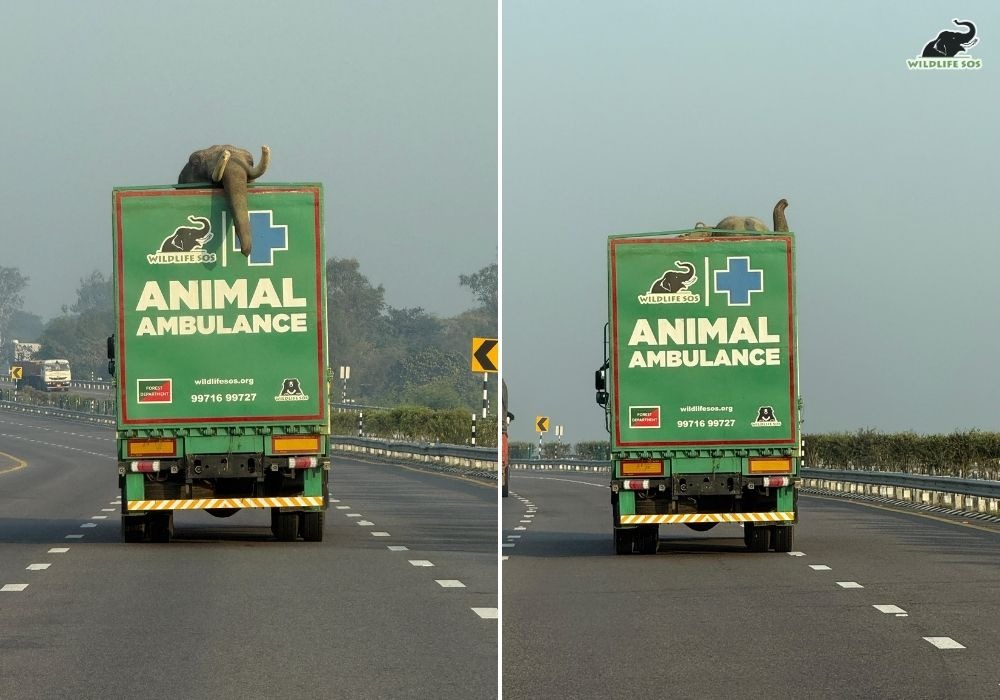
Veer’s rescue team finally found a secluded location, but the sun was setting fast, which made medical examinations difficult to perform. Priority was placed on Veer’s comfort.
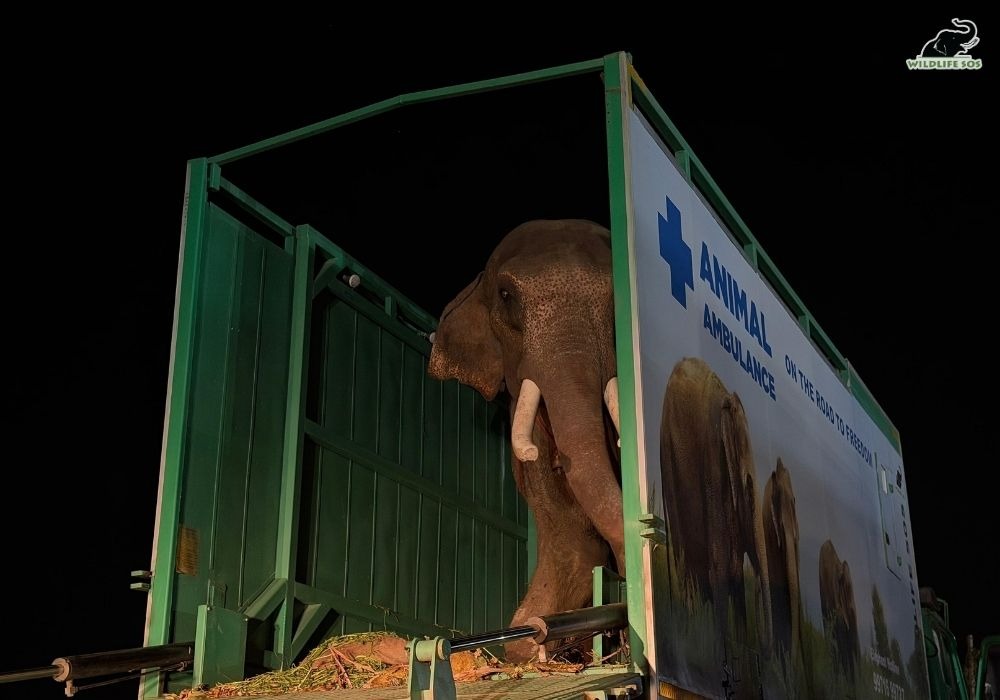
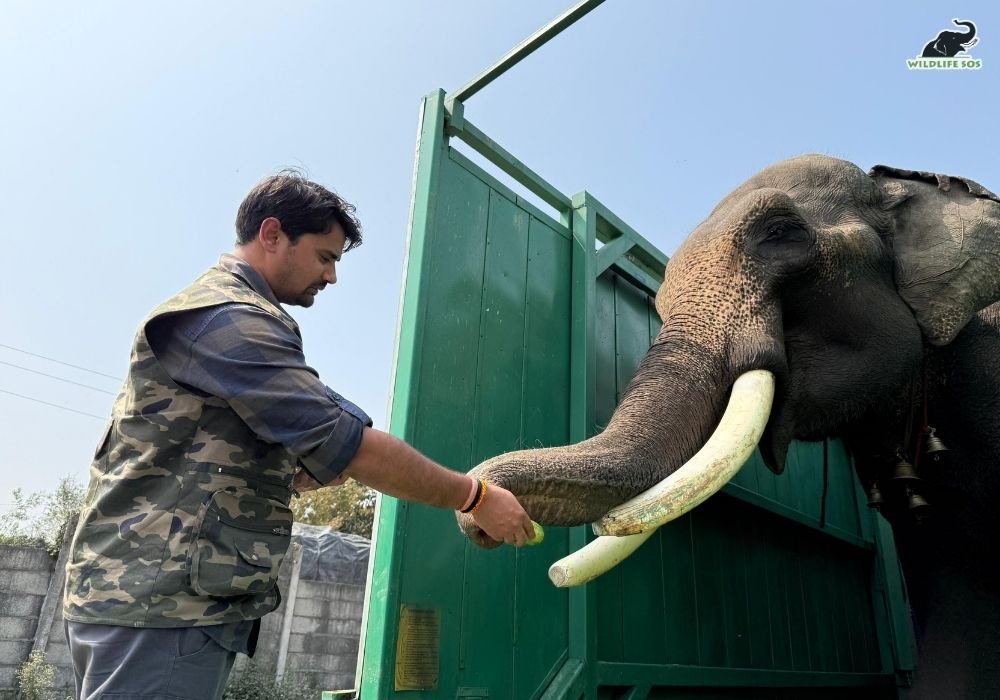
The team did not waste an opportunity to bond with Veer. The caregivers offered him sugarcane that he gracefully accepted and voiced his approval with soft huffs. The veterinarians were relieved to see that Veer’s body posture was not rigid; he remained relaxed. He would tense up during high activity moments but would wind down again, recognising the safe energy around him.
Conscious efforts were made to provide food and ample water to Veer along the journey. As heat and sun came at its peak the next day, a stop was intentionally made before reaching EHC. The ambulance with Veer was parked under the shade of a tree to help the two cool down as the temperatures rose. Veer was given a refreshing bath and he eagerly consumed both juicy fruits, veggies and plenty of water.
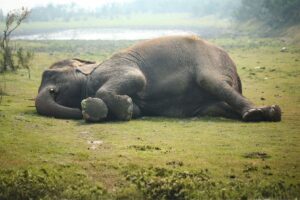
As the teams resumed their journey with Veer with the next destination being the elephant hospital, fate had other plans in store. In a sudden event, the animal ambulance got stuck in the mud along the way. While the team members were busy figuring out how to spring the vehicle back into motion, Veer gained the opportunity to get some well deserved sleep. He was relaxed, probably the most relaxed he had ever been in his entire life.
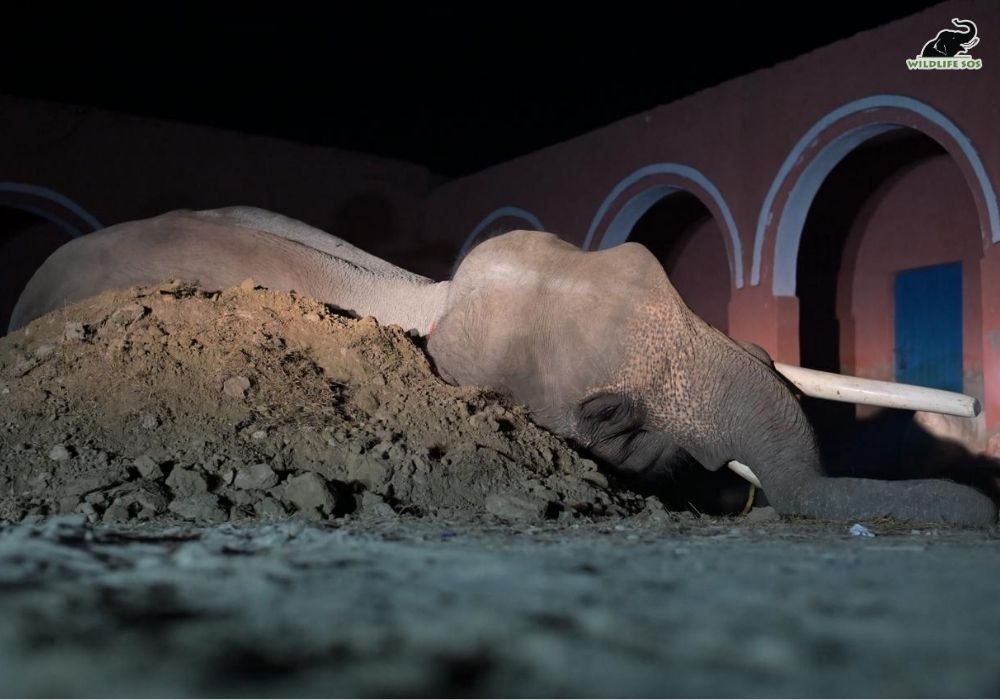
After a needed night of sleep, our veterinarians were finally able to conduct a preliminary assessment of Veer as he woke up the next morning. Veer’s condition was worse than the team had imagined it to be. As per the UPFD’s report, the visible problem in his right front limb was the major issue. There was also a prominent scar on the same elbow joint from an injury that was never properly treated. His gait and posture are abnormal, also because the left forelimb is forced to bear extra weight because of his damaged right leg that is struggling to support him, causing serious inflammation. Additionally, a thermographic evaluation revealed marked inflammation along Veer’s dorsal spinal region.
Veer’s forelimbs had remained bound with spiked chains all his life. Since the journey back to the hospital had elongated, the vets felt it best to start treating the septic wounds that had festered due to this. These injuries were extremely painful, and Veer made it known through low grumbles as the antiseptic medication was carefully applied.
Long-Term Care
The wheels of the ambulance kept spinning once they were out of the mud and stopped only when they reached their destination. As Veer entered EHC, his ever curious trunk was the first to enter the premises as it extended to take in all the new scents from his surroundings. He was then given fresh fodder and water within the hospital campus as he stepped onto soil that finally shows grace towards his aching limbs. While our expert team of veterinarians develop a medical plan to heal Veer, our dedicated caregivers are preparing healthy meals to rejuvenate Veer.
The pachyderm will be provided a field with enrichments to explore, encouraging him to revive his natural behaviours such as foraging. Soon after Veer comfortably settles in, target training sessions will gradually follow to allow the staff to interact with the tusker gently and out of his own free will.
Please support Veer’s treatment by becoming a monthly contributor towards his care and receive exclusive updates through email on the pachyderm’s new life.
Wildlife SOS is fighting to provide the gentle giants in captivity with the compassion and medical care they deserve. If you witness an elephant being exploited in activities like logging, begging, tourist rides, or religious processions please email us at info@wildlifesos.org or reach out to us on our elephant hotline number: +91 9971699727.
Feature Image: Suryoday Singh Mann/ Wildlife SOS