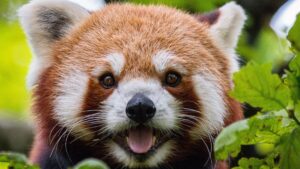
A utopian world where all beings live and thrive in harmony often feels like a distant dream. Such a world quietly exists in pockets where indigenous tribal communities harmoniously coexist with wildlife in forests. However, when the wild finds itself in the human terrain, they experience what is unkind, unnatural and traumatic for them. To give them the dignity they rightly deserve, spaces have been carefully carved out with the intention to keep them safe. At Wildlife SOS centres in Uttar Pradesh, compassion and safety of wildlife isn’t a vision, it is a reality being lived.
Here, wildlife is given the room to bloom freely. Animals are given the respect and right to exist after having faced extreme cruelty in captivity. The camaraderie that can exist between humans and animals feels both rare and ideal. But one must never lose hope.
Carved Out for Coexistence
Nestled on the outskirts of the historic town of Mathura, the Elephant Conservation and Care Centre (ECCC) unfolds like an inspiring tapestry featuring the living wild. Set beside the Yamuna River and framed by dense forest covers, the centre hums with life that exists all around. Tall grasses sway in the breeze and thick plantations and shrubs come alive with movement. Birds perch high up in the trees and their calls layer into a natural chorus that echoes across the landscape.

The rescued elephants wander peacefully through open spaces, while engaging with thoughtfully designed enrichments that stimulate their curiosity and encourage natural behaviour. They forage, explore, and relish treats like sugarcane, fruits, and fresh fodder, rediscovering instincts that were long suppressed with brutal chains. Their joy is visible and found in companionships they form, in the safety they experience, in the surroundings akin to the wild, and the freedom they had been denied.
Equally powerful stands the transformation among mahouts. The individuals who once participated in exploitative practices have undergone their own journey of conversion. After learning more about these large mammals and their natural behaviour, and being empowered with methods and manners for their welfare, they now devote their lives to the care and protection of these elephants. In each of these cases, the rays of coexistence shine bright. Understanding animals requires a strong foundation of knowledge and awareness. The vision to help wildlife that was snatched away from their wild habitats is not a theoretical aspiration here, it is a reality caregiving humans and rescued animals are proudly living with.

While elephants have a majestic presence, there is much else to observe at ECCC. A peacock pecking at grains right beside an elephant busy crunching sugarcane, both entirely unbothered by the other’s presence. Squirrels darting along branches as though racing the wind, and spotted owlets roosting in their hollow cradles, watching the world through half-closed eyes. There are also frogs that spring confidently across pathways, while the butterflies drift lazily between shrubs. Spider webs shimmer like glass in morning light, and right beneath the soil, ants build intricate colonies as social networks of their own. It is evident why these gigantic mammals are known as ecosystem engineers — the movement of their mighty feet and trunks can create suitable habitats for all creatures, big and small.

On the side, caregivers here carry out their daily deeds too. They bring bundles of fresh fodder, prepare enrichments for the elephants, and reload their sacks with treats. Their goal? To make sure that the elephants engage with their surroundings in ways that can boost their wild instincts. Many of the rescued ones never experienced the opportunity to explore them before.

Also at the heart of this thriving ecosystem is the dense, layered greenery that supports all its occupants. A land that was once barren has now transformed into a lush landscape, thanks to a thoughtful technique called Miyawaki plantation. It is an assured way to create a dense, native forest in a short span of time. Carefully planned and patiently nurtured, ECCC’s arid area has grown into a forest of shrubs, climbers, and young trees that are allowing each other to grow. Over 11,000 native trees including 20 indigenous species such as shisham, neem, peepal and more have evolved the landscape into a self-sustaining ecosystem. And yes, this actually means that it has revived and supports biodiversity. The success of this method has quite literally borne fruit by encouraging a vibrant neighbourhood for countless species, a place where new life emerges each day.

Here, every inch of land tells a simple truth: when space is shared with intention, nature responds with utmost abundance.
Creating Safe Spaces
Many of the animals under Wildlife SOS’s care cannot be released back into the wild because they were taken away from it at a tender age. They received no parental guidance on survival skills. Prolonged captivity and neglect led to lifelong medical issues and trauma that needed attentive care — and caring for them requires expertise. Recreating environments that mirror natural habitats of the wild as closely as possible is enabling rehabilitated animals to rediscover instinctive behaviours and reclaim agency over their own lives.
At the Agra Bear Rescue Facility (ABRF), located within the lush expanse of the Soor Sarovar Bird Sanctuary and surrounded by dense forest, rescued sloth bears are provided with a safe haven. Once a part of the archaic and cruel ‘dancing’ bear practice, these sloth bears can now finally roam, dig, forage, and explore in environments that echo their natural habitats, offering them not just care, but the freedom to simply be.
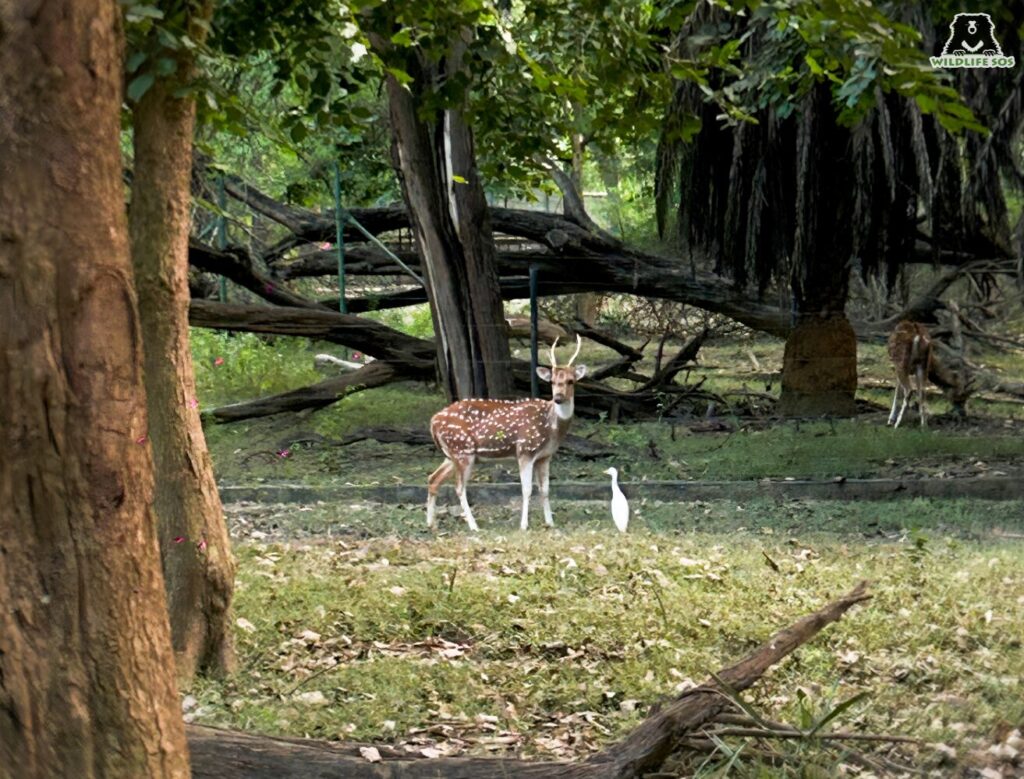
Along with the sloth bears, there is a cohort of wildlife that peacefully coexists. Monkeys occasionally appear now and then. They’re curious and quick, inspecting enrichment items designed for bears before disappearing back into the trees. Antelopes wander gracefully with their calves, while wild visitors like Asian palm civets, small Indian civets, Indian gray langurs and even porcupines are occasionally spotted in and around ABRF. One among the rodents with sharp quills is a frequent visitor. A familiar presence, caregivers now refer to the popping-up porcupine as “Bubbles”.

ABRF’s premium location attracts several migratory birds that can be seen across the landscape, including the great white pelican, bar-headed goose, northern pintail, dalmatian pelican, mallard, ruddy shelduck and Indian spot-billed duck. This is because beyond the high rising trees lies a river that adds a rhythm to the surroundings, supporting this thriving world. Along the muddy banks and sun-drenched shores, turtles can be found basking in the sun, sometimes gathered in quiet groups, and other times as solitary figures sitting perfectly still against the current. Here, conservation has expanded to many species that lives, breathes and benefits from the landscape set up for sloth bears, becoming a constant reminder of why this initiative matters.
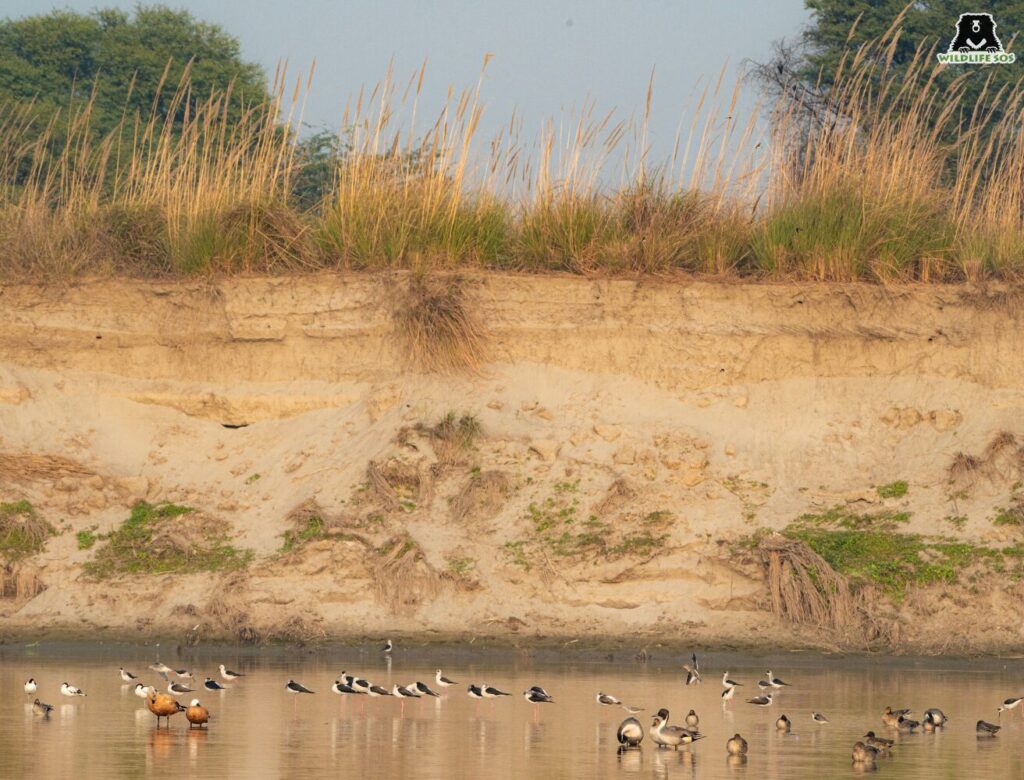
Perhaps by acknowledging the company of the avians, turtles, antelopes and the recurring porcupine, we remind ourselves that demarcated boundaries between the people and wildlife do not exist beyond the human world.
A Rare Sound
In the stillness of the evening, the centres offer something increasingly rare for human beings: true silence. Not an absence of sound, but a peaceful quietude that carries with it the chorus of crickets, distant rustling leaves, and the merry chirps of many birds. And that’s not where it ends. Soft flickers of fireflies add a visual delight by lighting up the dusk. This “silence” feels grounding, restorative, and one transporting us right back to childhood, to moments when nature felt close and time moved slowly.

Evenings are also when elephants take soft, nimble steps to set out on their walks. Their low rumbles are for all their companions, including the caregivers who walk beside them with a bag of fruits and sugarcane. Their names are called out softly, to which the elephants respond with lifted trunks and gentle nudges, a small gesture that conveys familiarity, comfort and an understanding that transcends language. Nearby, the sloth bears settle into their own evening rituals. Walking back, one might hear the rhythmic snuffling and grunting of a pair still caught up in the energy of play with enrichments designed for them, before they disappear into the cool and deep dugouts they have carved into the earth for the night’s rest.
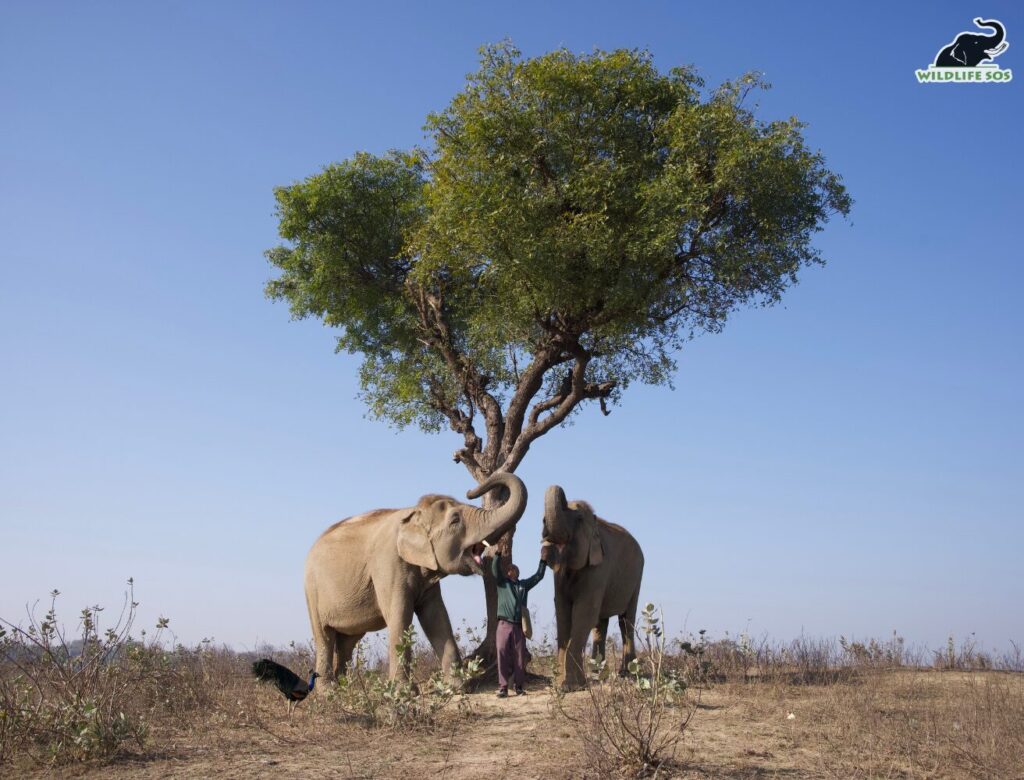
Care here is never a routine, it is built on relationships. Each interaction carries a deep understanding that seems to exist between the caregivers and the animals. The caregivers are as integral to the facilities as the trees, birds and the animals themselves. They silently make sure that enclosures remain clean, enrichments are ready, the ground is soft and the food prepared is fresh. Every interaction, even if these are distant, reflects patience and an ever evolving bond built on trust.
A Conscious Choice
These centres were built with one simple intention, to make and create a space for animals who were always meant to live in the wild. Our centres offer a glimpse into how protected environments for animals that were denied the rightful experience of living in the wild allows them to exist as they are, peacefully. They stand as reminders that conservation is consciously chosen to promote animal welfare, and this must precede the idea of human-wildlife coexistence.
Coexistence, however, is not to be misunderstood as wildlife living under human care or supervision. It is the freedom for wildlife to exist on their own terms, in spaces that are inherently theirs, and where their natural behaviours are respected, not regulated. Wildlife SOS centres therefore also represent a shift in perspective. Observing rescued animals, understanding their kind, the unnatural lives they’ve lived, the trauma revealed by their body and behaviour, and how affectionate care can heal their inhumane past, can pave a positive path towards coexistence, and can subvert the idea of conflict.
Conflict begins when human actions dominate or disregard the needs of other species, and when we react to their presence with fear or harm, often driven by ignorance or a lack of empathy. But true coexistence asks for the opposite, it asks for a sympathetic awareness that their right to exist is not ours to grant or take away. An ideal world is one where wildlife can thrive where they belong, and rescue operations such as bears caught in poaching traps, or elephants misused for riding, cease to exist.

Across these landscapes, where elephants wander freely at their own pace, sloth bears rediscover their natural and wild instincts, and countless creatures thrive alongside, there is a harmony that is deeply inspiring for this humble observer, one born from the willingness to make room.
The world we dream of, one where humans and wildlife coexist in harmony, starts with each of us. Support Wildlife SOS in turning our deepest intention to conserve the wonderful coinhabitants of our planet into action. Make a donation or reach out to us at [email protected] to learn how you can help!
Feature image: Atharv Pacharne / Wildlife SOS