From a small town called Thamarassery that lies in the foothills of the Western Ghats in Kerala, to the front lines of India’s most critical rescue missions, Dr. Adhithyan’s journey has always been guided by a single obsession, the animal kingdom.
Before he could even grasp the complexity of the wild world around him, young Adhithyan was already enchanted by its mysteries. While children his age were watching cartoons, he was enamored by visuals on the Discovery Channel. And his favourite pastime? Collecting fallen feathers and observing the life teeming in ponds near his home. This wasn’t just a childhood phase, it was the blueprint for a life dedicated to the wild.
Dr. Adhithyan is a cherished and admirable Veterinary Officer with Wildlife SOS. He represents the collective mission of wildlife veterinarians: the commitment to restore freedom to those animals who had once lost it.

What first sparked your interest in veterinary medicine and wildlife care?
In my childhood, while other kids were watching cartoons, I was glued to Discovery Channel and Animal Planet. I collected pictures of every animal I could find, gathered feathers from birds, and spent hours catching different varieties of fish from the pond, just to be able to admire their beauty.
My parents encouraged me to pursue MBBS, so after 12th grade, I took a year gap to prepare for the entrance exams. During that time, I found an opportunity to take a different path, veterinary medicine. Some like-minded friends and I decided to pursue it together and once I got into the veterinary course, my focus shifted more toward wildlife. I read as many wildlife medicine texts and papers as possible, made friends with those who shared my thoughts and passion, and participated in numerous wildlife and bird surveys. That’s how my journey truly began.
How did you come across Wildlife SOS?
Just after my graduation, there was an opening at the Bannerughatta Bear Rescue Centre, located in the heart of the forest and not far from my hometown. I was contacted by a senior veterinarian who explained the role in detail. The timing felt perfect.
The work Wildlife SOS was doing deeply moved me, rehabilitating former ‘dancing’ bears, sheltering leopards caught in conflict, caring for abused elephants, and rescuing countless animals across India. It was everything I had dreamed of being a part of. I accepted the offer wholeheartedly, and that’s how my journey with Wildlife SOS began. From that first day, I have been immersed in the unpredictable, demanding, and deeply rewarding world of wildlife rescue that unfolds here at Wildlife SOS.

Can you share a rescue, treatment, or moment in the field that left a lasting impact on you?
There are many, but one that stands out is a leopard cub rescue at the Manikdoh Leopard Rescue Centre. We received an urgent call from the Forest Department, a tiny male cub, barely three weeks old, had been found in a burnt sugarcane field during harvest season. Farmers often burn dry leaves to make cutting easier, and the cub had gotten caught in the aftermath.
This happened in peak summer. When we reached the site, the cub had burned paws and much of his fur was singed. Thankfully, the burns were mostly superficial. He was remarkably cooperative throughout the initial examination and we immediately began cooling measures with ice packs to bring down his body temperature, administered subcutaneous fluids to correct dehydration, treated and dressed his paws, and placed him in a calm environment until nightfall.
In Maharashtra, when cubs are found in such situations, there is a possibility of reuniting them with their mothers. That evening, we prepared a secure transport arrangement for the cub, placed him in a comfortable transparent box on a one-foot platform, and monitored the site with infrared cameras to minimise his stress.
At first light, we rushed back. The box had been toppled over with no sign of the cub, which we hoped was a good sign. Checking the footage, we saw the mother leopard approaching cautiously, gently lifting her cub by the scruff of the neck, and disappearing into the forest. “Yes!” we all cheered. That moment remains one of the happiest in my life. I believe, somewhere out there, that little cub must now be a strong young leopard, roaming free where he truly belongs.
What continues to motivate you in this line of work, especially on the more challenging days?
Every rescue and every animal we treat stays with us forever. They become a part of our memory, etched into our hearts in ways that are impossible to forget. And the thought that countless more animals are out there, suffering and hoping, drives us forward. It reminds us why we cannot stop and why we must keep going.

What is the most rewarding part of being a Veterinary Officer at Wildlife SOS?
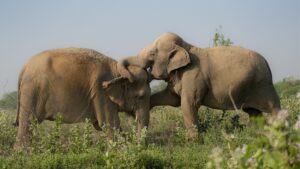
The most rewarding part is witnessing these animals thrive in the safe spaces they now call home, lives they would never have experienced otherwise. Former ‘dancing’ bears who once roamed the streets and elephants who were forced to beg now live with dignity and freedom. Seeing them rediscover natural behaviors, comfort, and peace is profoundly moving.
I feel truly privileged to be part of work of such magnitude, work that restores not just health, but freedom and hope for wildlife.
Have you ever had a pet or grown up around animals? Among all the animals at our centres, do you have a personal favourite?
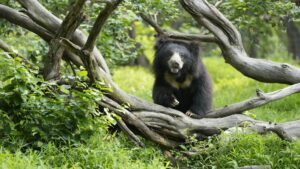
I grew up surrounded by animals. Village life meant being constantly around goats, chickens, cats, and dogs and caring for them wasn’t something special, it was simply a way of life.It’s hard to choose a favourite at Wildlife SOS, but a few hold a special place in my heart. Deva, a sloth bear at the Bannerughatta Bear Rescue Centre, is cute, chubby, and loves the treats I give him. He learned his operant conditioning behaviours remarkably fast and is a total sweetheart. He loves to nap and is slightly lazy, but in the most adorable way.
Bizi from the Agra Bear Rescue Facility is another one I am fond of. He is extremely intelligent with a wonderfully expressive face. More recently, Jenny, an orphaned cub rescued from Madhya Pradesh, has won my heart. She is a bundle of endless energy, playful, affectionate, and full of life. Honestly, there are so many… but each of them leaves a mark on your heart.

If you could spend a day as any animal, which one would it be and why?
I would choose to be a golden eagle. A majestic bird of prey, an apex predator that answers to no boundaries and knows no fear, they soar high above the mountains, riding the wind currents, with the world stretched endlessly below. What an extraordinary experience that would be!
Outside of your professional life, what hobbies or interests help you unwind?
I do a little birding in and around the campus and have documented around 250 bird species in Agra. I have recorded many raptor species, and even achieved the first photographic documentation of the Amur falcon from Uttar Pradesh. I have also contributed to the globally recognised Merlin Bird ID app, working with top birders and experts in India.
Do you have a favourite bird or wildlife species that fascinates you the most?
If I had to choose, it would be the leopard. As Jim Corbett once said, the leopard is the most beautiful animal in the jungle. They are extraordinarily intelligent, adaptable, yet mysterious and elusive, a combination that is both deadly and breathtakingly beautiful.
Is there a fun or lesser known fact about you that your colleagues might be surprised to learn?
I have worked for the well-known international bird ID application Merlin Bird ID, contributing to the Indian birds section alongside famous birders and experts around India. According to the eBird checklist contributions, I am currently ranked 2nd among the top eBirders in Uttar Pradesh, and stand at 53rd position for species count.

What is the best piece of advice you’ve ever received? What would you like to tell aspiring wildlife veterinarians or conservationists?
One piece of advice that has stayed with me is, ‘If you are the smartest person in the room, you are in the wrong room.’
It reminds me to constantly seek environments where I can learn, grow, and be challenged. Growth happens when you surround yourself with people who inspire, question, and push you beyond your comfort zone.
I believe in keeping that thirst for knowledge alive. When you remain curious, humble, and willing to learn, progress becomes inevitable. And somewhere along that journey of continuous learning, you end up achieving more than you ever imagined.
If you could address or solve one major challenge in wildlife conservation today, what would it be?
Human-animal conflict. It happens all over the world and is not just about the animals or people, it’s rooted in shrinking habitats, expanding human needs, fear, and misunderstanding.
I wish there were a simple, peaceful solution to end it altogether. But the deeper you look, the more complex it becomes. It’s a layered issue involving ecology, economics, culture, and livelihoods. Resolving it requires patience, science, empathy, and cooperation from all sides, for long-term coexistence.

For Dr. Adhithyan, the work he does is never truly ‘finished’. Whether he’s exploring and documenting birds as an expert or digging deep into wildlife research and field investigations with the same persistence that sloth bears show while hunting for termites, Dr. Adhithyan’s outlook towards animal care is both impactful and inspiring. With his heart rooted in wildlife conservation, we are honored to have him and his expertise on board.
If you too are passionate about wildlife, Wildlife SOS welcomes you to visit our bear and elephant centres in Uttar Pradesh. Write to us at [email protected] for more details.
Feature image: Chinmoy Swargiary/ Wildlife SOS