Doctors are seen far beyond their medical profession. They are widely respected as healers, and for veterinarians, it becomes all the more extraordinary. They require not just medical expertise, but utmost patience in their minds and a deeply etched compassion in their hearts for the patients who can not talk about their pain.
We witness such committed dedication at Wildlife SOS, which runs 17 conservation facilities across India. Our very own veterinarians have showcased their skills with profound sensitivity across the 10 different rescue and rehabilitation centres the organisation runs. These include the Elephant Conservation and Care Centre (ECCC), which is the country’s first specialised elephant centre, the Elephant Hospital Campus (EHC), India’s first elephant hospital, Agra Bear Rescue Facility (ABRF), the largest sloth bear rescue centre in the world, Bannerughatta Bear Rescue Centre (BBRC), the second largest one for rescued sloth bears, and Manikdoh Leopard Rescue Centre (MLRC), a poignant centre for leopard care. We even have two transit facilities where rescues from the Delhi NCR and Uttar Pradesh Rapid Response Units are taken for specialised care and treatment. The very function of these establishments lies in the hands of guardians that uphold competence for care.

As we bridge Veterinary Appreciation Day (June 18) and National Doctors’ Day (July 1), it is the perfect time to celebrate the incredible doctors who work behind the scenes at Wildlife SOS. Whether they are treating a large leopard, a long python or a baby bird, their compassion and dedication never waver. Amidst their extremely busy schedules, we managed to steal a few moments to get to know more about them and their unique stories.
1. What keeps you motivated and smiling throughout the day?
Dr. Arun: The animals themselves. Their resilience, innocence, and ability to recover despite extreme suffering are powerful motivators. Also, knowing that even a small intervention can significantly improve their quality of life keeps me grounded and positive every day.
Dr. Ilayaraja: My motivation comes from continuously exploring new possibilities to provide better care for distressed animals and witnessing their recovery and improved quality of life.

Dr. Lalit: My work contributes to improving the health and welfare of animals that keeps me motivated. Of course, seeing an animal recover, become comfortable, or return to a better quality of life brings a smile to my face.
Dr. Deepak: Listening to the voices of birds and talking with them makes me smile.

Dr. Sriram: The staff and caregivers work together as a team and everyone is an all rounder. Everybody is good at multitasking and actively contributes to team discussions.

2. Can you share a challenging yet successful surgery you have ever performed?
Dr. Rahul: I once performed a very successful surgery on a bear named Neena to clear up a painful abscess on her spine.
Dr. Deepak: Yes! Believe it or not… it was a python’s dental surgery!

3. What is one unique thing in Wildlife SOS vet’s cabin that you would never find in a regular vet’s clinic?
Dr. Avinash: I believe that the equipment at our centres is unique and in a perfect working condition. At the MLRC hospital, we have an electrolyte analyser, which I don’t think any other animal hospital has.
Dr. Ilayaraja: Specialised wildlife anaesthesia equipment, including laryngoscopes with extra-large blades and oversized endotracheal tubes designed for large wild animals, is something rarely found in a conventional veterinary clinic.
Dr. Lalit: The uniqueness of the ECCC vet cabin is that I can observe Priyanka, Mia, Rhea and Tara from my cabin window. It’s really heartwarming and brings me peace to see them daily and to see their natural behaviour and their playfulness shine after years of abuse. I can observe them from a distance as they engage in activities like enrichment, bathing in a pool, eating fodder, walking, playing, and self grooming.

Dr. Arun: What sets us apart is the combination of field improvisation and wildlife-specific equipment. From customised immobilisation tools to enrichment-based medical training aids. But more than that, it’s the unpredictability, you might be preparing for a sloth bear dental procedure one moment, and an elephant foot emergency the next.
4. We do know that in human beings, once anaesthesia wears off, it causes us to be strangely confused. In case of surgical interventions for animals, what is their reaction while they wake up from anaesthesia?
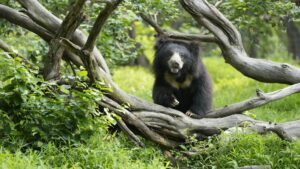
Dr. Arun: Many animals, especially bears, show very expressive recovery behaviours. I remember a sloth bear trying to “walk with dignity” after anaesthesia but slowly realising its legs weren’t fully cooperating, it sat down, looked around as if nothing happened, and then casually lay down again. That moment did bring in a few smiles in an otherwise intense field.
Dr. Gochalan: While recovering from anaesthesia, the animals are very drowsy. I have seen bears swinging their heads, trying to come back to a normal position. After recovery when they try to walk, they look like they’re experiencing something close to a hangover, you know, trying to understand their environment. Monkeys while recovering also make some unusually confused expressions.

5. Have you ever felt an animal saying “thank you” to you through a gesture or look, or touch or in any other form?
Dr. Ilayaraja: Many times. Some animals respond to their names, and sometimes they voluntarily approach us, and gently sniff us without any signs of fear or aggression. These moments often feel like their own unique ways of expressing trust and appreciation.

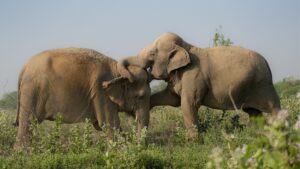
Dr. Gochalan: Most of the elephants hold our hands with their trunks when we go to treat them. Bani used to do this too, especially right after her rescue. Their eyes talk. We have observed that if their pupils are dilated or constricted, that means they are not interested in any kind of interaction.
Dr. Vineet: For me, the rescue operations are deeply fulfilling. Releasing animals from traps and watching them freely roam around in the wild feels like they are saying “thank you for helping me”.
Dr. Avinash: A female leopard had a serious wound on her stomach after getting caught in a wire and I treated her for 25 consecutive days. Once she had completely recovered, we made the arrangement to release her back into the forest. While she was stepping out of the carrier cage, she looked back for a second before disappearing into the forest. It felt like she was saying “thank you” to us.
6. What has been your most heartwarming moment here over the years?
Dr. Arun: There have been many, but the most heartwarming moments are when rescued animals, especially those that have suffered for years, begin to trust again. Watching a once-traumatised sloth bear or elephant relax, forage naturally, or simply rest peacefully is deeply fulfilling.

Dr. Adhithyan: While working at MLRC, we rescued a three weeks old male cub with superficial burns from a burnt sugarcane field. After treating his injuries, we placed him in a comfortable transparent transport box in the exact spot where the cub had been discovered. Infrared cameras that were installed nearby captured our success! The mother leopard arrived, pushed down the box, and lifted her cub by the scruff of his neck and disappeared into the forest. It remains one of the happiest moments of my life. Knowing that that little cub is out there right now, roaming freely where he truly belongs.
Dr. Pramod: The most heartwarming moment is definitely seeing Bani walking on her feet. We brought Bani here in lateral recumbency and her chance of survival was minimal. She was hit by a train while crossing the railway tracks with her herd in Uttarakhand. The herd got scared and ran away, but Bani was badly injured and couldn’t get up. Her spine, hips, hind limbs were all injured and were paralysed. This was back in 2024. Looking at her now gives me immense happiness and satisfaction.
Dr. Rahul: It was the rescue mission where the team worked tirelessly to save an elephant named Moti in Ramnagar, Uttrakhand. Despite the tireless efforts of our team and a massive support form the Indian Army, losing him was deeply depressing. Another such rescue mission was of Bani. Her condition initially seemed completely hopeless, but our team refused to surrender. Today, seeing Bani thrive and play at our centre feels heartwarming.

7. Who are your favourite animals at the centres, and which one has the best manners when it’s time for a medical checkup?
Dr. Sriram: Deva ( sloth bear at BBRC) is certainly my favourite! He always remains so comfortable and responds wonderfully during the regular medical check-ups.

Dr. Vineet: Jimmy, Shyam and Bholu (at Van Vihar Bear Rescue Facility) are my favourites. Jimmy and Shyam always hold out their palms as if for a handshake! Shyam has his own way of saying hello! Whenever we approach him, he says hello in a unique way by standing on his hind limbs and bringing his paws together.
Dr. Lalit: Laxmi (at ECCC) is my favourite as she is a very cooperative girl in our centre. We face no struggle while treating her during routine check-ups such as taking her body temperature, collecting samples, monitoring her blood pressure, and giving oral medication. Best thing is she is voracious, so on a single call itself, she hurries and comes over with her mouth open for treats.
Dr. Gochalan : Laxmi is my favourite too. She loves food more than anything else and is so motivated by them that she has become a quick learner for positive reinforcement training.. She’s a foodie by heart and this helps the team smoothly conduct routine check-ups.

A big shout out to all our amazing veterinarians who have joined Wildlife SOS and its mission to provide both medical and emotional care for the animals. You are not just healing the wildlife, you are giving them a second chance at life they truly deserve!
If you feel inspired by the work they do, you can support the efforts of our incredible veterinary team by making a donation. Every contribution brings us one step closer to creating a more compassionate world for these wild animals.
Feature Image: Vineet Singh/ Wildlife SOS