Ask a wildlife conservationist on how they observe animals, and you may realise that there is more to what can be seen. At our animal rescue and rehabilitation centres, we often see animals doing what can be called a regular activity, but that would be a partial interpretation. An elephant stands quietly, her trunk gently brushing the ground. A few metres away, another one waves and stretches her trunk. Unless one knows that both were rescued from lives where fear and restriction governed them, these actions wouldn’t be given a second thought. It is here that they’ve finally found calm after chaos, and the opportunity to forage freshly growing greens.
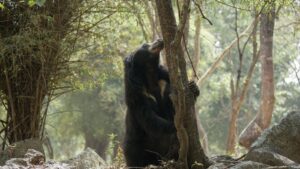
At our sloth bear centre, a soft, distinct hum can be heard. The caregivers call this the “bear song”. It has a rhythm to it, and the bears “sing” it when they are content. It is one of the most rewarding sounds to hear from bears rescued from traumatic pasts.
Understanding what these small behaviours mean offers a glimpse into an animal’s healing journey. Many rescued animals arrive carrying the physical and psychological scars of captivity, neglect or traumatic encounters. Healing, then, is not just about treating injuries; it is also about helping them feel secure in their surroundings, build trust with their caregivers and gradually rediscover behaviours that come naturally to them.
It Begins With Trust
We are aware that in the first few days when rescued animals come under our care, some tend to hesitate before taking the food offered. Others remain guarded and still, as if practicing their choice might backlash. Their movements are measured, reactions defensive. Even if they realise that their body is safe, their mind is yet to reach that stage.
Take Suzy, for instance.
Although she is not with us anymore, she was one of the most special ones that we treated at Elephant Conservation and Care Centre (Elephant Camp). Belovedly called ‘Paro’ by her caregiver, she has left an immense impact on how we practice and perceive rehabilitation in our centres.
For over six decades, Suzy lived under circus tents, performing unnatural tricks, standing for hours in chains, moving only when commanded. By the time she was rescued, she had lost her vision and spirit entirely. The world she stepped into at the ECCC was not just new to her, it was one she had never known could possibly exist
In those early days, Suzy didn’t explore her surroundings. She just couldn’t. Every step required trust she hadn’t yet learned to form. Alongside our team, Suzy began to find comfort in two fellow rescued elephants, Asha and Lakhi, who had also survived lives of hardship. Asha, the trio’s gentle matriarch, guided both blind elephants with soft rumbles and reassuring touches of her trunk, while Lakhi’s quiet companionship helped turn unfamiliar spaces into places of safety. Together, they taught Suzy that this new world could be trusted.
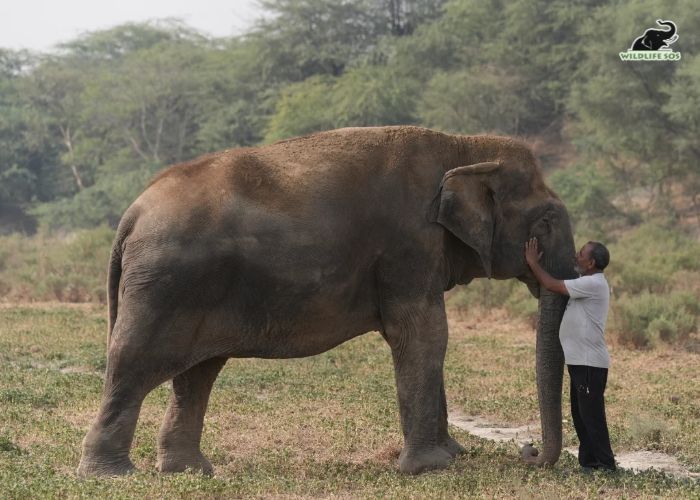
After Asha and Lakhi passed away, Suzy leaned even more on her caregiver, Baburam ji. He stayed by her side on walks, reassuring her with words and treats as she navigated her space.
Slowly, over time, a sense of faith had grown in Suzy. With her trunk, she began reaching out to check for the presence of the one person she now knew she could rely on. Baburam loved his Paro dearly and he ensured she always had a hand to hold on to, all the way to the very end.
Somewhere along this journey, Suzy had learned that she didn’t have to live her life alone anymore.
That’s where healing begins.
The Freedom To Be Curious
Anxiety is natural.
But it doesn’t return in environments that become comfortable. It doesn’t exist where fear dominates. And if it is taken over by curiosity, that’s a welcome sign.
At the centres, caregivers often notice this taking place in the smallest ways. A bear that once stood withdrawn begins to interact with objects entirely new and appealing to them. They dig into soft earth, sift through mud, pause to inspect where ants and termites are coming from. These instinctive behaviours had remained numb, only to emerge when the mind and body was no longer overwhelmed.
Jenny and Gracie’s story carries this shift beautifully.
Jenny was just a two-month-old cub when she was found clinging to her gravely injured mother in Madhya Pradesh in 2025. Her mother didn’t survive, leaving Jenny orphaned long before she could learn the skills she would have needed to survive in the wild. Sloth bear cubs usually stay with their mothers for at least two years, relying on them to learn everything from finding food to navigating dangers. The trauma of losing that guidance so early left Jenny helpless with severe signs of distress, digestive issues and weakness. Without the right care, her world could have easily shrunk into a box.
At Agra Bear Rescue Facility (ABRF), caregivers stepped in to become the constant source of care she desperately needed. They were also ensuring that the wild instincts she was at the cusp of developing weren’t lost. Enrichments like puzzle feeders, hanging wooden logs and jute hammocks, were all designed suited to her size, her age and her needs. These were nothing less than “toys” for Jenny, bringing out the child’s playfulness and spirit.
Jenny is now over a year old, and she shares a beautiful bond with her caregiver, Deshraj, who also hand-reared her in the initial days and provided a sense of support that the infant bear had lost. She is one of the most adventurous bears at our facility. She loves to play, loves to swim, and loves to climb right at the top of a tree.

Gracie, on the other hand, was approximately 12 years old at the time of her rescue this year. The poor bear had unfortunately spent her entire life in pain and captivity. A rope that was passed through her pierced snout was tugged so she could perform in pain on the street for meager money. She remained malnourished, injured and in extreme trauma stemming from abuse and ill-treatment.
Upon reaching the facility, the vet and the caregivers had to be immensely patient to try and get her out of the shell of fright she was used to living in. Our first goal with Gracie was to give her the nourishment and nutrients she was denied all her life. We started slowly, by feeding her food mixed with honey and milk. She finally understood that all we meant to give to her was love and care. Today, she may be called a calm and shy bear, but she demands for what she now treasures — dollops of honey and her very own bowl of milk.
And Then, Slowly, the Body Follows
Healing rarely moves in a straight line, but when it does begin, you see it reflect in the animal’s body.
Suraj’s story is impossible to forget.
For decades, he lived in a dark, damp area at a temple site, bound in chains, under-fed and overworked. By the time he was rescued, his body reflected everything he had endured. He was underweight, his joints stiff, his skin marked with wounds, and his behaviour shaped by constant fear.
Once rescued, at the centre, even the smallest sounds startled him. Thunder would stress him out. He would sway and bob, which are stereotypic movements that are caused from trauma.
The caregivers remained gentle and patient with him, constantly reassuring him that the life of abuse and bondage he was so far accustomed to was now over. And then, slowly, something began to change. The pool at the facility became a comfort zone for Suraj, and he spent hours soaking and splashing water all around.

He started taking mud baths on his own and loves being showered by his caregiver. So much so that he often falls asleep in the middle of the sessions.
Laxmi’s path to healing started from a different place.
Unlike most rescues, she arrived at our centre severely overweight after years of surviving on fried street food, sugary temple offerings and nearly 200 vada pavs a day while begging on the roads of Mumbai. At just 18 years old, she was already battling osteoarthritis, exhausted joints and a body carrying far more weight than it should have. Even climbing into the rescue vehicle became impossible without a crane because walking itself had become so painful.
Rehabilitation meant unlearning years of unhealthy habits. Our veterinarians designed a completely new diet to reduce the strain on her joints, but Laxmi wanted nothing to do with beetroots, pumpkins and leafy greens. She would literally turn her back on her caregivers rather than accept the food they brought. Patient coaxing, favourite treats like bananas and watermelons, and months of consistent care gradually changed her relationship with food.
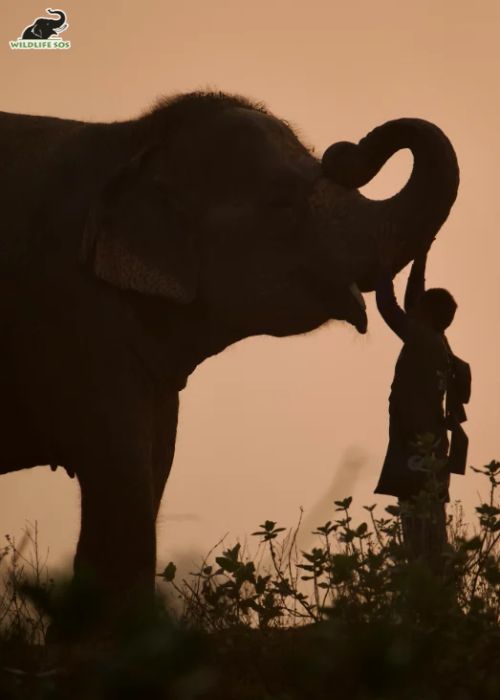
As her body grew stronger, another kind of recovery began to reveal itself. Laxmi embraced target training, eagerly presenting her feet for pedicures and her ears for blood draws once she understood that cooperation brought rewards. She also formed close bonds with her companions Bijli and Chanchal, whose presence helped her regain her playful side
Then came one of her most memorable breakthroughs. When our team introduced hanging feeders filled with treats, Laxmi quickly realised she could untie the knots and make everything tumble down at once. So we made the knots trickier, and she happily spent hours figuring them out. It was more than a clever trick. It showed an elephant actively solving problems, engaging with her environment and rediscovering the curiosity that rehabilitation is meant to nurture.
And One Day, It Feels Almost Ordinary
The most surprising part is that there’s no clear moment when healing is “complete” or “beginning”. Trauma has a vicious tendency to last, and so, providing care, safety and comfort are essential for both mental and physical healing.
Yet, there are signs to know that they are healing. The elephant that once flinched at every sound or stood fearfully still now walks calmly through the same space.
One of our newest resident bears, Lissy, was rescued as a young-adult (around three to four years old). Her pierced muzzle, smashed canines and digestive troubles spoke of a painful past, but once she arrived at ABRF, she seemed determined to make up for lost time.
After completing her quarantine period under veterinary care, Lissy was introduced to a lush field, where she threw herself into being a bear with remarkable gusto. She eagerly chased enrichment balls smeared with peanut butter, dug eagerly through the soil in search of ants and termites, and even discovered the joy of climbing wooden platforms — things she had never done before.
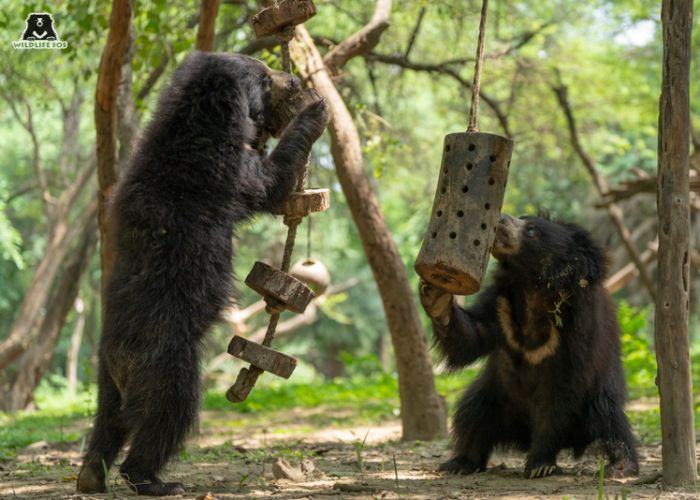
When Lissy met Gracie, our team knew that she had also found a friend. What followed ever since has been wondrous to watch for her caregivers. Lissy races after Gracie, splashes into pools with Jenny and Molly, and spends hours exploring every corner of her enclosure! This reminds us how healing can be observed when the bear gets a chance to grow the wild spirit inside of them.
Such moments are when we think about how far they have come. These shared stories are what the process of care and rehabilitation are about.
Unsurprisingly, there is no fixed timeline for any of this. Some animals find confidence in their care quickly. Others take months, even years, to unlearn what torture taught them.
But the pattern remains the same.
Trust builds > mind and body heal > personality emerges. And somewhere along the way, the animal stops surviving and starts living.
If you wish to contribute to the journey of healing for these animals, please feel free to donate here.
Feature Image: Wildlife SOS