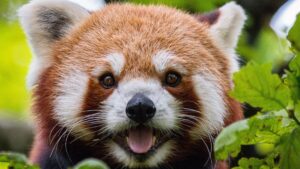
Wildlife SOS rescued as many as 338 animals in March 2026 across Delhi, Uttar Pradesh, Jammu & Kashmir and Gujarat — which included encountering rare species and witnessing landmark recoveries.
March did not arrive gently. The climate apathy agonises everyone, and is impacting animals that are facing the unravelling uncertainties of climate change as well. The month that is supposed to usher in warmth came wrapped in contradictions — unpredictable downpours, restless winds, and a kind of atmospheric tension that cut across seasons. The Wildlife SOS Rapid Response Units stayed on high alert as the helpline rang with one call after another. The rescue teams withstood challenges the weather presented with a dedicated commitment to ensure animal safety. Here is what March looked like on the ground.
Delhi NCR
Delhi in March occupies an uneasy middle ground. Winter is over, but does not entirely leave, and summer arrives before it is welcome. For reptiles, this shift in temperature means increased movement through residential areas as they seek warmth. For birds, the breeding season is underway, and juveniles attempting early flights sometimes land in places far from where they should be. In this unsettled month, the Wildlife SOS Rapid Response Unit in Delhi answered calls from across the capital — from crowded residential lanes to busy government offices — rescuing 182 animals in total: 126 birds, 27 reptiles and 29 mammals.
It was a regular morning at Mandawali Metro Station in East Delhi when commuters noticed something unusual near the tracks — a juvenile black kite (Milvus migrans) lying still, unable to lift itself. The Wildlife SOS helpline was informed, and within 45 minutes, the Rapid Response Unit was on site. The team secured the bird from the vicinity of the tracks, and close observation revealed that the bird was not only dehydrated, but also faced an issue with its eye. Eye drops were given for its temporary condition and the kite was hydrated, and after a few hours, it was healthy enough to take flight once again.

The same week, the helpline received another call related to a black kite found in distress at the Ministry of Electronics and Information Technology in Delhi. The team responded and successfully rescued the bird. Across March, 46 black kites were rescued in Delhi, reflecting the scale of raptor rescues the city sees at the onset of breeding season, which synchronises with increasing temperatures and shifting weather patterns.
Among India’s venomous snakes, four species carry the most toxic snakebites — the Indian cobra, Russell’s viper, common krait, and the saw-scaled viper. While the first three are occasionally encountered in Delhi-NCR, the saw-scaled viper (Echis carinatus) has not been recorded here in over a decade.
Residents of the Shivpuri Patpar Road area in East Delhi spotted this very snake inside their home and immediately called the Wildlife SOS helpline. The adult saw-scaled viper, measuring approximately 1 to 1.5 feet, was already in a defensive posture, producing the characteristic rasping sound the species makes by rubbing its keeled scales together when threatened. Trained rescuers used specialised equipment to secure the snake without causing it any harm. The viper was later released into a suitable natural habitat away from human settlements.

Among the 27 reptiles rescued in Delhi this March, 14 common Indian wolf snakes, five spectacled cobras, four royal snakes and two rat snakes were relocated from residential and public spaces across the city.
Agra & Mathura, Uttar Pradesh
The Rapid Response Unit in Agra responded to 72 rescue calls in March — 29 reptiles, 21 birds and 22 mammals. Among these, several cases demanded intensive veterinary attention and extended care at the Wildlife Transit Facility.
It was a call after midnight that alerted the Wildlife SOS Rapid Response Unit about a grounded Egyptian vulture (Neophron percnopterus) found in Agra. The Uttar Pradesh Forest Department found the severe injuries on the wings of the rarely sighted raptor, who had been caught and cut by wires of a fencing. Unable to fly, the wound on the right wing was so deep that its bone had been exposed. In a joint operation, the forest department and Wildlife SOS secured the bird before dawn and transported it to the transit facility.

The veterinary team’s immediately brought the bird under intensive care, with antiseptic wound dressing and oral painkillers being provided. Close examination indicated that the vulture had struggled to free itself from the fencing, and this was when the wire cut through tissue and bone, causing irreparable damage to the wing. Since flight is no longer possible, the bird will receive lifetime care at the Wildlife SOS facility.
The Egyptian vulture is listed as Endangered on the IUCN Red List and is protected under Schedule I of the Wildlife (Protection) Act, 1972. As scavengers, vultures perform a critical function in maintaining ecosystem health — removing carcasses that would otherwise spread disease.

In Kakuabad village on Gwalior Road, villagers came across a young male Indian hog deer (Axis porcinus) in poor condition and alerted the police. After looping in the forest department, Wildlife SOS was contacted as well. The Rapid Response Unit transported the approximately nine-year-old deer to the Wildlife SOS Transit Facility by midnight.
Veterinary examination found that the right hind leg of the hog deer had an advanced stage of gangrene, with no viable tissue remaining. Amputation was the only option to prevent fatal sepsis. The surgery was carried out successfully.

What followed was a period of recovery for the deer. Consistent treatment and examination led the deer to show significant improvement in its mobility. The hog deer was eventually released — an applause not only for this individual, but the expertise followed by wildlife veterinarians.
A distress call from a village near Mathura reported a large bird grounded near an agricultural field. When the Rapid Response Unit arrived, they found a sarus crane (Antigone antigone) unable to move, with a broken wing. The bird was transported to the transit facility, where the veterinary team assessed the injury. Its wing bone had a fracture, which required careful, sustained treatment.
The sarus crane is among the tallest flying birds in the world and holds the distinction of being the state bird of Uttar Pradesh. Recovery is progressing steadily, and the bird is expected to be released once the wing has healed fully.

Jammu & Kashmir (J&K)
March in Kashmir was, by any measure, the coldest the region had seen in some time. The mountains did not agree that winter was over. Snow continued to hold at higher elevations while rains took over in the plains. The climate was in contradiction with itself, and animals across the region were among the first to feel it.
For Aaliya Mir, Centre In-charge of Wildlife SOS in J&K, and her team, March was a month of climatic contradictions and intensive fieldwork. Alongside rescue operations, the team carried out awareness programmes, conflict mitigation research and human-wildlife interface studies — all in a landscape still firmly in winter’s grip. The Wildlife SOS J&K unit rescued 6 animals, 3 reptiles and 3 birds that included two black kites (Milvus migrans), one barn owl (Tyto alba), two levantine vipers (Macrovipera lebetinus) and one ladakh cliff racer (Platyceps rhodorachis). When the rescue calls came in, two of them involved species whose presence and behaviour in this part of the world is unlike anything found elsewhere in the country.
A household in Kashmir called to report a snake inside their home. Rather than rushing to the site, Aaliya Mir and her team first guided the residents through a set of clear instructions: do not disturb the snake, maintain distance, and if safely possible, take a photograph so the species could be identified and the snake’s location could be tracked.
The residents followed every instruction. The photograph confirmed the species — a Ladakh cliff racer, one of the rarest serpents found in the region. The behavioural patterns of this cold-adapted, high-altitude species differ considerably from those of snakes inhabiting warmer, lowland regions of India. The erratic temperatures of that particular March had likely driven it into the warmth of the structure. The rescue team carefully secured and released the snake into the forests of the Himalayas.

Vadodara
While Kashmir was still under snow, Vadodara was already beginning to experience heat sharply. Temperatures climbed earlier than expected, water sources thinned across the city, and the conditions for the animals worsened. The Wildlife SOS-GSPCA (Gujarat Society For Prevention Of Cruelty Animals) team addressed 79 rescues in March — 30 reptiles, 38 birds and 11 mammals.
One of the cases came in from a residential society where a large monitor lizard was seeking shelter from the scorching sun inside a broken pipe. The monitor lizard had entered the washing area of a house to find the cool spot. The resident promptly reached out to the helpline and a rescue operation was carried out. The monitor lizard received proper hydration and a medical assessment that declared it uninjured and fit for release. Monitor lizards are excellent protectors of the ecological balance, keeping the rodent populations of small mammals in control.

The Wildlife SOS Rapid Response Unit responded to every call. Each animal that came in was assessed, rehydrated and given the medical attention needed for recovery. As temperatures across the country continue to rise, cases of summer-oriented rescues are expected to increase, a pattern the team is well prepared to handle.
Wildlife SOS operates 24×7 emergency rescue helplines across regions, responding to hundreds of calls each month. If you spot a wild animal in distress, contact the nearest rescue team immediately.
Delhi-NCR: +91 9871963535
Agra & Mathura, Uttar Pradesh: +91 9917109666
Jammu & Kashmir: +91 7006692300 / +91 9419778280
Vadodara, Gujarat: +91 9825011117
Timely reporting saves lives — both human and wild.
You can also support our work by making a donation.
For more on our reptile rescue operations, join our Facebook group Wildlife SOS Reptiles.
Feature Image: Wildlife SOS/ Aaliya Mir