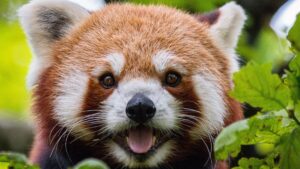
Every day, without realising it, we rely on millions of wild animals working behind the scenes. If you peel back the curtain a little, an entire population of wild animals maintain the delicate balance of their home, which impacts the planet we are on as well.
For animals, doing work is not about building their career. They do not clock in, they are not paid, and more often than not, their intentions are either misunderstood or overlooked. Yet their contributions directly shape human survival, health, and wellbeing. Want to know how? Read on!
Elusive Pest Controllers: Pangolins
Those of us who know of Pokémon would recall the character Sandshrew that had a symmetrical pattern on its body and could curl up into a ball. That’s exactly what a pangolin looks like, and can do.

Pangolins are difficult to spot in the wild, but they do have a large impact on it. A single pangolin is known to eat about 70 million insects in a year! They sure lack teeth, but have long snouts and the lengthiest of sticky tongues that help them to hunt and feed on them. And there’s more. Their strong armour of scales protects them from every bug bite possible

Between ants, termites and other small insects, pangolins love to munch on termites the most. Feeding on them is protecting the woods from being destroyed. While digging out insects using their sharp claws, they’re actually tilling the soil, boosting its nutrient levels for seeds of more trees to grow.
Controlling the pest population of insects, these mammals matter in ensuring the forest’s health. But in today’s times, trees are being cut down to accommodate human needs. The loss of this landscape means the loss of their food and shelter. And the loss of pangolins means the loss of the very gardeners instinctively working to maintain a rich forest.
Sadly, pangolins are the world’s most trafficked mammal. High demand for their scales also leads to them being hunted down.

Habitat loss has led pangolins to wander into areas where they become awkward and unusual sightings. Wildlife SOS often comes across pangolins in distress, rescuing and relocating them to habitats suitable for them.
Thank You for the Food we Eat, Bees
Here’s a fact that will make you gasp.
As many as 75% of crops across the world that we consume rely on pollinators to spread. Among the seed dispersers is one species that tops the list — it can multiply 35% of the crop lot. They’re small-bodied, have wings, but if bothered, they may sting. We’re talking about the buzzing bees.
Through pollination, they enable the reproduction of a vast number of crops from fruits and vegetables to oilseeds and nuts. This is why the Ministry of Agriculture has promoted beekeeping for farmers to boost their produce. It can substantiate their incomes by selling bee products such as honey and beeswax.
In the UK, there are estimates that without natural pollinators, it would cost farmers almost 2 billion pounds a year to manually propagate their crops. Among fruits are apples, orchards of which highly depend on pollinators to flourish.

So the next time you see a bee, give their flight a second thought. They are, after all, natural farmers, a gift of nature to us.
Engineers of Forests: The Elephants
Elephants are known to eat on the go, consuming as much as 150 kg of food and almost 100 litres of water in a day. As these giant beings move through forests, they push over trees, clear pathways, and disperse seeds effectively shaping vegetation patterns and enabling new plant life to grow — becoming guardians of the ecosystem. These ecosystems ensure that we breathe good air for our wellbeing and prevent natural disasters from occurring. In drier regions, they are also known to dig for underground water and create drinking water holes that benefit us and countless other species.

Elephant populations in India and across the world are threatened mainly by illegal hunting for their tusks, poaching of young calves to be used in entertainment industries such as circuses, in wedding processions and even at temples, and human-wildlife conflict due to habitat destruction. The most recent census report states that only 22,446 Asian elephants remain in India, a decline from the number declared back in 2017.
Wildlife SOS has been consistently working for the welfare of Indian elephants and runs India’s first elephant hospital with state of the art medical equipment. Through awareness sessions and initiatives like Refuse To Ride and a campaign to end ‘begging’ elephant practice by 2030, we aim to secure the future of every single elephant in India.
Nature’s Sanitation System: Vultures
Did you know that across the globe, except for Antarctica and Australia, the vultures occupy an important place in our food cycle? By rapidly consuming animal carcasses, vultures prevent the spread of harmful pathogens that could otherwise contaminate soil, water, and human settlements. Their highly acidic digestive systems neutralise dangerous bacteria, making them uniquely equipped for this role

Till the 1990s, vultures were plenty in number, till its population suddenly dropped. The reason: toxic veterinary drugs like diclofenac that were used for cattle. Vulture populations feeding on carcasses that were given these medicines for relief were in fact poison for these avian scavengers.
The declining numbers of vultures in India brings more sorry news. The carcasses rotting in the village areas are sparking health concerns such as spread of diseases among people. Moreover, with vultures missing in action, scavengers like jackals are taking over, making cases of human-jackal conflict rise

To initiate conservation practices of vultures in Thar desert, a region where several raptors reside, a study by Wildlife Institute of India has begun to study their movement and behaviour through GPS transmitters.
The Night Crew: Bats
As dusk falls, a group of essential workers takes over. These animals are probably the worst victims of fictional slander as a result of being constantly associated with horror stories and legends of vampires.
Bats are the only true flying mammal species on Earth and play a dual role in ecosystems. On one hand, they act as pollinators and seed dispersers for hundreds of plant species across the world and help in maintaining biodiversity particularly in tropical regions. On the other hand, they also consume large quantities of insects and agricultural pests like maggots, caterpillars, and aphids. They act as natural protectors for crop fields, reducing the need for chemical interventions in farms involving cotton, maize and fruit orchards.

As per the Zoological Survey of India, our country is currently home to around 135 bat species, of which the smallest is the Indian pygmy bat and the largest is the Indian flying fox. Their population is threatened by various factors, mainly unplanned urbanisation causing habitat loss.
Shapers of Grasslands: Rhinos
Built like tanks, Rhinos are pretty much nature’s mighty lawn mowers made specifically for the open plains of Africa or grasslands of Asia. These mega herbivores help the environment immensely through their grazing and foraging habits, consuming as much as 60 kg in one day. They also do a great job of fertilising and nourishing the soil by excreting over 20 kg of dung everyday. No wonder they are listed as ecosystem engineers.
The greater one-horned rhinoceros, or the Indian rhinoceros, is the largest rhino species In Asia. Once upon a time, the greater one-horned rhinos roamed across northern floodplains of the Indian subcontinent but now, it is only found in the alluvial Terai-Duar grasslands and riverine forests at the foothills of the Himalayas in India and Nepal

The rhino populations all across the world are under a lot of threat, with less than 80 Javan rhinos and around 40 Sumatran rhinos left in the wild. In India too, increased severity of floods in Brahmaputra river basin caused by climate change has impacted the numbers of Indian rhinoceros, who are also facing factors like habitat degradation and illegal hunting.
The Quiet System We Rely On
These animals are among the many that create and maintain the balance of the world that we know. They are the main factors influencing the natural processes that provide us with clean air, water, food, and pest control.
What becomes clear is that the loss of any one animal species does not occur in isolation. It triggers a domino effect that can alter entire ecosystems and ultimately, human life.
Protecting wildlife, therefore, is not just about conservation. It is about recognising and preserving the intricate, life-supporting networks that make our comfortable existence possible.In the words of Sir David Attenborough, “It is important that we humans come down from our high horse and realise that we don’t have any more right to be on this planet than other animals”. By supporting Wildlife SOS and our initiatives, you too can contribute in making Earth a safe space for animals once again.
Feature Image: Mradul Pathak / Wildlife SOS