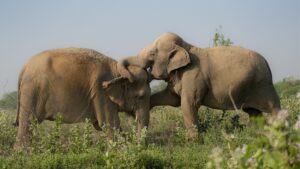
By May, the air in North India begins to balmy with heat, with the afternoons stretching for a longer period of time. However, at Wildlife SOS’s Elephant Conservation and Care Centre (ECCC), Elephant Hospital Campus (EHC) and Agra Bear Rescue Facility (ABRF) in Uttar Pradesh, these hours are when one can witness the most refreshing sights: elephants splashing around in their pools and coating themselves in dust baths, while sloth bears take sprinkler showers and lick juicy fruit popsicles!

It was amidst such an active routine when Indian actor Shivani Raghuvanshi arrived for a visit from May 4 to 6, 2026, to our elephant and sloth bear rescue centres in Agra and Mathura. Her eagerness and curiosity to learn, connect, and experience the lives of rescued wildlife was more than evident for all of us.
Our team made sure to ensure that Shivani’s itineraries at the centres were designed around the best hours to avoid high heat. Over the course of two days, the bubbly actor was given plenty of opportunities to observe the rescued and rehabilitated animals. Shivani immersed herself in the stories that defined their life before they arrived here, and the ones that are redefining their reality at our rescue facilities. She witnessed the patience, respect and dedication that is required towards their long-term care.

One of the most cherished experiences at ECCC is the morning walk, where elephants rescued from a lifetime of walking on harsh roads are now experiencing the soft earth beneath their feet as they stroll in the company of their caregivers. As the soft morning light filtered through the trees, Shivani joined the team to observe Maya, Phoolkali, Emma and Tara during this daily routine. A sense of calmness began to sink in when the large mammals took their steps in synchrony, carrying swaying trunks and gentle rumbles along the way.

As the walk came to an end, an unexpected drizzle began to fall from the summer sky, bringing with it a respite from the heat. The elephants appeared to relish the droplets, while Shivani stood quietly taking in the moment. It was simple and unplanned, but a perfect start to the visit. Following the walk, Shivani participated in an orientation session that introduced the work of Wildlife SOS and the ongoing rescue, rehabilitation, and veterinary efforts carried out across the centres. A detailed tour of ECCC followed soon after, offering a closer look into the daily routines that shape elephant care, from nutrition and enrichment building to medical support and behavioural well-being.

Throughout the first day of her visit, what stood out most was the genuine curiosity with which Shivani approached every interaction and conversation. The experience became valuable when she enthusiastically participated in their caring routine. Shivani helped out in chopping fresh seasonal fruits for elephants, and in making enrichments for them too. Once ready, she filled buckets with fruits to keep them ready for the elephants returning from their evening walks. While she did so, our team apprised her of why enrichments are an important part of elephant care. They encourage physical activity, mental stimulation, and natural behaviours, keeping their inherent instincts alive. The enrichment items were filled with dates, leaves and the very chopped fruits Shivani had kept ready for the elephants.

Later in the day, following an afternoon break, the visiting chart guided Shivani to India’s first medical unit for elephants, the Elephant Hospital Campus (EHC). Here, she was introduced to the advanced, specialised veterinarian care being carried out for rescued elephants.

Conversations centred around the physical and emotional challenges elephants in neglected captivity endure over the course of their lives. Chronic foot problems caused due to walking on tarmac, spine problems after carrying unfair heavy weight on their back, persistent limb injuries caused by prickly chains they were kept tied with, and malnutrition from prolonged neglect — all were hard-hitting truths that required lifelong medical treatment and compassionate care.
One of the most memorable moments of the visit was Shivani’s meeting with Bani, the youngest elephant under our care who recently completed two years under Wildlife SOS’s compassionate care.

Rescued as a baby elephant left paralysed after a horrific collision with a running train, Bani faced tremendous challenges during the early days of her recovery. Through months of attentive veterinary treatment, round-the-clock care, physiotherapy, and unwavering support from her caregivers, she gradually regained her strength and mobility. Today, Bani is an active and curious young elephant who continues to grow in confidence with each passing day. Watching her walk and explore her surroundings, is a powerful reminder of how care can transform a life once overshadowed by uncertainty.
Hearing her story and then seeing her being playful and full of energy, surely left Shivani captivated by Bani. She spent time constantly smiling while observing Bani’s childlike behaviour and vocal interactions. Meeting Bani offered a glimpse into how conservation commitments and medical advancements are fuelling a future that blankets care and protection of elephants facing freak accidents and mishaps in our country.

The second day of the visit began at the Agra Bear Rescue Facility (ABRF), home to rescued sloth bears who were once exploited through the now eradicated ‘dancing’ bear practice in India.

The tour through the facility introduced Shivani to the history of the cruel tradition and the extensive efforts undertaken throughout the years by Wildlife SOS to rescue and rehabilitate sloth bears, while also supporting the Kalandar communities who once depended on the said practice for survival.

Through conversations, stories, and observations, the visit offered insight into the emotional and behavioural recovery of rescued sloth bears adapting to lives of safety after years of suffering. Having enjoyed preparing enrichment treats for the elephants the day before at ECCC, Shivani was eager to take part in a similar activity for the rescued sloth bears, where she spent time chopping fruits and vegetables for the rescued sloth bears as part of their daily care routine. An interactive session accompanied by a short film screening followed that further led Shivani into the organisation’s rescue efforts for one of the most understudied bears of the world that underwent torture to entertain human beings.
The experience at ABRF concluded with a boat ride on the Yamuna River. The facility is located within the Soor Sarovar Bird Sanctuary, which is home to the wonderful diversity of wildlife. Along the riverbanks and waters and among several bird species were turtles that could be spotted basking in the summer sun that became a captivating sight for Shivani.

By afternoon, the team returned to ECCC where Shivani volunteered to prepare enrichments for the elephants returning from their evening walk. Thoughtfully putting together treats and leaves in a big tyre enrichment, the joyful event felt both rewarding and emotional. The evening brought with it a quiet experience of taking a peaceful walk through the elephant centre.

As evening settled over the centre, the rustle of leaves and calls of birds returning to their roosts took over. For Shivani, it was a moment not just to say goodbye to us, but also to absorb everything the visit had offered over the last two days at the centres.

From learning about elephant rehabilitation and sloth bear rescue to witnessing the resilience of rescued wildlife firsthand, Shivani’s visit offered her an opportunity to engage more deeply with the realities of conservation and compassionate care.
Visiting our centres play an important role in building and sharing meaningful connections between people and wildlife, helping create greater awareness about the challenges faced by rescued animals and the care that supports their recovery.
If you would like to experience Wildlife SOS’s rescue and rehabilitation centres firsthand, write to us at [email protected] to learn more about our visitor programmes and conservation initiatives.
Feature image: Vineet Singh / Wildlife SOS