Imagine a leopard or a bear suddenly appearing near a village or human habitation. It sure came from the wild, but the animal in sight also happens to be wearing a collar. For a community already anxious about encountering wildlife in proximity, the collar itself might raise more than many questions, the first certainly being “why has it been fitted with a collar?!”
Such peculiar encounters would often lead to frustration directed at the Forest Department, with some villagers referring to a collared animal as ‘your leopard’ or ‘your bear’. To those who frequently witness such sights, answers become more than necessary to resolve suspicions. The collars in question are in fact radio collars, which prove to be highly useful in the wildlife conservation field. And how exactly are they useful? They track the animal’s movement and location so the possibility of human-wildlife conflict can be stopped.
Through sustained awareness efforts concerning radio-collaring, people living at the edge of forests are increasingly understanding why it matters and how the information gathered can help researchers identify potential conflict areas. The scope of any resolution can encourage and activate people at the forefront of this issue. Some communities prone to conflict scenarios are even coming forward to highlight cases related to specific species and, knowing how radio-collars work, are trusting them to be a problem-solver.
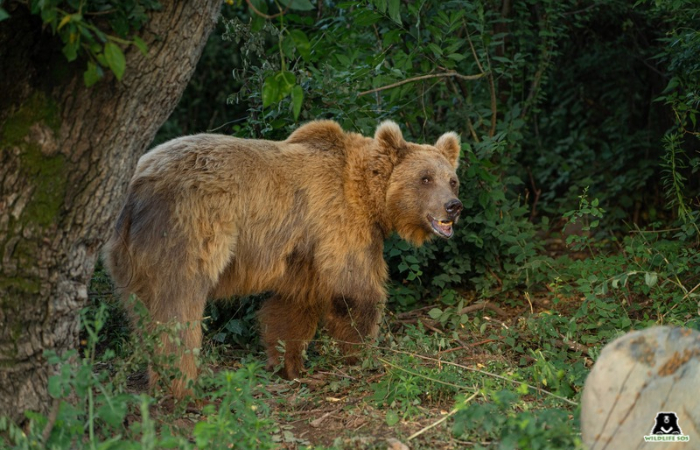
This change in perception reflects something important: coexistence becomes more achievable when people are not simply told to live alongside wildlife, but are helped to understand the “how” and “why” surrounding it. In Jammu & Kashmir (J&K), where many share landscapes with leopards and Himalayan black and brow bears, Wildlife SOS has been working with the J&K Wildlife Protection Department, Department of Youth Services & Sports and the Zoology Department at the University of Kashmir as significant stakeholders to build this understanding. Over the last two years, wildlife education, awareness and community engagement programmes have reached more than 10,000 students and 5,000 community members. The awareness work involves scientific capacity building, community engagement, and educational outreach.

Making Science Meaningful Beyond the Field
Understanding wildlife begins with understanding how it lives, moves and uses its habitat. But findings from scientific research can have a much deeper impact on people who live closest to wildlife. During interactive and educational sessions on wildlife conservation held by Wildlife SOS, in collaboration with the J&K Wildlife Protection Department and key stakeholders, attendees are introduced to the tools and techniques used in wildlife monitoring. These include demonstrations of radio collars, camera traps and tracking devices, and how these are crucial in analysing and interpreting data. This explains how science can contribute to informed wildlife conservation and conflict mitigation decisions.

The value of this approach is best illustrated by the research conducted by Wildlife SOS on Himalayan brown bears in Jammu & Kashmir. Studies on bear movement, habitat preferences, denning behaviour, and conflict hotspots have led to a better understanding of this bear species’ behaviour. For communities, understanding the purpose behind such research can change the conversation around wildlife monitoring. Instead of seeing a collar as a device to simply track an animal, it is imperative to recognise its potential to provide information that can help anticipate encounters and support preventive action. At the same time, conservationists and researchers begin to gain incredible insights into the behavioural patterns and preferences of the species, so that sensitive measures towards their protection can be taken.
When Conservation Conversations Begin in the Village
Scientific knowledge, however, cannot remain confined to research teams and institutional discussions. It must reach the people whose everyday lives are most affected by human-wildlife encounters. This is where the initiatives that fall under the umbrella of ‘Bridging the Gap’ — a community awareness programme in Jammu & Kashmir — come in. Through village meetings, discussions with local leaders and targeted community interactions, Wildlife SOS works to make conversations around wildlife more relevant to local experiences. A farmer working in an orchard and a parent concerned about a child’s safety may face very different challenges. Awareness sessions take these differences into account, drawing on available information from the Forest Department and field observations to explain patterns of human-wildlife conflict.
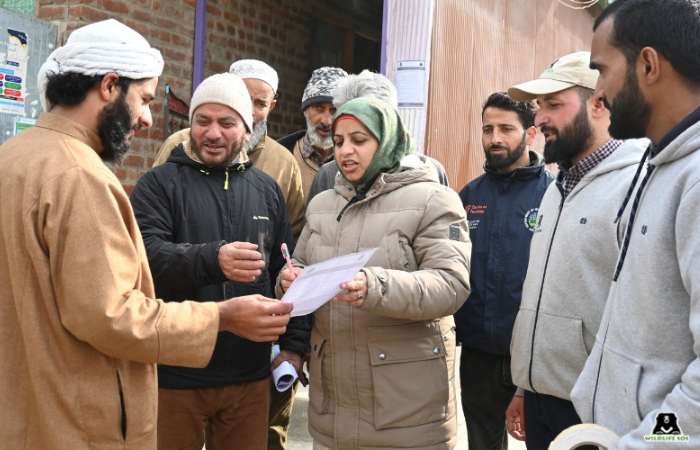
For example, small children are at higher risk in and around areas where leopard encounters frequently occur. Farmers and orchard workers can be more susceptible to bear attacks since fruit crops can often attract bears. Discussions such as these help explain why and how these encounters happen. They also help people understand the precautionary measures that can be taken, thereby improving children’s safety and taking care while entering fields and orchards frequented by bears.
The conversations also challenge commonly held assumptions about conflict management. Relocating an animal involved in a conflict, for instance, does not necessarily resolve the underlying problem; it may simply shift the conflict to another location. By discussing examples from Jammu & Kashmir and other parts of the country, the team encourages communities to look beyond individual incidents and understand the larger factors that bring people and wildlife into contact.
Where Curiosity Becomes Understanding
The journey towards coexistence can also begin with students in a classroom or during their visit to a wildlife rescue centre. Under the ‘Educate, Engage and Coexist’ project, Wildlife SOS in Jammu & Kashmir engages school and college students through interactive awareness sessions and conservation discussions. Rather than limiting learning to facts about individual species, these interactions introduce students to local biodiversity, wildlife behaviour, ecological relationships and the challenges of conservation.
At the Wildlife SOS rescue and rehabilitation centres in Dachigam and Pahalgam, the learning experience becomes even more personal. Visitors are introduced to the landscape and its wildlife before learning about the rescued animals receiving care at the centres. Many of the Himalayan bears here have been rescued following conflict-related incidents. Their stories offer an opportunity to discuss why animals sometimes come into contact with people, what happens when such encounters lead to conflict and why certain rescued animals need long-term care.
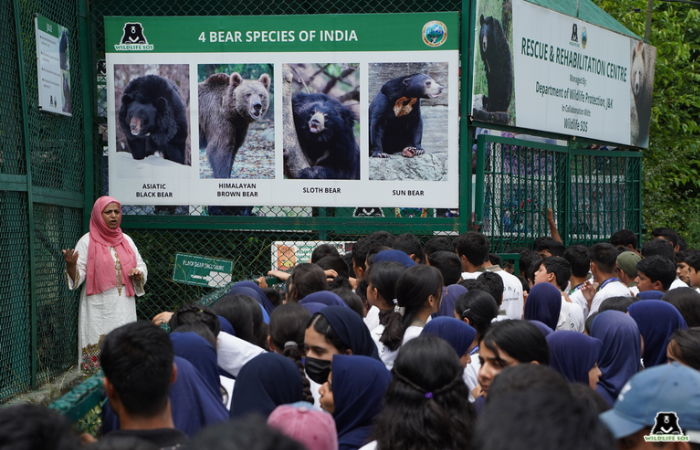
There is another meaningful dimension to these interactions. What began largely as sessions led by Ms. Aaliya Mir, Programme Head, Jammu & Kashmir, Wildlife SOS, has gradually expanded to include trained centre staff and caregivers. They bring with them additional perspectives to these discussions, allowing visitors to hear from people who are in close contact with the animals and who may have valuable local knowledge and experiences to share. In addition to classrooms and rescue centres, nature walks and nature camps give students and community members the chance to see biodiversity, explore habitats and relate conservation discussions to the natural world around them.
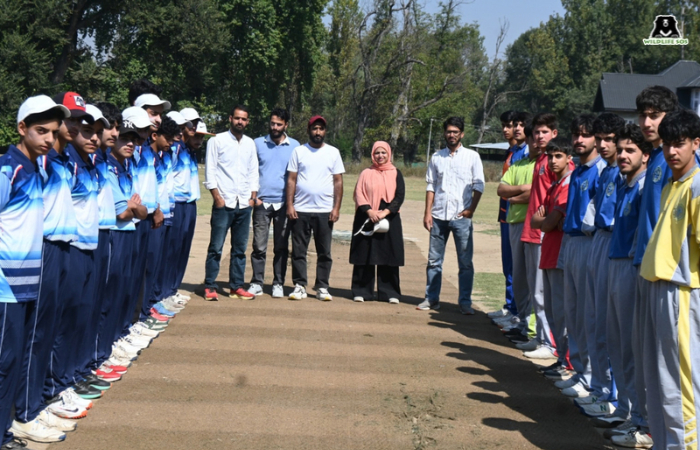
Changing how people perceive wildlife does not happen through a single awareness session. It takes sustained conversations, accessible scientific information and opportunities for people to ask questions, share concerns and become part of the solution. Through its work with the J&K Wildlife Protection Department, Department of Youth Services & Sports and the Zoology Department from the University of Kashmir, Wildlife SOS is bringing together science, local knowledge and education to encourage a more informed relationship between people and wildlife. Because coexistence is not simply about sharing space, it is about understanding the lives of the animals around us, recognising the challenges faced by communities and finding ways to make that shared landscape safer for both. And sometimes, that change begins with something as simple as understanding why a wild animal wears a collar.
Donate to Wildlife SOS today and support efforts to reduce human-wildlife conflict and promote safer coexistence between people and wild animals.
Feature image: Akash Dolas/ Wildlife SOS